U-RIL
Response Innovation Lab in Uganda
Overview
The Uganda Response Innovation Lab (U-RIL) was founded in 2018 by Save the Children Uganda. The main objective of the lab is to support the humanitarian response to 1.4 million refugees from eight East African countries, mainly from the Democratic Republic of Congo and South Sudan, and their host communities across 13 districts in the country through innovative approaches, systems, technologies and products.
Uganda is the country hosting the largest number of refugees in Africa, with 60% being children and 110,000 persons with specific needs. The Government of Uganda implements a progressive approach, called the Comprehensive Refugee Response Framework, and provides refugees with freedom of movement, the right to work and establish businesses, access social services, and an allocation of land for shelter and agricultural production. However, challenges come with hosting such large numbers of refugees over a long period of time, and the level of unmet needs among both the refugee and host communities is critical. Despite an integrated approach to service provision, refugees have higher needs than host community members in terms of access to livelihoods, food security, health and nutrition, shelter, and non-food items. A 2018 vulnerability study found refugees much more likely to be living in poverty than the host population, even while receiving assistance.
Updates
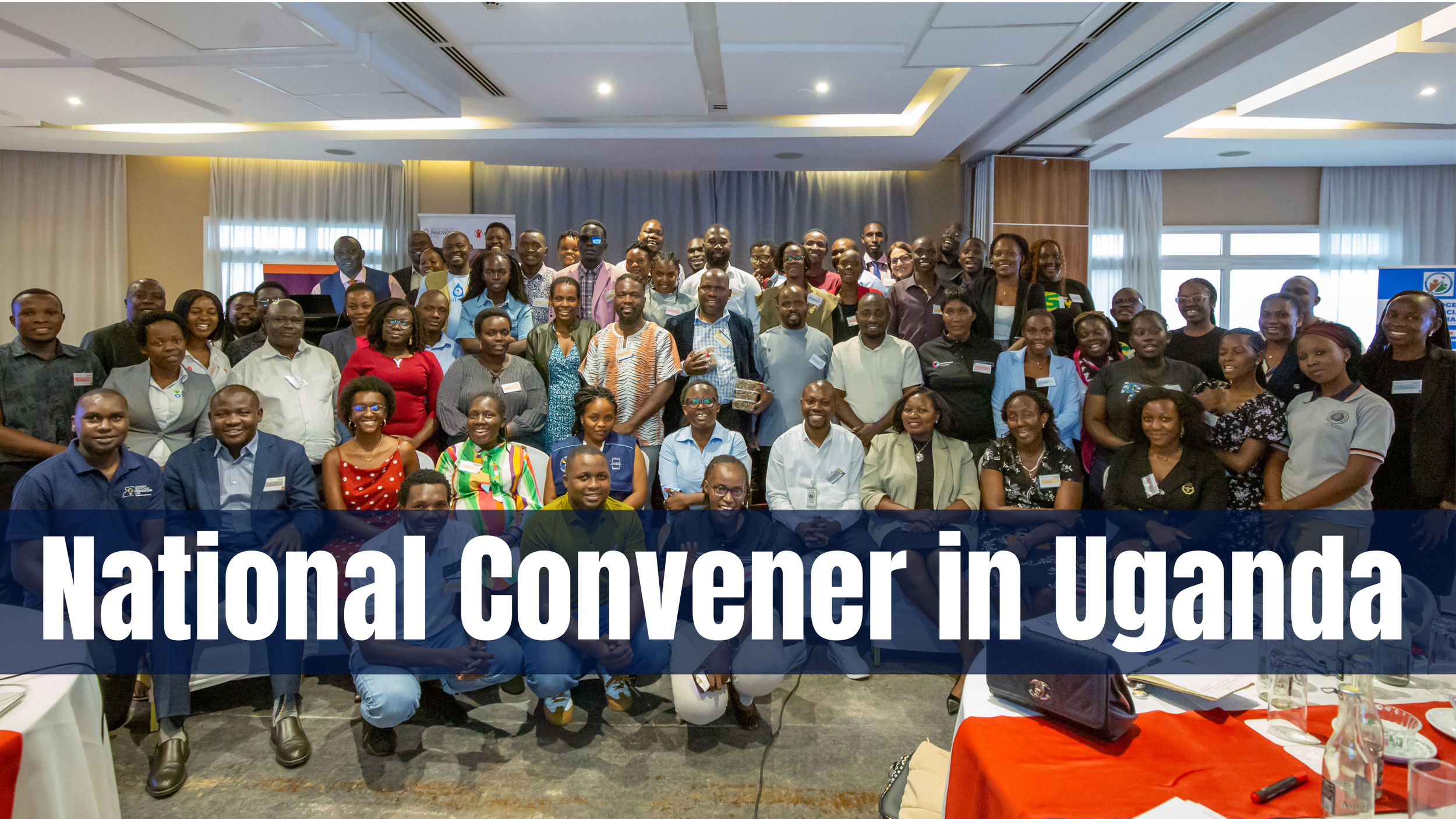
On 7 May 2026, the Uganda Response Innovation Lab (U-RIL) organised the Innovative Financing Convener.
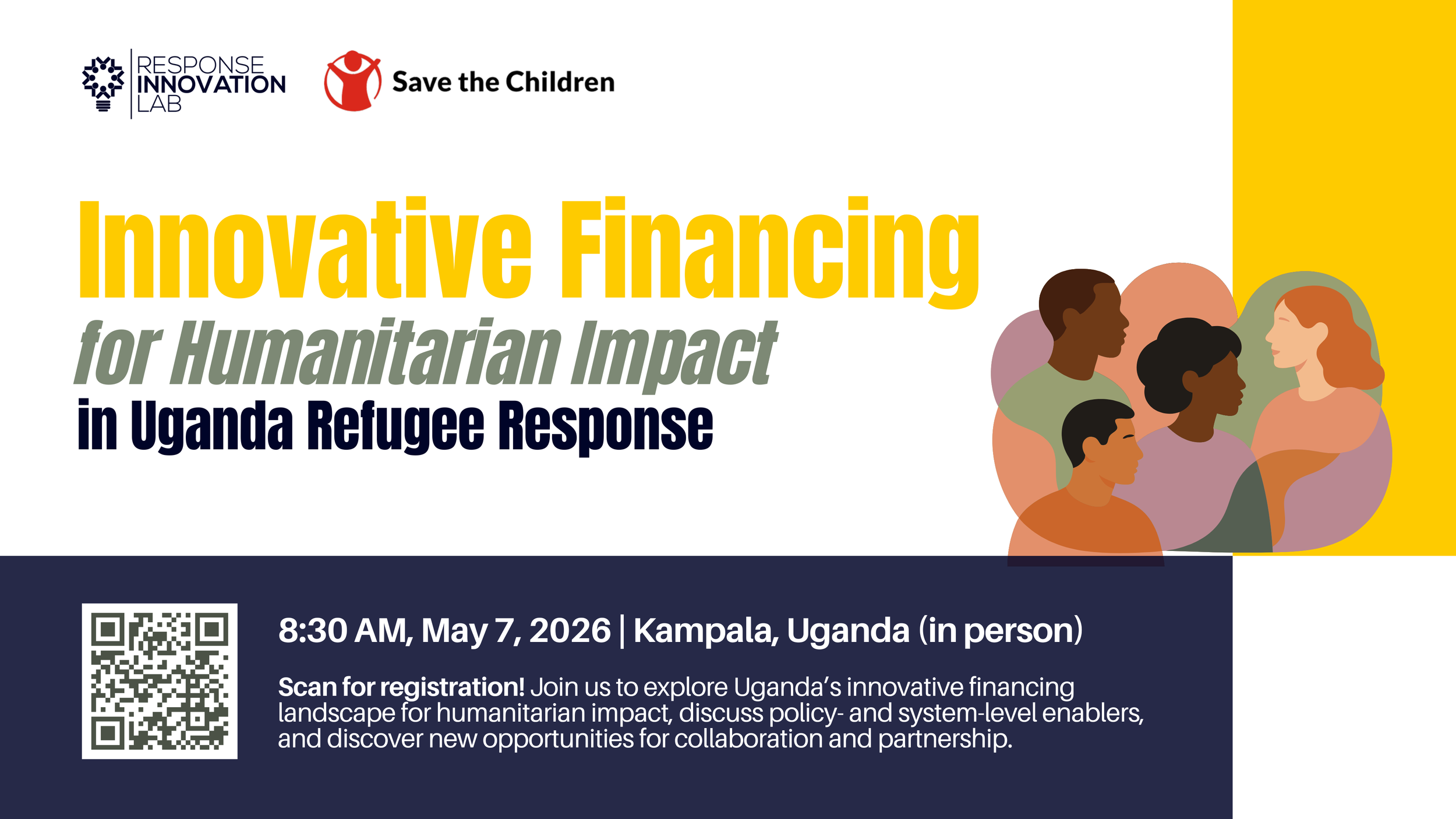
Join us in Kampala on May 7 for a national convener discussing Innovative Financing for humanitarian impact. Sign up before April 25, 2026!
RIL Newsletter brings you more than updates. Sign up today to find out!
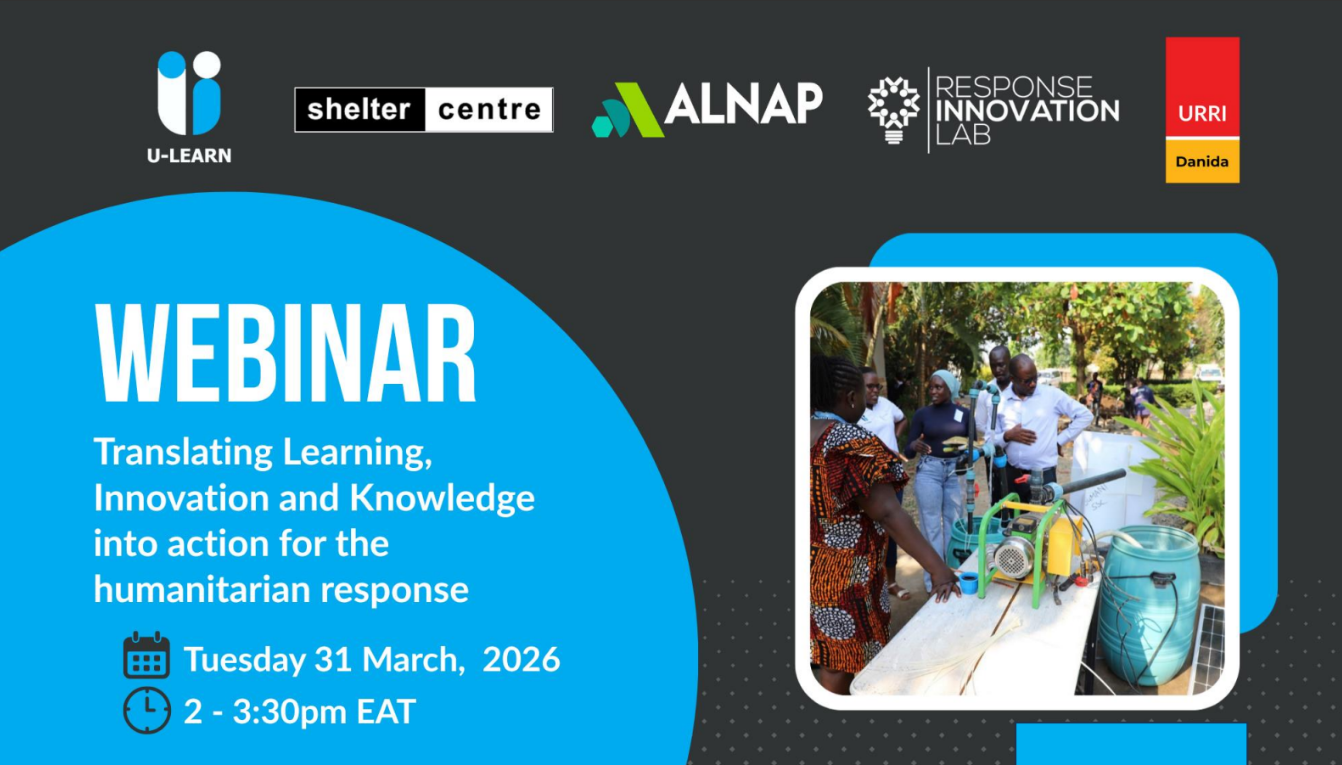
U-Learn, together with Rwanga Foundation, ALNAP, the Humanitarian Library and Shelter Center, co-hosted a webinar on learning, innovation, and evidence uptake in humanitarian contexts. The webinar aimed to share practical approaches to strengthening learning and evidence uptake in humanitarian and refugee responses. Check out the webinar recording and relevant resources!
Our annual review for 2025 is finally here. The year witnessed significant disruptions across the humanitarian sector, yet our global network continued to explore—through relentless effort and commitment—how to do more with less.
At this year’s #HNPW, we hosted a session on March 5 reflecting on a decade of humanitarian innovation, bringing together perspectives from practitioners, innovators, and ecosystem actors across different regions.
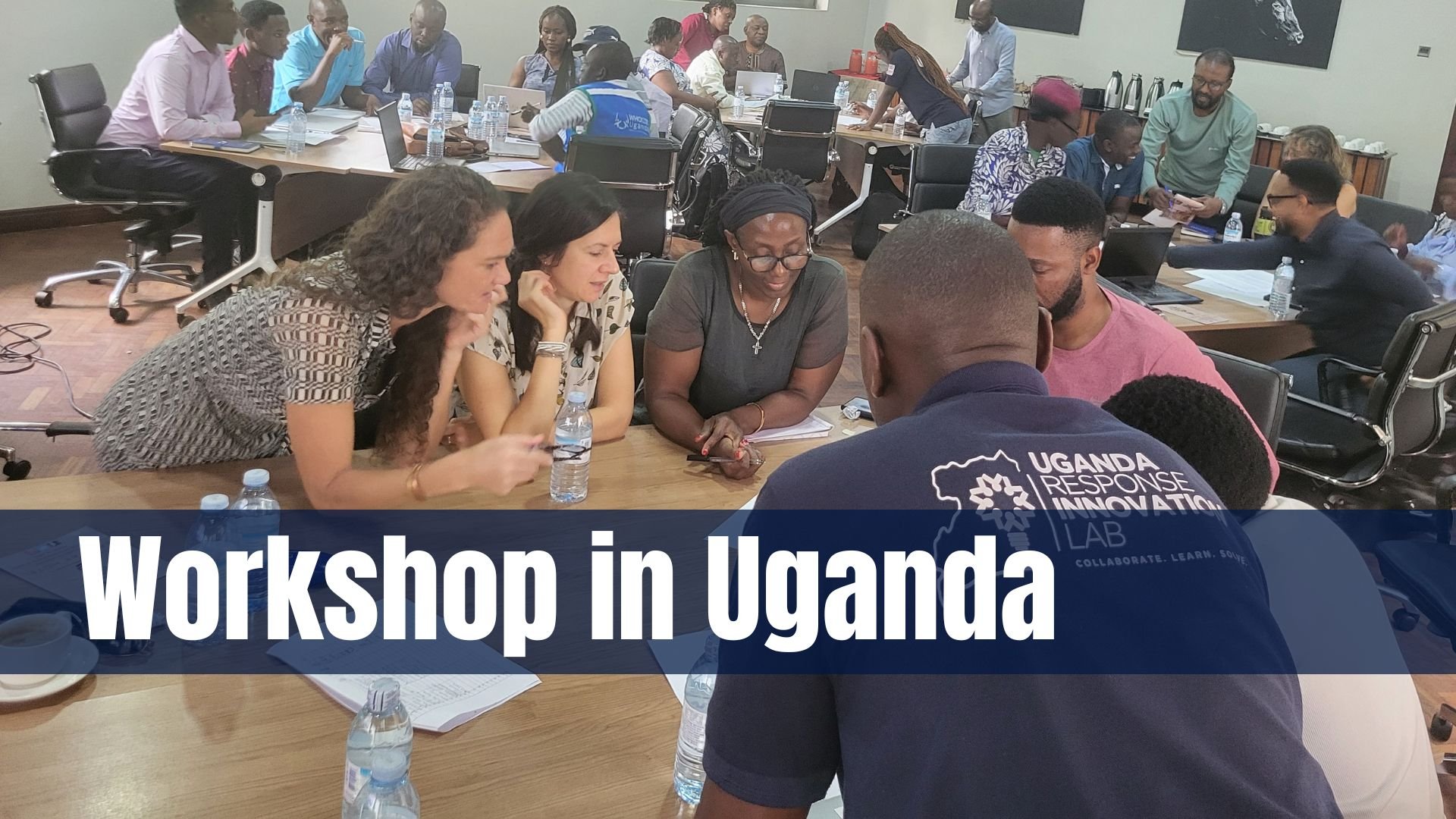
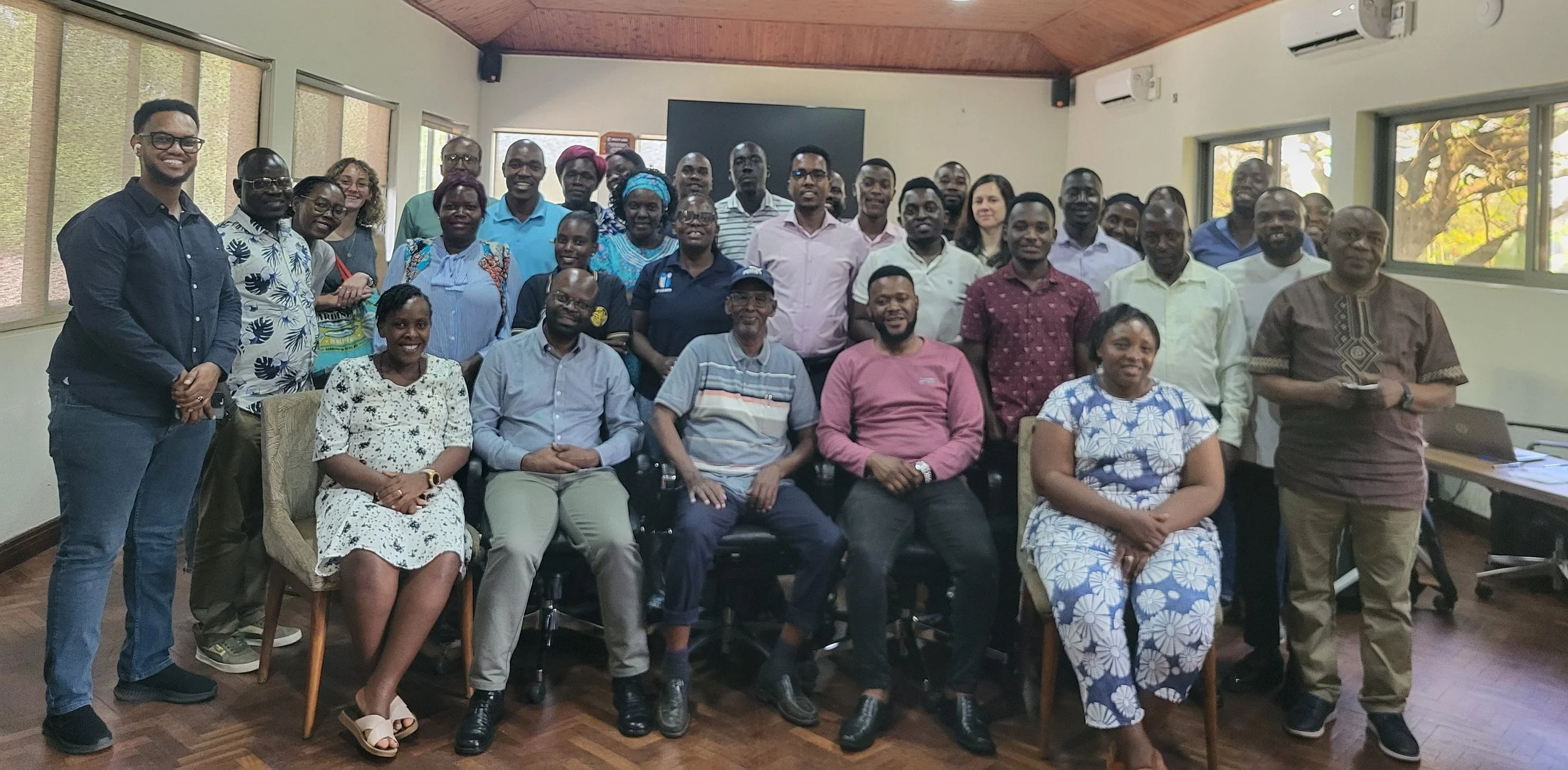
On November 27th, the Uganda Response Innovation Lab (U-RIL), in collaboration with Start Network, hosted a workshop focused on the future of research and innovation in humanitarian response across Uganda and its neighboring countries. This report brings you the insights and knowledge generated from the workshop.
RILx25 brought together 130 participants from 35 countries across various sectors and geographies. The event was organised in collaboration with Superpool and IFDO, with the generous support of Danish Refugee Council, Elrha, Grand Challenges Canada, the Oxfam Novib HST-LHL programme, and Save the Children International. Check out the takeaways from RILx25 and get inspired on how to prepare for the next “crossroads”.
On November 27th, the Uganda RIL & Start Network brought together diverse actors from five countries for a dialogue on the future of humanitarian research & innovation. Using Elrha's Futures Toolkit, participants mapped pathways to resilience and relevance amidst uncertainty.
Bilow Capital is an innovation project supported by the Somali Response Innovation Lab through the FIRM Challenge 2024. In this piece, Co-founder and General Partner Hana Kaise Abdi—also a speaker at RILx25 on the “Local Innovation Ecosystems” panel—shares her insights on what it takes for a local innovation ecosystem to truly thrive.
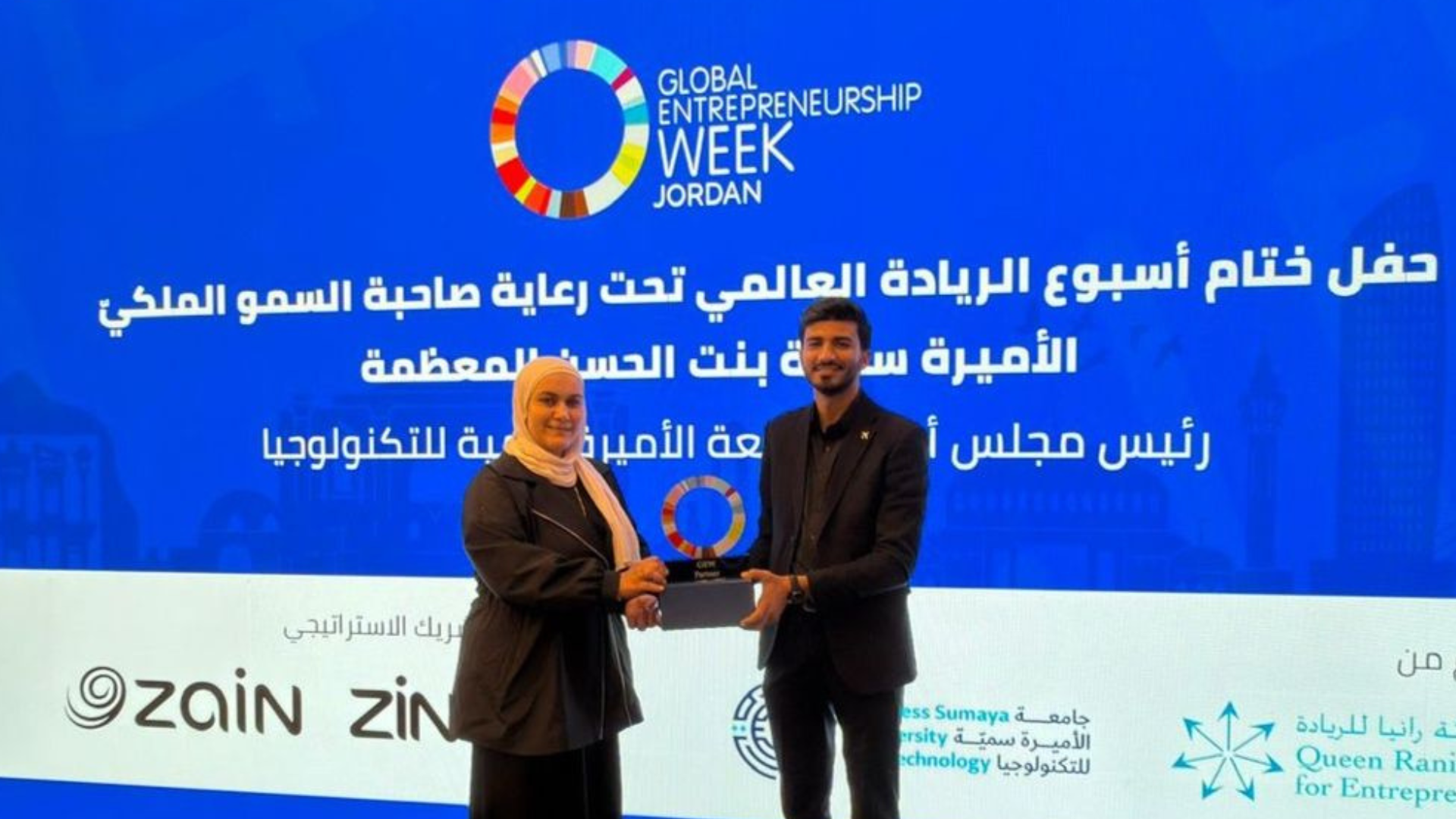
A small milestone and recognition we achieved in Jordan!
Climate-smart agriculture isn’t just a buzzword — it’s a lifeline for farmers on the frontlines of climate change. In this piece from a South Sudan perspective, we explore what truly makes a solution “climate-smart,” from boosting productivity and resilience to cutting emissions and protecting natural resources. We look at which food-system actors can drive this shift, what farmers in resource-poor, climate-affected areas are actually asking for, and whether current innovations match their needs.
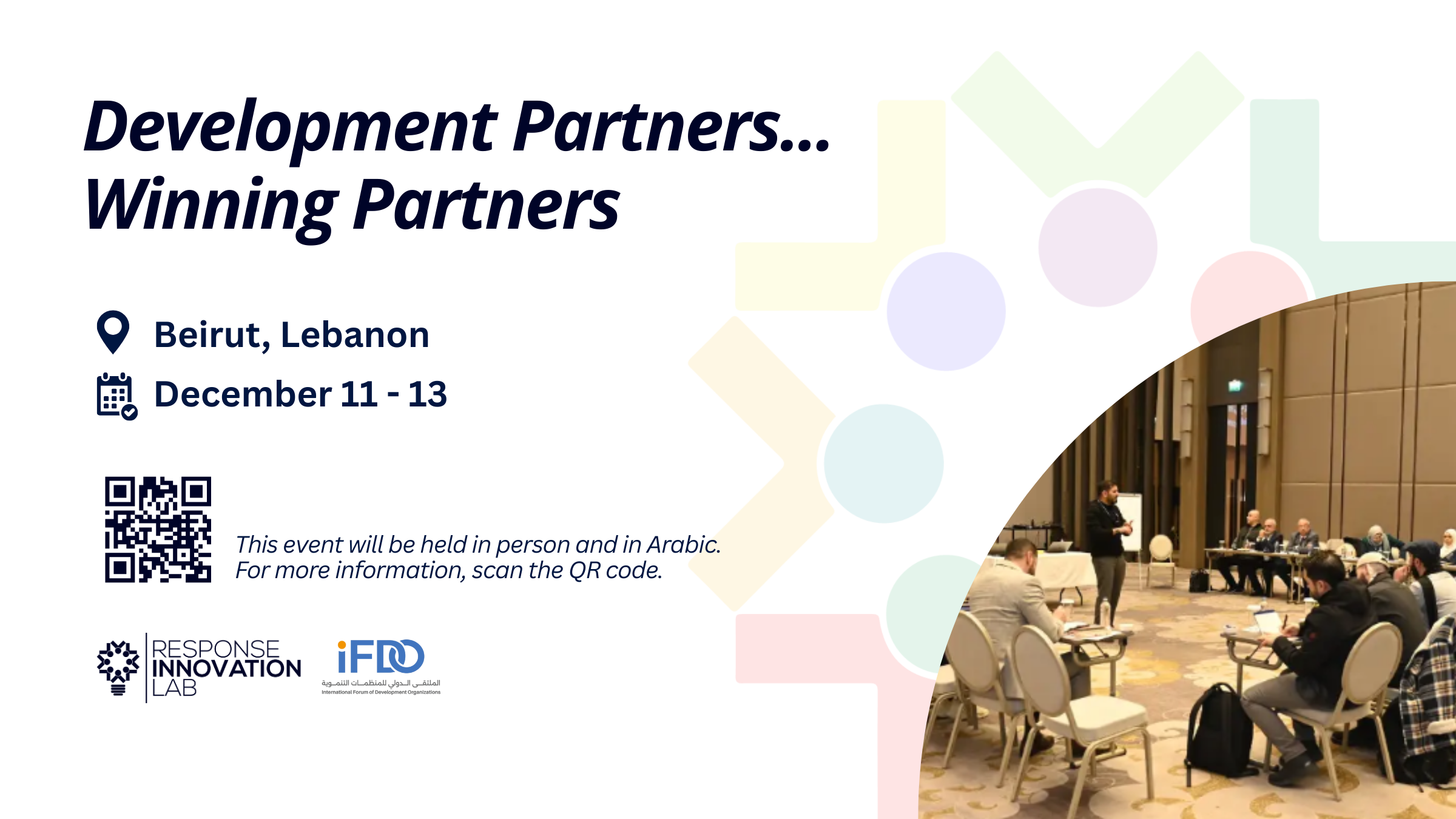
Response Innovation Lab will partner with the International Forum for Development Organizations for their event “Development Partners… Winning Partners” in Beirut this year, taking place from December 11 to 13.
We hosted the 2025 edition of our annual event RILx in Istanbul from October 15-17, this year under the theme “Humanitarian Innovation at the Crossroads: New Solutions for Ecosystems in Crisis,” with a dual focus on localization and climate adaptation. Three days of open conversations, cross-sector learning, and genuine connections in Istanbul brought together over 130 participants from around the world, spanning international and local NGOs, social enterprises, institutional donors, foundations, academia, entrepreneurship support organisations, public institutes, and impact networks. Check out the snapshots from RILx25!
Great news from Khalid Hashi, an innovator we’ve been proud to support over the years!
The Obama Foundation has just announced that Khalid will join its eighth cohort of Obama Scholars — a group of 11 emerging leaders from around the world who will participate in the program at Columbia University in New York City.
We have successfully delivered the first round of the training series under the Oxfam Novib program “Humanitarian System Transformation through Local Humanitarian Leadership”! Together, we unpacked the structural challenges around capacity and risk sharing, and explored how innovation can be a practical tool to rethink the way we work — from the ground up.
What can you learn? A breakdown of ecosystem components and their relevance to innovation in humanitarian settings; Case studies from Syria and Uganda offering real-world examples of ecosystem mapping and engagement; Tools and frameworks from the RIL to help practitioners identify and strengthen key relationships, flows, and enabling conditions in their contexts….and more!
Call for Ugandan- and Refugee-Led Tech & AI Innovations! Applications are open for the Uganda 2025 RIL Innovation Support Cohort, a 5-day bootcamp designed to strengthen the capacity of innovators working in humanitarian response. Check out our requirements and apply now!
We will see you in Istanbul from October 15 to 17! This year, we will explore together “Humanitarian Systems Transformation” and “Climate Adaptation in Fragile Settings”.
As StartupBlink’s Ecosystem Partner, Somali Response Innovation Lab is happy to share that Somalia reclaims its spot in the Global Top 100 Startup Ecosystem, ranked by StartupBlink in 2025. Somalia now ranks 13th place in Africa and 4th in Eastern Africa!
Response Innovation Lab hosted a session on “The Missing Link: Connecting Community-Led Innovation Initiatives with National and Global Social Innovation Ecosystems in Humanitarian Settings“ in Geneva, on March 26.
Join us online or in person for a 90-minute session to explore the current social innovation ecosystem and pathways between local communities in areas affected by crisis and the national humanitarian and innovation hubs.
As a partnership with Elrha and with the support from the Foreign, Commonwealth and Development Office and Norad - Norwegian Agency for Development Cooperation, the Humanitarian Innovation Forum brought together a diverse group of actors to discuss the challenges facing humanitarian innovations and and to envision how the ecosystem could better support the communities.
Inspired by the term “Ddokolo,” a slang word symbolizing resilience and cultural identity from Northern Uganda, the enterprise has grown under the stewardship of Ms. Winfred Nanungi. Today, Ddokolo is a guiding light of hope, blending innovation, community development, and social impact into its core operations.
A story showcasing how U-RIL partners with social innovators in the community to drive positive changes.
RIL, in partnership with Gray Dot Catalyst, planned and facilitated the “Creating Hope in Conflict: A Humanitarian Grand Challenge Innovation Basecamp” in Nairobi, Kenya together with 40+ innovators.
Insights from our MENA Manager, Ruba Hijazi, on Social Entrepreneurship and the collaborations between NGOs and social enterprises.
How do we generate and share evidence? Everything explained in one video!
Challenges
Developing the preparedness and resilience of the most vulnerable communities takes a dedicated effort to identify the specific challenges faced in the delivery of basic services (healthcare, water and sanitation, power, communications) to remote communities, marginalized groups and other hard-to-reach Somalis. Community-based organizations, local governments and other entities facing these challenges will need opportunities to uptake local or global solutions that will help to remove barriers to providing these services in an emergency.
A range of humanitarian and recovery needs exists in Uganda and the growing influx of refugees and asylum seekers from the surrounding region have exacerbated problems faced by local communities. Given the crisis escalation, the Uganda RIL supports response efforts and innovates around challenges in order to improve the lives of the affected communities during the crisis response, and during their transition to self-reliance.
To date, the following challenges have been identified:
CHALLENGE 1: SUSTAINABLE & MARKET-DRIVEN LIVELIHOODS
Employment creation, skills development, connections with private sector opportunities, and markets do not match the demand, particularly of young people in refugee settlements and refugee-hosting communities.
CHALLENGE 2: FINANCIAL INCLUSION AND DIGITAL SKILLS
Cash-based assistance is a modality of assistance that is increasingly used in Uganda. This acts as a driver to financial inclusion but also reveals the gaps in access to financial services and both financial and digital skills among refugee and host communities.
CHALLENGE 2: QUALITY & CONTINUOUS EDUCATION
Identified areas are cost-effective and result-oriented professional development for teachers and improved learning environments and outcomes for children (such as more focus on numeracy and literacy and multi-lingual support). These challenges, pre-existing before the pandemic, have been heightened by the prolonged school closure since the Covid-19 outbreak.
CHALLENGE 3: SUSTAINABLE AND SAFE ACCESS TO WATER, ENERGY, AND WASTE MANAGEMENT
On the topic of energy, in particular, challenges in terms of matching the supply and demand for clean energy solutions that are reliable, affordable, and accessible and raising awareness among potential users have been identified.
CHALLENGE 4: QUALITY AND ACCESS TO HEALTH SERVICES
Including but not limited to sexual and reproductive health with a focus on adolescents and psycho-social support.
CHALLENGE 5: EMPOWERMENT AND INCLUSION OF MARGINALIZED PEOPLE
Particularly women or people living with a disability.
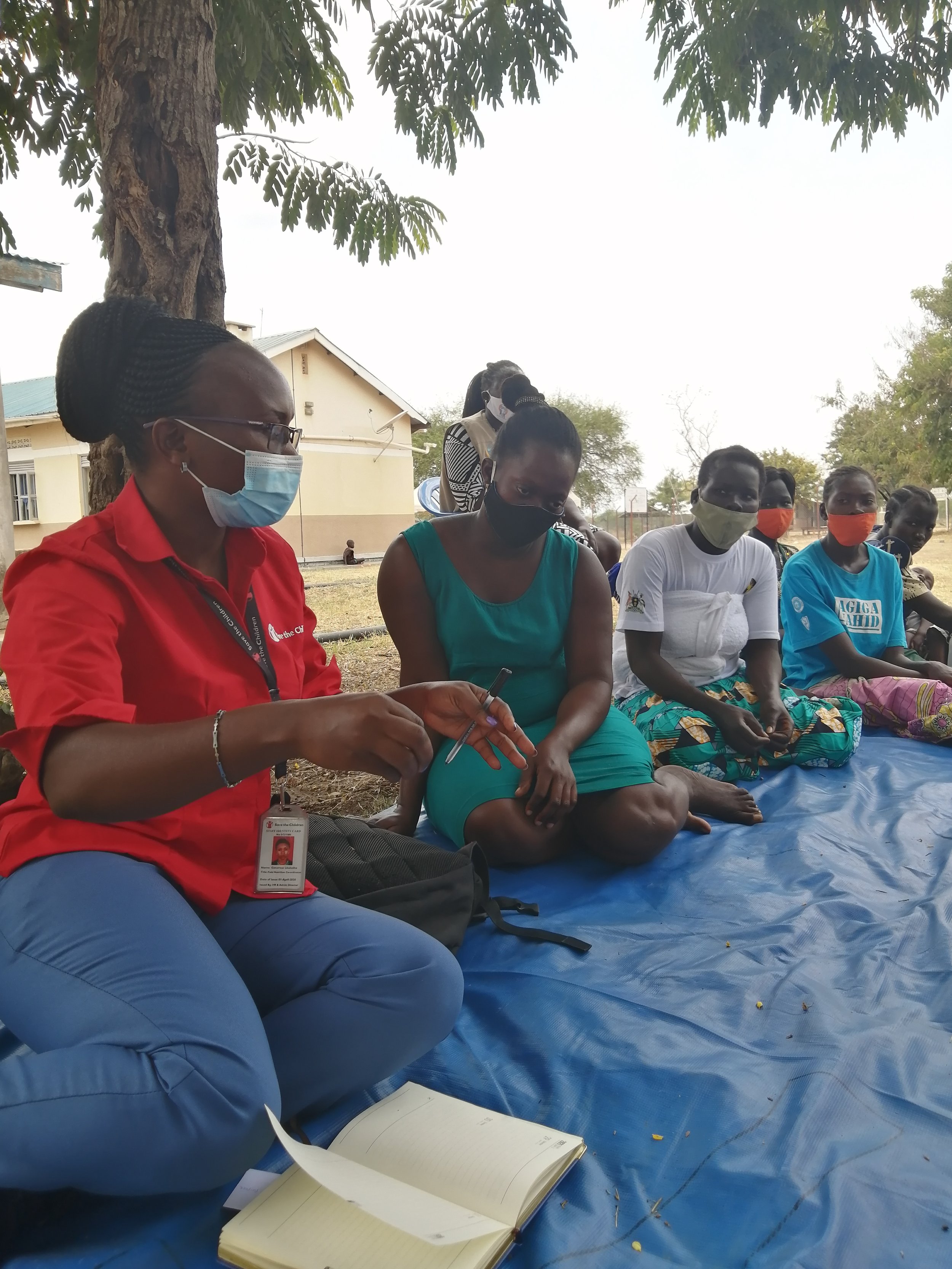
The challenges are determined from a mapping of all local stakeholders involved in the response.
What We Do
Uganda is home to a vibrant and growing community of innovators, many of which are looking to help with the recovery from, preparedness toward and resilience to crisis. While some funding opportunities exists for commercial products, social entrepreneurs and innovative non-profits do not have access to the capital they need to prototype, test and scale their solutions.
U-RIL provides tools and guidance for actors to jointly develop solutions, whether using existing approaches or incubating innovations. The Lab supports events, convening actors around humanitarian and nexus challenges, problem analysis, promotion of innovations that already work and matching problems with solutions.
You can learn more about RIL’s overall approach by visiting our What We Do page.
Connecting people and solutions
U-LEARN UGANDA
U-Learn believes the refugee response is most impactful when it maximizes the use of quality evidence, and deeply integrates refugee voices and preferences. U-Learn acts as a public good – supporting a wide range of refugee response actors to continually improve their programming by making use of high-quality learning, evidence, and insights.
The Uganda Learning, Evidence, Accountability, and Research Network (U-Learn) is a 3-year UKAID funded program delivered in Uganda by the Response Innovation Lab (hosted by Save the Children) in consortium with IMPACT Initiatives and the International Rescue Committee. It is designed to promote improved outcomes for refugees and host communities in Uganda. In collaboration with the government and a wide range of implementers and stakeholders, U-Learn specializes in Accountability to Affected Populations (AAP), Research, and Learning. U-Learn delivers a range of assessments, convener events, training, resource curation, and technical assistance to support actors across the response.
U-RIL Projects
The Response Innovation Lab offers a series of training to innovators designed to strengthen their capacity in the areas of:
Safeguarding
Intellectual Property and Innovation Value Chain Management
Resource Mobilization
Monitoring, Evaluation, Accountability and Learning.
The Local Innovation Nutrition Solutions project aims to create viable business models to enable the sustainable demand of local nutritious foods in refugee-hosting communities in Uganda.
The AMPERE Project is a consortium led by Mercy Corps in partnership with the Response Innovation Lab, Save the Children and Netherlands Development Organisation (SNV) to test, prove and build evidence for quality, affordable, and reliable market-driven energy access solutions for humanitarian response programming in Uganda. The implementation area is in the Bidibidi refugee settlement in West Nile in Northern Uganda, which displays favorable characteristics to explore an innovative operational model that bridges the humanitarian-development nexus.
Local Call - Uganda-BASED Innovations Only: The Uganda Response Innovation Lab hosted a local prize call for Ugandan innovators and entrepreneurs with already proven solutions to preventing, mitigating, and responding to COVID-19. With the support of the Ministry of Foreign Affairs of Norway and Save the Children, the call tackles four challenge areas with small financial prizes to selected winners. The call closed in 2020, and winners announced in early 2021.
Local Call - Uganda-BASED Innovations Only: In partnership with the Dutch Relief Alliance (DRA), the Uganda RIL held the DRA Innovation Fund’s third call (DIF 3) for proposals. The DIF 3 Local Call aims to promote humanitarian innovation for refugees as locally as possible. The focus of the call is on local refugee-supporting innovations in Uganda. The call closed in 2020, and winners announced in early 2021.
Solution Packs
As a part of the MatchMake function, the Response Innovation Labs produce Solutions Packs for each challenge they run. The packets go to the Challenge holder for a decision to be made around solutions. Below are samples of some of the packets developed from past challenges.
Innovations
As a part of the Response Innovation Labs support function, both global and local innovators are supported through the labs. Below are a list of innovations the lab has supported. You can visit the SMILE portal to view other innovations developed or tested in Uganda.
An Innovation that is turning School Bags into Mobile Classroom Furniture to solve the lack of affordable, classroom furniture by providing a SeatPack.
A portable parasite-based hardware device that uses principles of light scattering and magnetism to detect Plasmodium in blood samples.
Side by side intervention against child marriage and pregnancy cases rising during the pandemic in Bidibidi
Implemented preventive measures during food assistance in Rhino and Yumbe, and developed a touch-free hand washing facility
Women-training programme for alternative livelihoods in Rhino during the pandemic
Community-workshop approach for youth in Jinja
Community-driven socioeconomic empowerment of Indigenous Batwa households in Kisoro
Multi-Platform Edu-tech Property transforming Literacy in Local Ugandan Languages
Continuous and safe learning for children at home
Education Infrastructure Enhancement Among South Sudanese refugees and host community in Bidibidi settlement
We just added a new addition to our Open Resources hub: MatchMaker Solutions Packs! Free to access for all, the guidebook helping organisations and networks moving from “we have a challenge” to “here’s what we can test and try”.