Humanitarian System Transformation through Local Humanitarian Leadership (HST-LHL)
Humanitarian System Transformation through Local Humanitarian Leadership (HST-LHL)

Local and national humanitarian organizations are often the first to respond in emergencies, they also continue supporting recovery long after international groups leave.
About the Programme
Humanitarian System Transformation through Local Humanitarian Leadership is a 3.5-years flagship program implemented in partnership with the Dutch Ministry of Foreign Affairs. It runs from April 2024 until October 2027, with a total budget of €16.8 million.
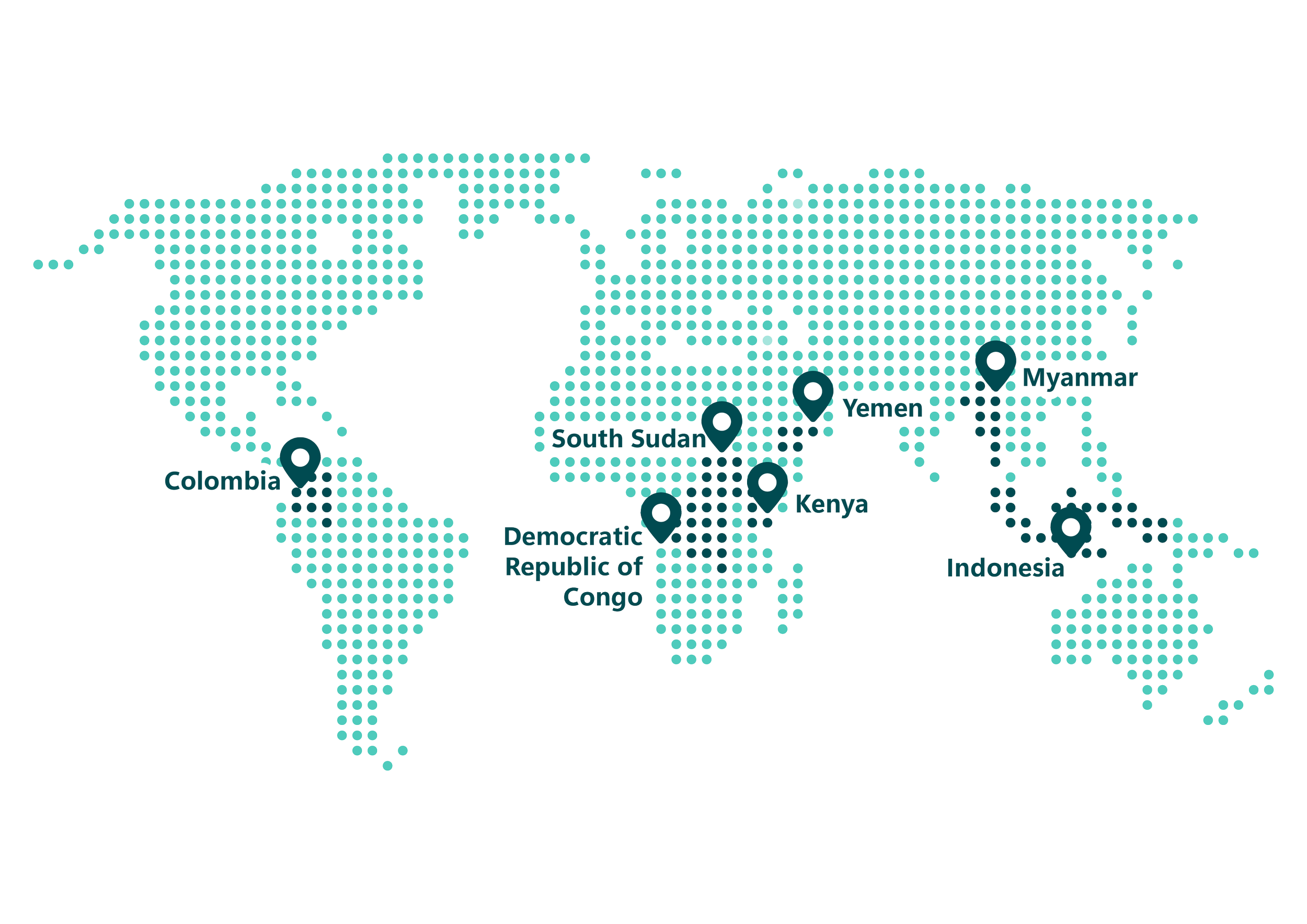
The program supports a shift towards a more equal, risk-informed and better funded locally led humanitarian system in seven countries, including countries affected by conflict or fragility. These are Colombia, Democratic Republic of Congo, Kenya, Indonesia, Myanmar, South Sudan, and Yemen. The program will contribute to improved representation by local actors in decision-making spaces at the global level, for example with donors and decision-makers in Geneva. Through research and learning at country-level, we will provide policy recommendations and proven solutions to transform the international humanitarian architecture.
RIL’s Role in the Programme
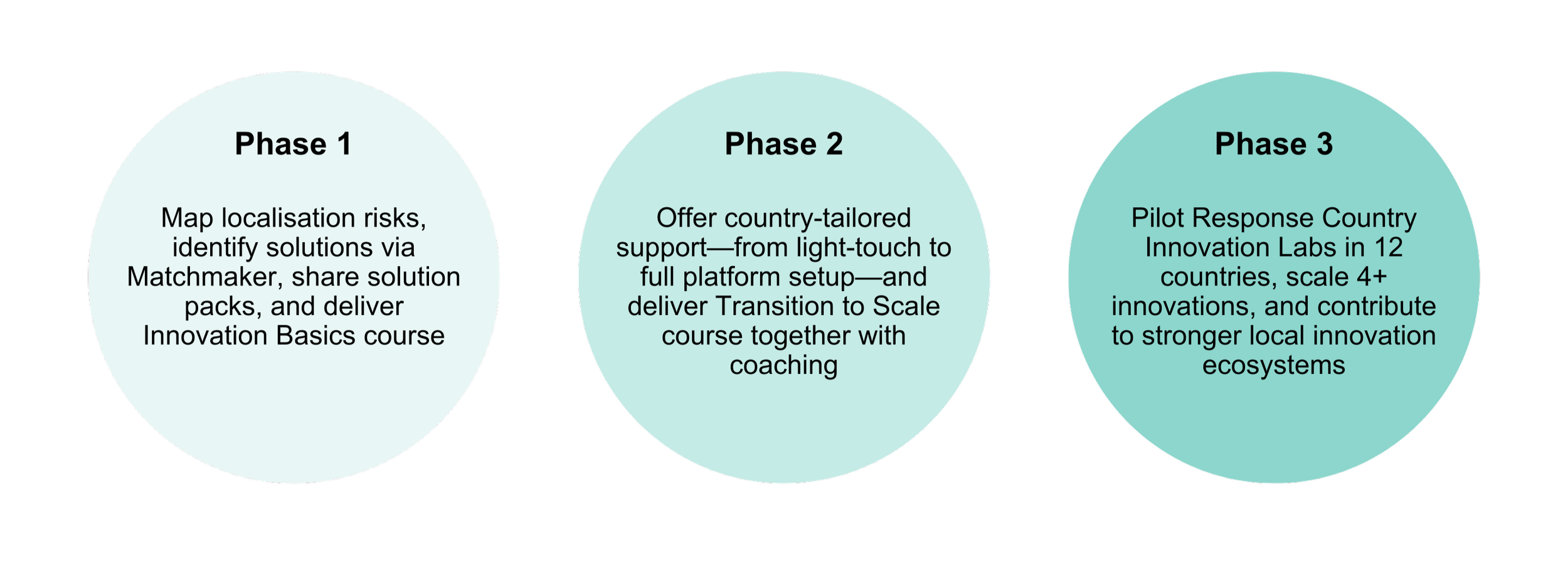
We, together with country teams and partner organisations, will scope country-specific risks and capacity-related challenges linked to increased Local Humanitarian Leadership and identify, design and disseminate solutions for wider learning in the humanitarian sector.
RIL Research & Resources
If you can’t open the link and would like to access the reports or resources, please contact weicong@responseinnovationlab.com. We will keep the resources updated as we move forward—stay tuned!
Phase 1: Research Synthesis
We conducted desk-based and qualitative research to identify key actionable challenges faced by local NGOs and NGO networks, informing the development of MatchMaker Solutions Packs. Available in English, Arabic, Spanish, and French, this report synthesises insights drawn from the reviewed literature and transcripts of 11 interviews conducted across two continents—West and Southeast Asia, and Africa.
Phase 1: MatchMaker Solutions Packs
The MatchMaker Solutions Packs developed under the Oxfam HST-LHL programme meant to provide guidance that helps an organisation or network kickstart the process of identifying one or more solutions that can effectively address a particular type of challenge. This process is meant to be internally driven, with or without external support. Click on the challenge areas below to check out the corresponding Packs.
The MatchMaker Solutions Packs in French, Spanish, and Arabic are also available upon request. Contact us to receive a free copy.
Humanitarian System Transformation through Local Humanitarian Leadership is a 3.5-years flagship program implemented in partnership with the Dutch Ministry of Foreign Affairs. It runs from April 2024 until October 2027, with a total budget of €16.8 million.