
#PostRILx25 | Ideas That Are Redefining What’s Next
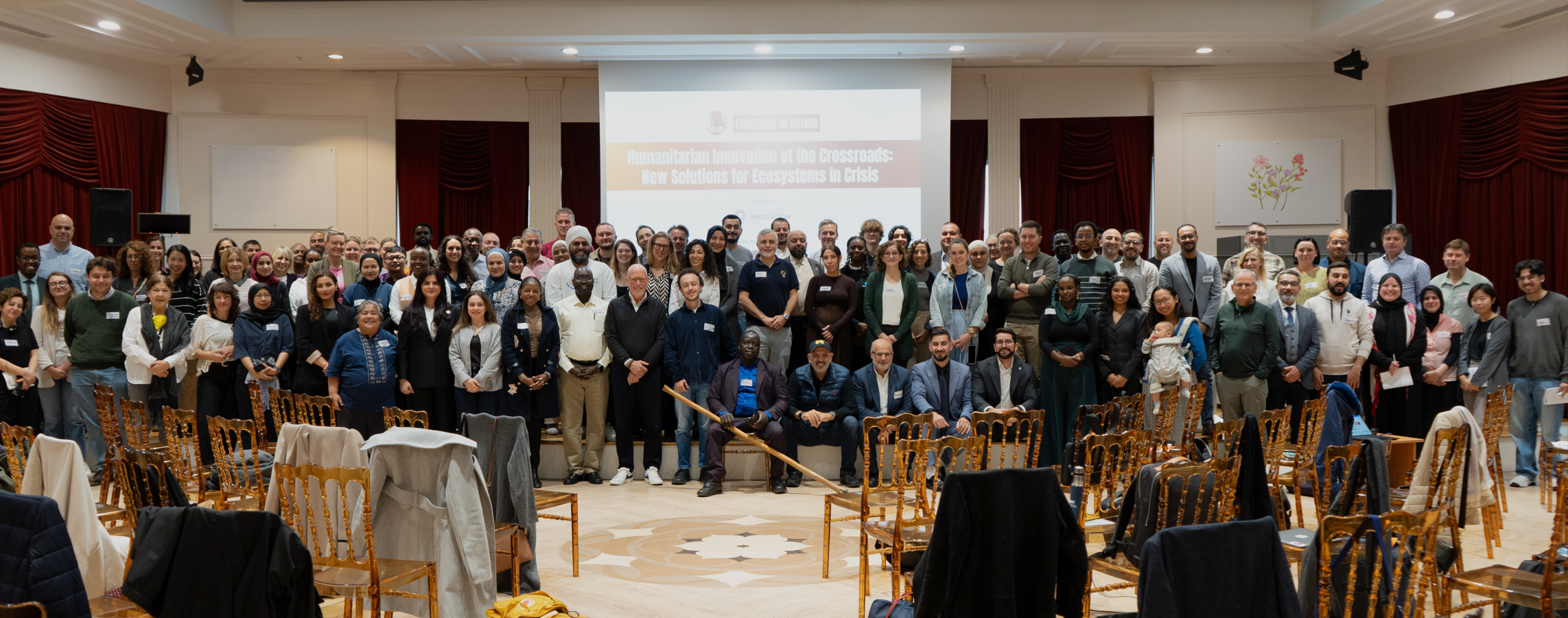
The 2025 edition of RIL’s flagship annual event, RILx25, took place in Istanbul, Türkiye from 15-17 October 2025 and brought together 130 participants from 35 countries, representing humanitarian agencies, local and national NGOs, regional impact networks, social enterprises, innovation hubs, entrepreneurship support organisations, impact investment, and philanthropic organisations, academic and public institutes. The event was organised in collaboration with Superpool and IFDO, with the generous support of Danish Refugee Council, Elrha, Grand Challenges Canada, the Oxfam Novib HST-LHL programme, and Save the Children International.
What was RILx25 about?
The event spotlighted two urgent priorities for the humanitarian sector: humanitarian systems transformation through localisation and advancing climate adaptation in fragile settings. The programme consisted a diverse range of activities including keynote addresses, thought-provoking presentations, interactive panels, innovation showcasing, innovation centre tour, and a half-day hands-on “collective foresight exercise” organised in collaboration with Elrha.
RILx25 marked the first year the conference opened its doors to a broader ecosystem, engaging voices from philanthropy, impact investing, and other non-traditional humanitarian sectors. Guided by a principle of “curation with intention,” the event prioritised diversity across geography, gender, seniority, and perspectives—bridging the Global North and Global South and creating opportunities for emerging changemakers to share the stage with experienced professionals. The approach of RILx25 contributed to the humanitarian innovation sector by fostering cross-sector and cross-response exchanges, providing a stage to showcase locally-led innovative solutions, and creating dialogues to collectively envision how we can be better prepared for the next “crossroads”.
What were topics discussed?
How might we develop innovation systems that effectively promote both advanced tech solutions and frugal or open innovations for implementers of climate resilience programmes, so that different types of actors can engage?
How might we reshape the future humanitarian response through alternative financing models to unlock more diverse funding for affected communities?
How might we create clear connections between the global climate agenda and local response and development plans for social innovators, so that opportunities to scale climate resilience solutions are maximised?
How might we support the scaling of effective local innovations for affected populations so that they reach their full impact potential in the context in which they were developed?
How might we demonstrate the value of local innovation ecosystems for response actors so that the humanitarian system becomes more localised, agile and innovative?
How might we promote demand and sustainable thinking in local communities so that innovations are adopted and impact is scaled?
How might we facilitate the spread of effective climate-smart agricultural solutions for rural communities, so that food systems can better withstand climate shocks and stresses?
How might we apply the massive potential of Artificial Intelligence in a responsible, human-centred way, so that AI-powered solutions are effectively adopted by frontline personnel and the communities they serve?
How might we leverage established and emerging technologies for local response actors so that they can achieve their full potential as leaders, coordinators and implementers of humanitarian action?
What are some key takeaways?
Core Challenges and Reframing Innovation
The session grappled with profound questions about the nature of innovation itself, challenging the sector to honour and scale the "quiet innovations" of survival, solidarity, and dignity that may not meet traditional definitions of scale. While confidence remains that innovation will drive a transformation towards more agile, sustainable, and locally-led systems, there is a clear call to invest in community-driven entrepreneurship and create infrastructure that fosters creativity while remaining grounded in humanitarian principles. This reflects the concept of "crossroads" as a constant reality; the key is to plan proactively for these decision points, integrating evidence and learning to navigate the tensions between scale and depth, speed and sustainability, and global expertise and local insight. Ultimately, real systems change happens when global agendas are actively shaped by local knowledge, agency, and innovation.
Collaboration, Ecosystems, and Scaling Meaningfully
Humanitarian actors are hungry for a more connected system built on "bridges" between frontline innovators and global resources, without creating a top-down central command. This requires intentionally extending national innovation ecosystems beyond capital cities to connect crisis-affected areas like refugee settlements and rural communities. An engaged local government is repeatedly highlighted as a game-changing catalyst for creating an enabling environment. Scaling is redefined not as mere replication, but as sustainability and collaboration, ensuring solutions are grounded in local realities. The sector is challenged to incentivise "mash-ups" that connect high-tech global approaches with simple, low-cost local solutions, recognising that these approaches can co-exist and collaborate effectively.
Climate Adaptation Programming
Climate adaptation programming is recognised as requiring an "all-hands-on-deck" approach, with collaboration across government, private sector, academia, local NGOs, and international agencies. Local communities and social enterprises are often the source of innovative climate-adaptive solutions, while international aid plays a critical role in de-risking the adoption of new technologies and approaches. The scaling of these locally grown innovations can be facilitated through supportive government policies. This model underscores a central theme: for climate adaptation to be effective, global agendas and resources must listen to, invest in, and be shaped by local knowledge and innovation, ensuring solutions are grounded in the specific contexts and communities facing these crises.
Localisation and the “Power Shift”
There is a strong, confident belief in innovation as a catalyst for shifting to locally-led humanitarian structures, moving beyond a decade of unfulfilled commitments where only a small fraction of funding reaches local actors directly. The call is for a genuine shift in perspective where international actors treat local partners as capable equals. While legacy local NGOs risk being leapfrogged by more agile structures, there is a consensus that the transition does not have to be a zero-sum game. Local governments and innovation-friendly authorities can catalyse social innovation, enabling early adoption and creating favourable environments. True localisation means facilitating a two-way flow: not only a bottom-up movement of solutions but also exposing local actors to new external technologies and ideas, and diasporas could play a key role in the process.
Financing and Resourcing the Ecosystem
Significant gaps persist in the financing landscape. Global actors like multinational corporations and impact funds continue to shy away from the risks of complex emergencies and fragile economies, leading to a concentration of innovation funding in regions like East Africa, Southeast Asia, and the Middle East and North Africa, while leaving areas such as West Africa as a "blind spot." The solution requires a multi-faceted approach: Global South actors are proactively developing their own alternative financing models by leveraging local private sectors and philanthropies. Donors are urged to listen firsthand to local needs and move beyond short-term project cycles to provide equitable, sustained investment. The role of foreign aid is seen as most useful in de-risking new approaches, with a specific call for partners to co-deliver resources like remote-work pipelines and equipment to grassroots innovation hubs.
Technology, AI, and Responsible Adoption
The potential of AI generates both excitement and caution. It is seen as a tool for local actors to "leapfrog" to more proactive aid systems, but its effectiveness depends on reliable local data and contextually usable outputs for decision-makers. A significant disconnect exists: there is little humanitarian-specific guidance available, especially for local NGOs, and many global actors are making big bets on AI without the requisite technical expertise. A recommended practice is for organisations to use AI internally first to build familiarity. Beyond AI, there is a pressing need to create shared technological infrastructure and to better support Open Innovation models—both advanced technologies like open-source software and low-tech community solutions—which struggle to scale under current funding and intellectual property frameworks.
Watch the recap video here.