
RIL Newsletter is launching soon!
Have you signed up for our RIL Newsletter yet? We’re excited to launch our new newsletter series, where we’ll be sharing updates, innovations, insights, and useful resources from across our network and beyond.
We promise: no spam — just one issue every 1–2 months.
We also welcome external contributions, so please get in touch (weicong@responseinnovationlab.com) if you have valuable resources or insights that could benefit the wider humanitarian innovation community!
Want to have a sneak-peek of what RIL Newsletter series will bring to you?
It will include global updates like this:
📖 2025 Year in Review: A Year of Resilience, Innovation, and Reimagination
We’re excited to share our 2025 Year in Review—a look back at a year of building “what’s next” and exploring what positive disruption can mean for our sector, in the language of reimagination and resilience. Our annual review features more than snapshots of our achievements; we also take the opportunity to shed light on the innovations we supported throughout the year, as well as the new resources and toolkits we introduced or updated—and more. Check it out here.
And updates from our network like these:
📣 U-RIL | Join our National Innovative Financing Convener on May 7, in person!
Uganda Response Innovation Lab (hosted by Save the Children), together with U-Learn, will host a National Innovative Financing Convener on May 7, 2026 to bring together a wide range of actors—including government representatives, INGOs, donors, the private sector, financial institutions, and impact investors—for cross-learning and exchange. Collective, we will identify system- and policy-level enablers, strengthen collaboration and partnerships, and advance innovative financing in Uganda for greater humanitarian impact. Read more about the background here.
To ensure a high-quality exchange among relevant peers, we will review registrations. If selected, you'll receive a confirmation email with event details. Thank you for your understanding. Register your spot through the link here.
🌱SyRIL | The launch of “RISE Syria - Resilient Irrigation for Smallholder Empowerment”
Water scarcity and climate shocks are pushing Northwest Syria's farming communities to the edge. With 70% of the population in urgent need of humanitarian aid and groundwater rapidly depleting, wheat and barley farmers are struggling to maintain their livelihoods and feed their families. In partnership with World Vision Syria Response, Engineers Without Borders, and Field Ready MENA, we are co-developing climate-resilient irrigation solutions that work with farmers—not around them. Rather than introducing unfamiliar technologies, RISE Syria builds on the irrigation practices farmers already know and trust, enhancing them with data-driven tools that support smarter, more sustainable water use. It's an innovation model that puts people first—inclusive of women, female-headed households, and persons with disabilities—and bridges local expertise with modern solutions to create lasting impact. Read more here.
Innovation spotlights like this:
(selected content from E-Parts Library featuring)
What’s the innovation about?
The E-Parts Library collects donated or discarded electronic devices, repairs and refurbishes them, and makes the salvaged components available as a resource—particularly for engineering students and innovators working on their projects. The project also built a digital platform to receive donation requests, display available reusable parts, and manage operations transparently.
What challenge does it tackle?
The alarming rise in e-waste and its destructive environmental impact. The project believes the answer lies not just in recycling, but in maximizing the use of damaged devices by turning them into valuable, reusable resources.
What's innovative about it?
Rather than disposal or basic recycling, E-Parts Library goes further—repairing, refurbishing, and redistributing components back into productive use. Combined with an online platform and community awareness campaigns, it bridges the gap between waste and resource in a structured, scalable way.
One lesson learned to share from the innovation team:
One lesson learned along the way Community engagement works. Distributing over 300 awareness brochures at Aleppo University and schools resulted in the collection of 82 electronic devices in a short period — with 90% of them non-functional, confirming both the scale of the problem and the community's readiness to act.
… and more! Sign up today to find it out using the link here.
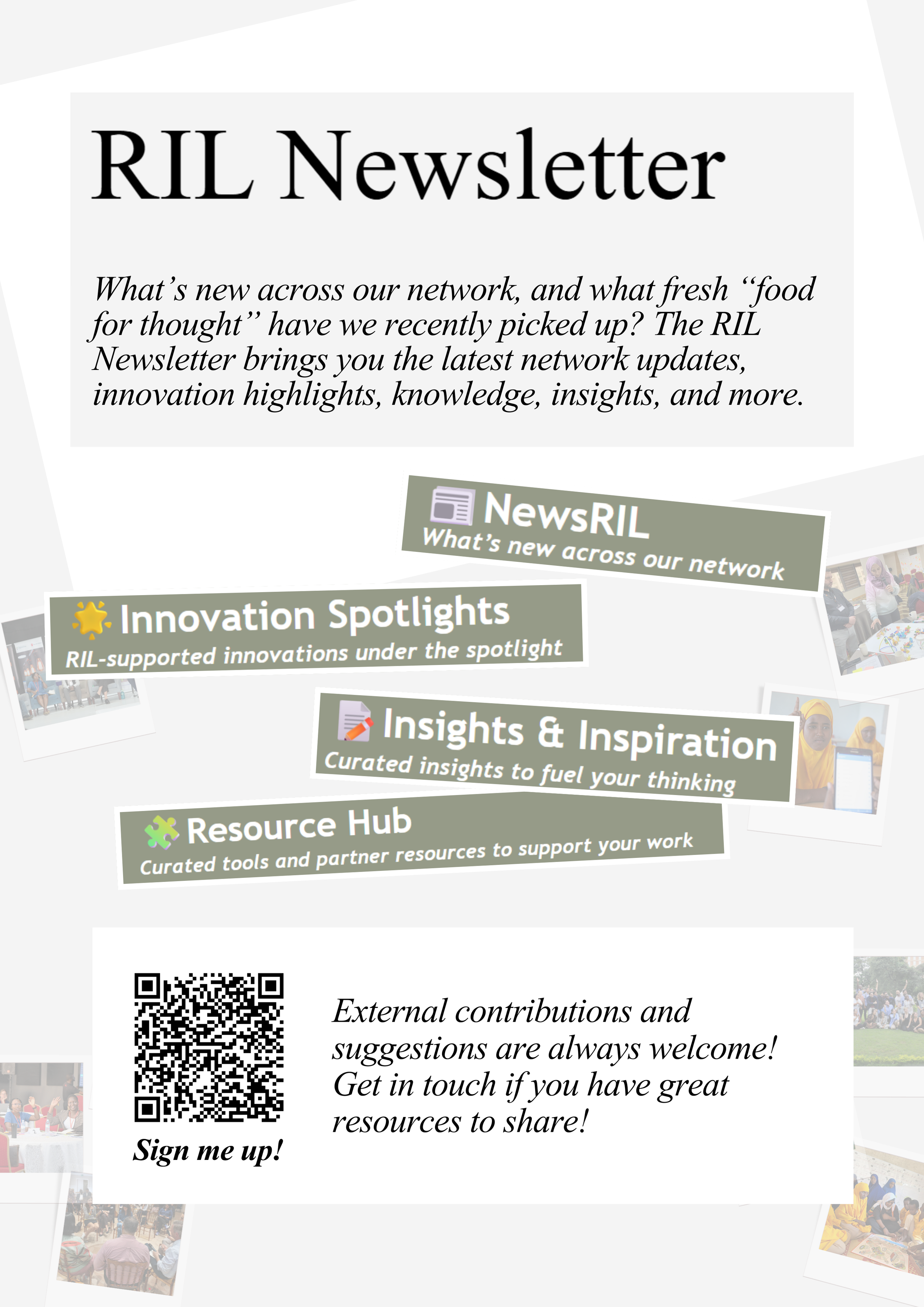
Scan the QR code to sign up for the RIL Newsletter!