
#RILPlasticsStories in Hargeisa No.2:“Plastic has value. So do the people recovering it.”
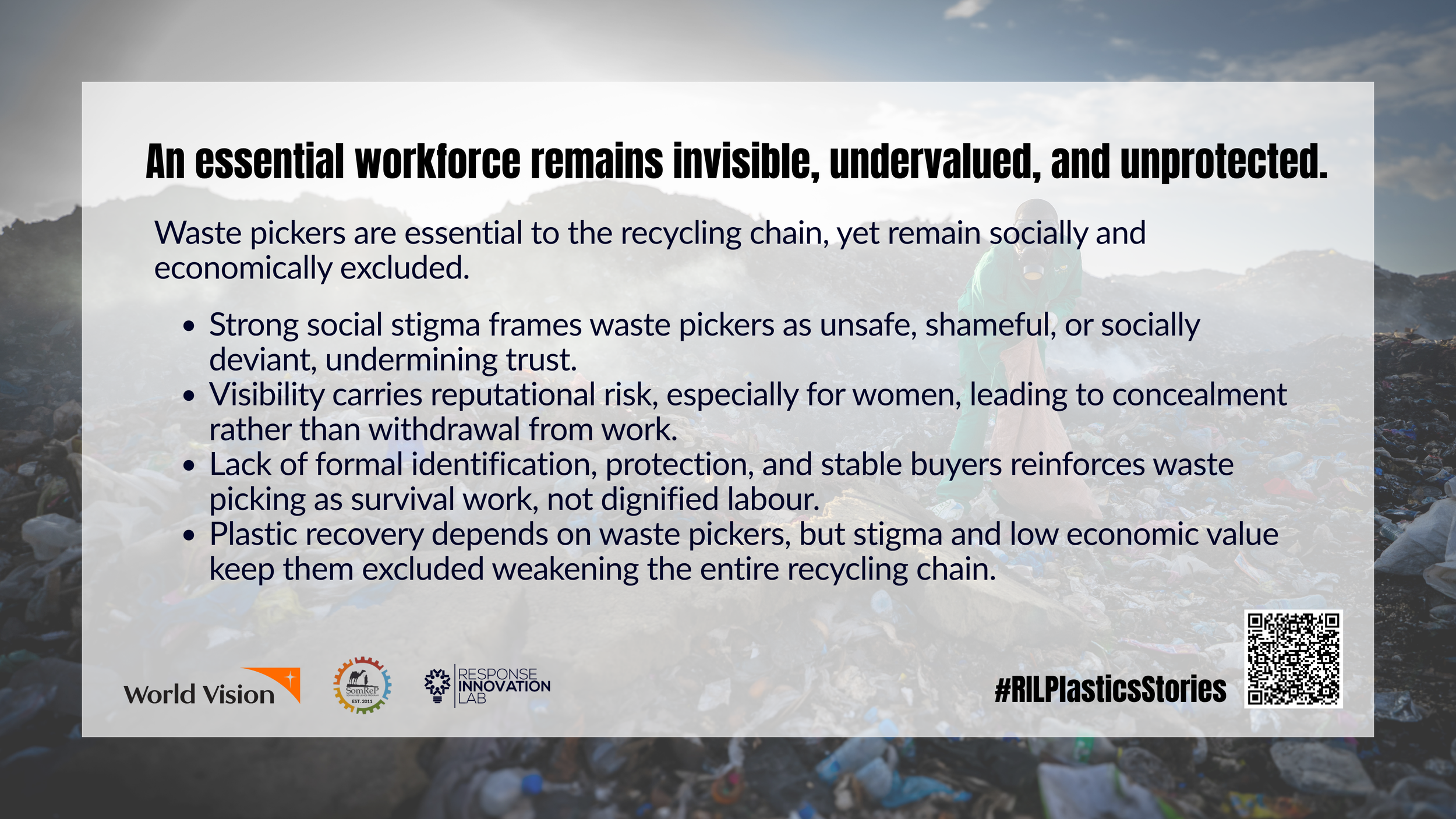
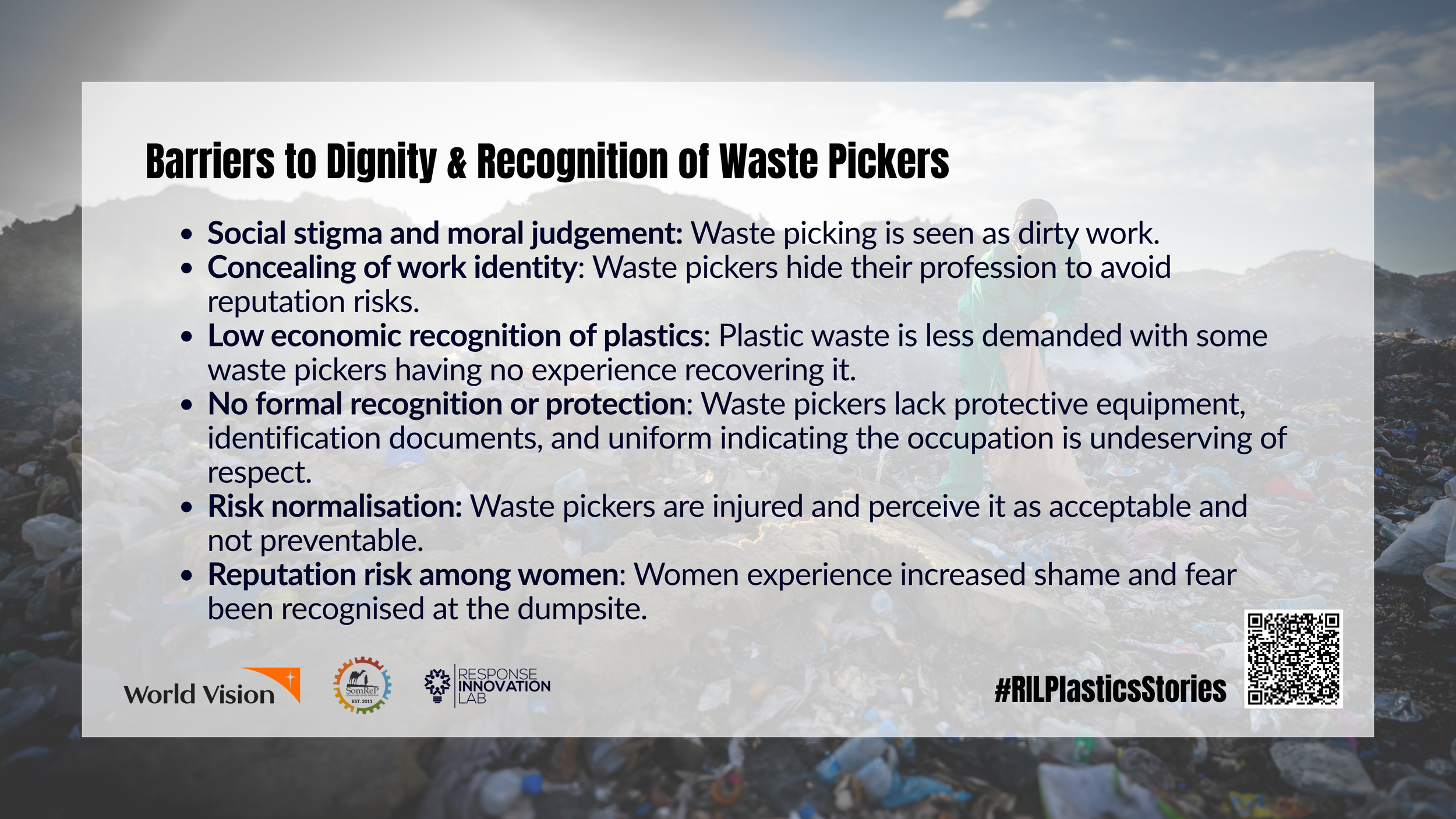
The recycling economy depends on invisible workers, often a vulnerable population underrecognized and even stigmatized. Waste pickers recover value, keep materials in circulation, and help make recycling possible. Our study shows that these waste pickers—the critical value-creators along the value chain—face multiple barriers to engagement (see picture).
Waste pickers’ sense of dignity is closely linked to their ability to survive and provide for their families. Their focus is primarily on earning income, managing daily needs, and supporting household responsibilities rather than seeking social approval. However, stigma often leads to concealment rather than withdrawal from work. Many waste pickers, particularly women who fear mockery or judgement, continue working while hiding their occupational identity. This experience is also shaped by how waste is valued in the market: materials like metal, which have clear economic value, tend to attract more recognition, while plastic waste—with weaker or less visible markets—can reinforce feelings of shame and invisibility.
At the same time, recognition for waste pickers needs to go beyond verbal appreciation. What matters more are tangible improvements such as fair and stable income, safer working conditions, and stronger economic inclusion within the value chain. Despite stigma and difficult conditions, faith and personal resilience often help individuals cope with social rejection and remain motivated to continue working.
This insight piece is based on a qualitative study conducted under the Social Plastics for Economic Development in Somalia project, a strategic initiative that seeks to transform the country’s critical plastic waste crisis into a catalyst for sustainable economic growth and livelihood opportunities. The project is implemented in partnership with Engineers Without Borders Norway and World Vision Somalia, and funded by Innovation Norway.