
#RILPlasticsStories in Hargeisa No.1: Why Should We Care?
The stories around plastic recycling and management are more complex and relevant today than you would think.
Plastic recovery—a process of turning plastic waste into valuable resources—fails in Hargeisa and many other contexts not because people don’t care, but because systems, incentives, and social normals make disposal easier than recovery. Once discarded, plastic is widely perceived as having little or no value, and households often lack incentives to sort, store. More broadly, waste management systems tend to be shaped by cleanliness norms and convenience rather than recovery and recycling outcomes.
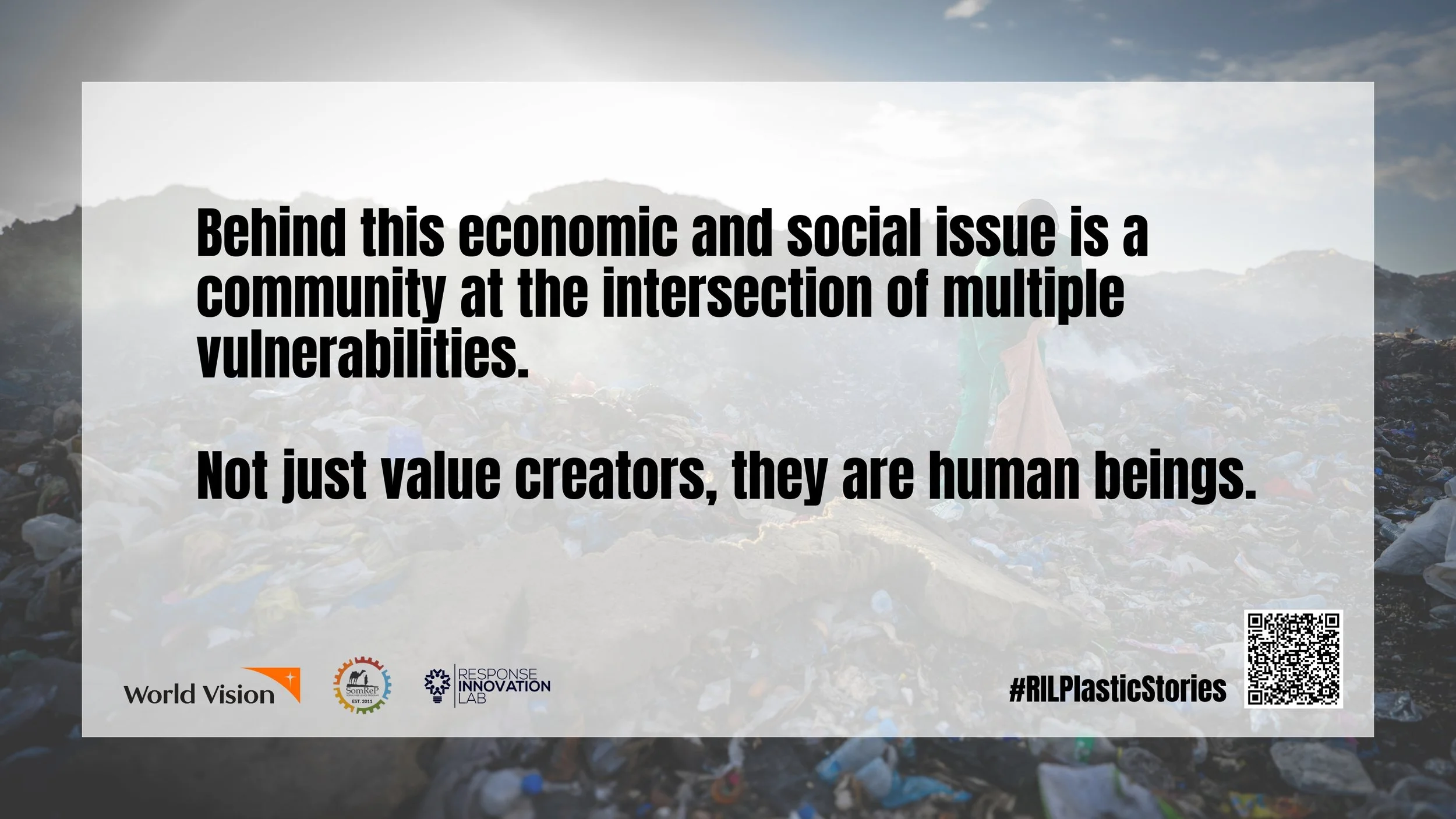
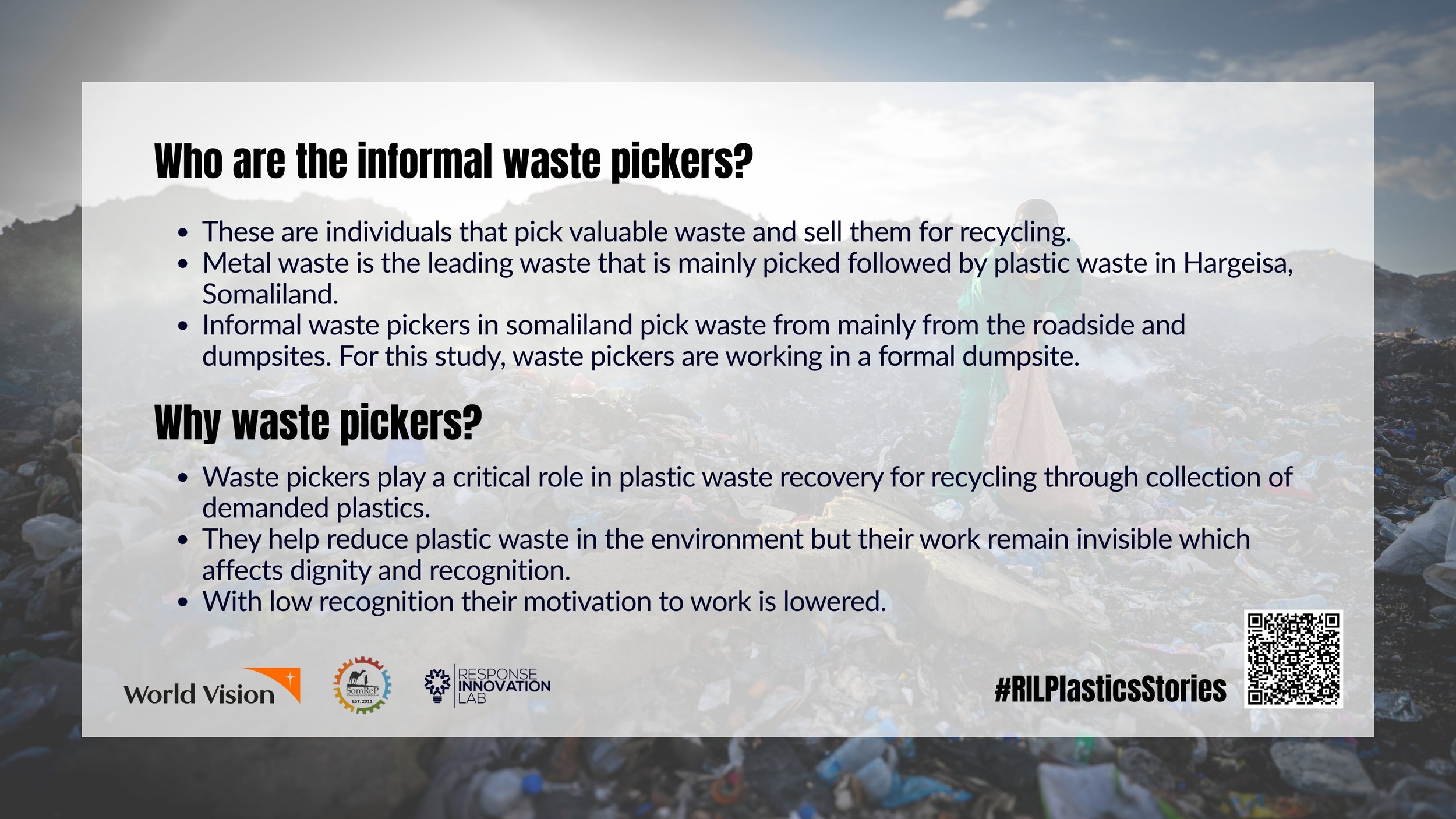
If we are serious about building a dignified and sustainable recycling economy driven by innovative waste management solutions, we must also consider the socio-cultural realities surrounding waste pickers. These actors are critical to plastic recovery, yet they are often vulnerable community members—including women and youth—who remain stigmatized, unsafe, and economically constrained. Their meaningful integration into the value chain through dignified livelihood opportunities requires system-level shifts in awareness, attitudes, norms, and behaviours, all of which we will continue to explore through this communication series.
This insight piece is based on a qualitative study conducted under the Social Plastics for Economic Development in Somalia project, a strategic initiative that seeks to transform the country’s critical plastic waste crisis into a catalyst for sustainable economic growth and livelihood opportunities. The project is implemented in partnership with Engineers Without Borders Norway and World Vision Somalia, and funded by Innovation Norway.