
#RILPlasticsStories in Hargeisa No.3:Reframe the Stories of Waste Pickers
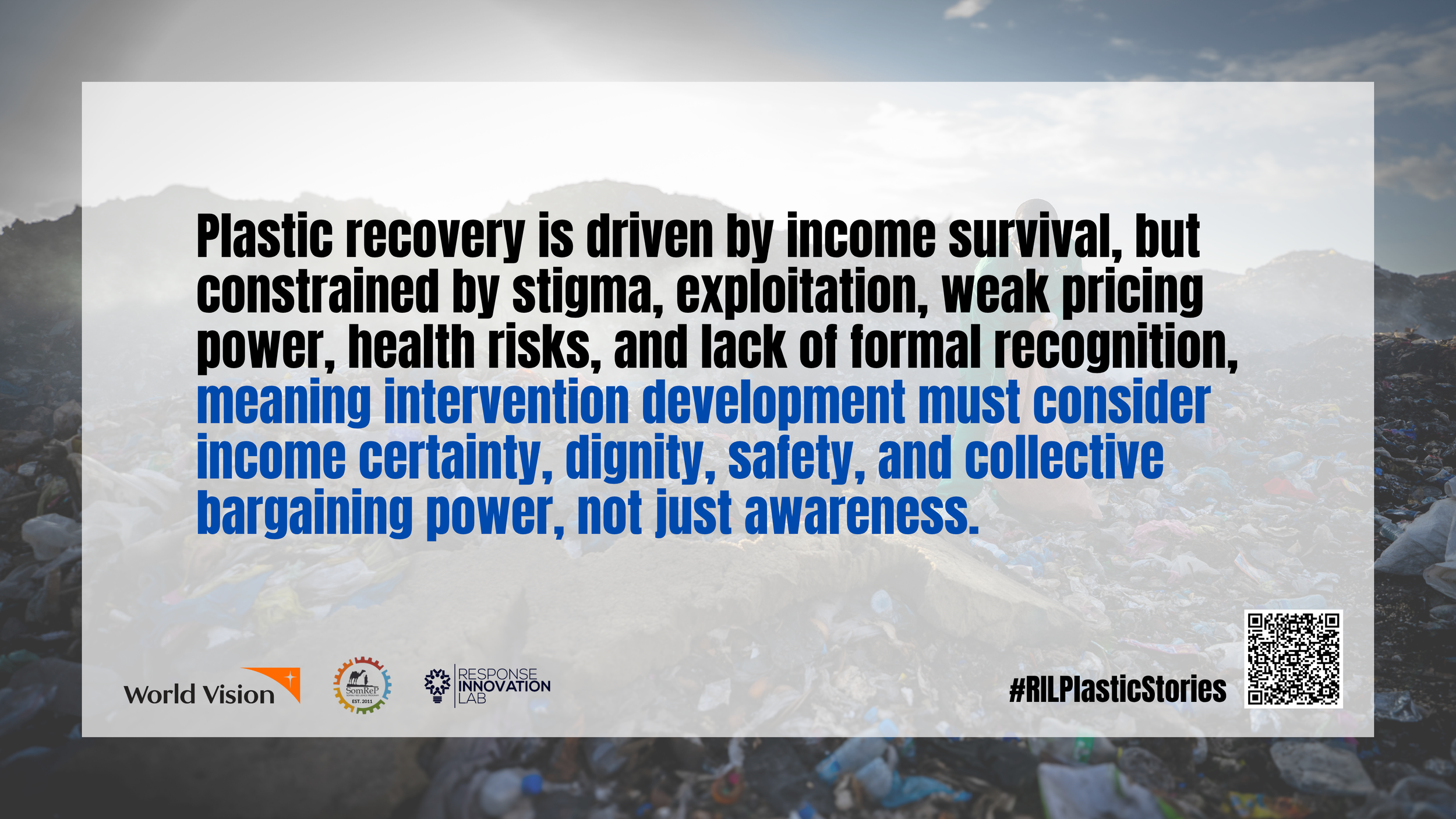
Waste picking is often seen as invisible or “low-status” work, yet it plays a critical role in keeping communities clean and enabling recycling systems to function. Waste pickers contribute directly to environmental protection, public health, and resource recovery, but their work is rarely recognised in ways that reflect its value. Strengthening dignity in waste picking therefore requires more than changing perceptions: it requires greater visibility, collective organisation, protection, and stronger links to economic value.
Making their environmental contribution visible can help shift perceptions of waste picking from “trash work” to essential environmental protection. Highlighting its links to cleaner land, healthier livestock, and improved community health can position waste pickers as contributors to the public good rather than workers at the margins.
Collective organisation can further strengthen recognition and legitimacy. Supporting waste pickers to form groups or associations can build a shared identity, increase collective voice, and reduce individual exposure. Practical measures such as uniforms, protective equipment, and identification cards can reinforce this recognition while improving safety and signalling that the work is valued.
Dignity is also shaped by social and cultural narratives. Framing waste picking as halal income and honest provision can challenge perceptions of shame and reinforce its legitimacy as work that supports families. At the same time, stronger and more consistent demand for recovered materials, such as plastic, can increase the economic value of waste picking and, in turn, strengthen its social recognition.
This insight piece is based on a qualitative study conducted under the Social Plastics for Economic Development in Somalia project, a strategic initiative that seeks to transform the country’s critical plastic waste crisis into a catalyst for sustainable economic growth and livelihood opportunities. The project is implemented in partnership with Engineers Without Borders Norway and World Vision Somalia, and funded by Innovation Norway.