
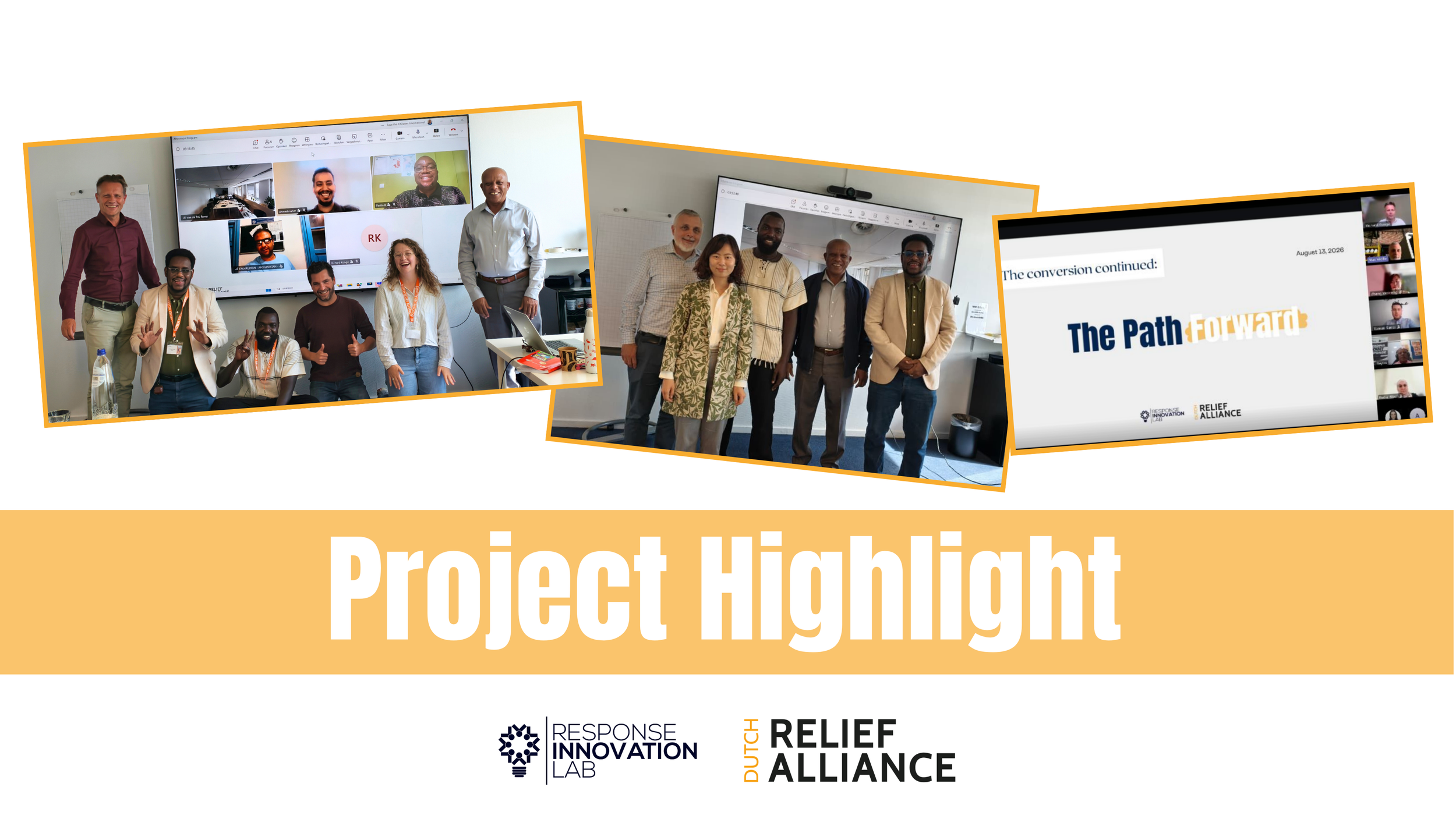
Building Stronger Innovation Ecosystems: RIL’s Support to the Dutch Relief Alliance Joint Responses
“We need to shift from coordination to collaboration.”
“Innovation isn’t a project; it’s a process.”
Check out the highlight and the output from the collaboration between RIL and DRA.
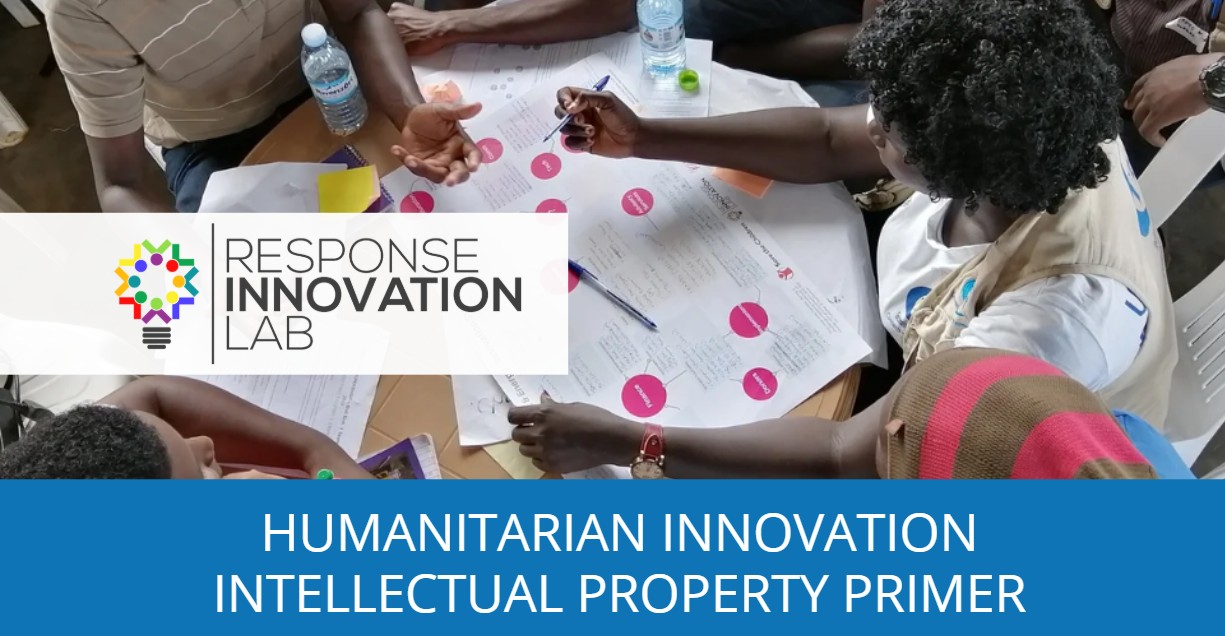
Humanitarian Innovation Intellectual Property Primer
Most innovation projects build partnerships and collaborations during their projects. It is important that when you are working with other individuals or organizations, you know what you are bringing to the collaboration and what you want to protect.
Partner Resource | Global Startup Ecosystem Index 2026 by StartUp Blink
As StartupBlink's Ecosystem Partner in Somalia and recognised as one of the "Notable Startup Ecosystem Builders", Response Innovation Lab remains committed to deepening our collaboration with the private sector and the local innovation community—working together to build a more connected, resilient, and thriving ecosystem.
Now Interactive: MatchMaker Solutions Packs
We just added a new addition to our Open Resources hub: MatchMaker Solutions Packs! Free to access for all, the guidebook helping organisations and networks moving from “we have a challenge” to “here’s what we can test and try”.
Pilot Launch! | InvoLearn: Humanitarian Innovation Fundamentals Training on Telegram
We’re excited to launch InvoLearn, a chat-based learning experience designed to help humanitarian workers build core innovation skills — anytime, anywhere, even with limited connectivity. Developed by SyRIL, InvoLearn offers interactive, self-paced micro-learning grounded in recognized humanitarian innovation frameworks.

Humanitarian System Transformation through Local Humanitarian Leadership Training Series
We have successfully delivered the first round of the training series under the Oxfam Novib program “Humanitarian System Transformation through Local Humanitarian Leadership”! Together, we unpacked the structural challenges around capacity and risk sharing, and explored how innovation can be a practical tool to rethink the way we work — from the ground up.
Learning Session: Understanding Ecosystems in Humanitarian Innovations
What can you learn? A breakdown of ecosystem components and their relevance to innovation in humanitarian settings; Case studies from Syria and Uganda offering real-world examples of ecosystem mapping and engagement; Tools and frameworks from the RIL to help practitioners identify and strengthen key relationships, flows, and enabling conditions in their contexts….and more!

Deep Dive into RIL’s Workshop | Report from NW Syria Challenge Mapping Workshops
Recognising the challenge brought by food insecurity, the Syria Response Innovation Lab (RIL), in collaboration with Field Ready Middle East, World Vision Syria Response (WVSR), and the Food Security Cluster (FS Cluster), organized two back-to-back workshops—one in Gaziantep, Türkiye, and another in Northwest Syria at the RIL. These workshops provided a platform for frontline responders to voice challenges, exchange insights, and collaboratively design solutions, fostering local ownership.

Explained in video: How do we generate & share evidence?
How do we generate and share evidence? Everything explained in one video!

Index Based Livestock Insurance (IBLI)
SomRIL has supported the Somali Livestock Insurance Consortium (SLIC) comprised off the SomReP consortium, ILRI (Internation Livestock Research Institute) and the Federal Government of Somalia, raise awareness across many public and private stakeholders, conduct feasibility studies, support the government for a task-force, and support the development of a Policy Roadmap. We also created an explainer video in English, Somali and Arabic: https://youtu.be/uQhcLojJxjY

Remote-Real Time Water Monitoring
In 2018, the RIL convened the Somali WASH cluster to identify and prioritize needs in this sector. Once of the challenges was around remote water monitoring. The RIL eventually got WV to ‘own’ this challenge, and the RIL helped WV win funding from the Humanitarian Grand Challenges to pilot new water sensors. This pilot is concluding, and the RIL has supported with an evaluation and a case study video: https://youtu.be/8YsRvAzC3Qs
RIL in Review 2021-2022
Our annual review for 2021-2022 is here! Please click on this link for a summary of activities, achievements and notable events from our growing network of field-based innovation platforms.

Supporting Green Innovations through Challenge Funds
In 2020-2021, RIL further supported investment in this field by facilitating the 3rd call of the Dutch Relief Alliance Innovation Fund – allowing an investment of EUR 2 million in locally-led innovative proposals. See more about this locally-driven approach to funding innovation and the great solutions that emerged here.

Case Study: Innovation M&E Toolkit on the Digital Attendance App Education Pilot in Somalia
A short video to showcase RIL’s M&E tool in Somalia gathering evidence around an educational pilot case study of the Digital Attendance Application (DAA) education pilot with World Vision.

Response Innovations for Somalia Emergencies (RISE) Report
The report presents the findings from the RISE innovation ecosystem mapping study which seeks to provide a more comprehensive understanding of the key actors, factors, and relationships within Somalia’s humanitarian innovation sector.

Green Innovation Catalog developed for Uganda
The catalog highlights green innovations in Uganda as compiled for the Green Innovations Prize.

Ethical Standards & Principles
by Response Innovation Lab
The document provides guidance into how Response Innovation lab core staff, members, and partners through its various initiatives adhere to a set of guiding principles, derived by an ecosystem of emerging practice and research.

Mapping EdTech in Uganda
Response Innovation Lab has collaborated with Briter Bridges to visualize the state of educational technology across some of the major African technology ecosystems.