Building Stronger Innovation Ecosystems: RIL’s Support to the Dutch Relief Alliance Joint Responses
“We need to shift from coordination to collaboration.”
“Innovation isn’t a project; it’s a process.”
These reflections from Innovation Focal Points across the Dutch Relief Alliance (DRA)’s Joint Responses captured an important shift in how humanitarian innovation can be understood and supported: from individual projects and activities towards stronger ecosystems, processes, and collaboration.
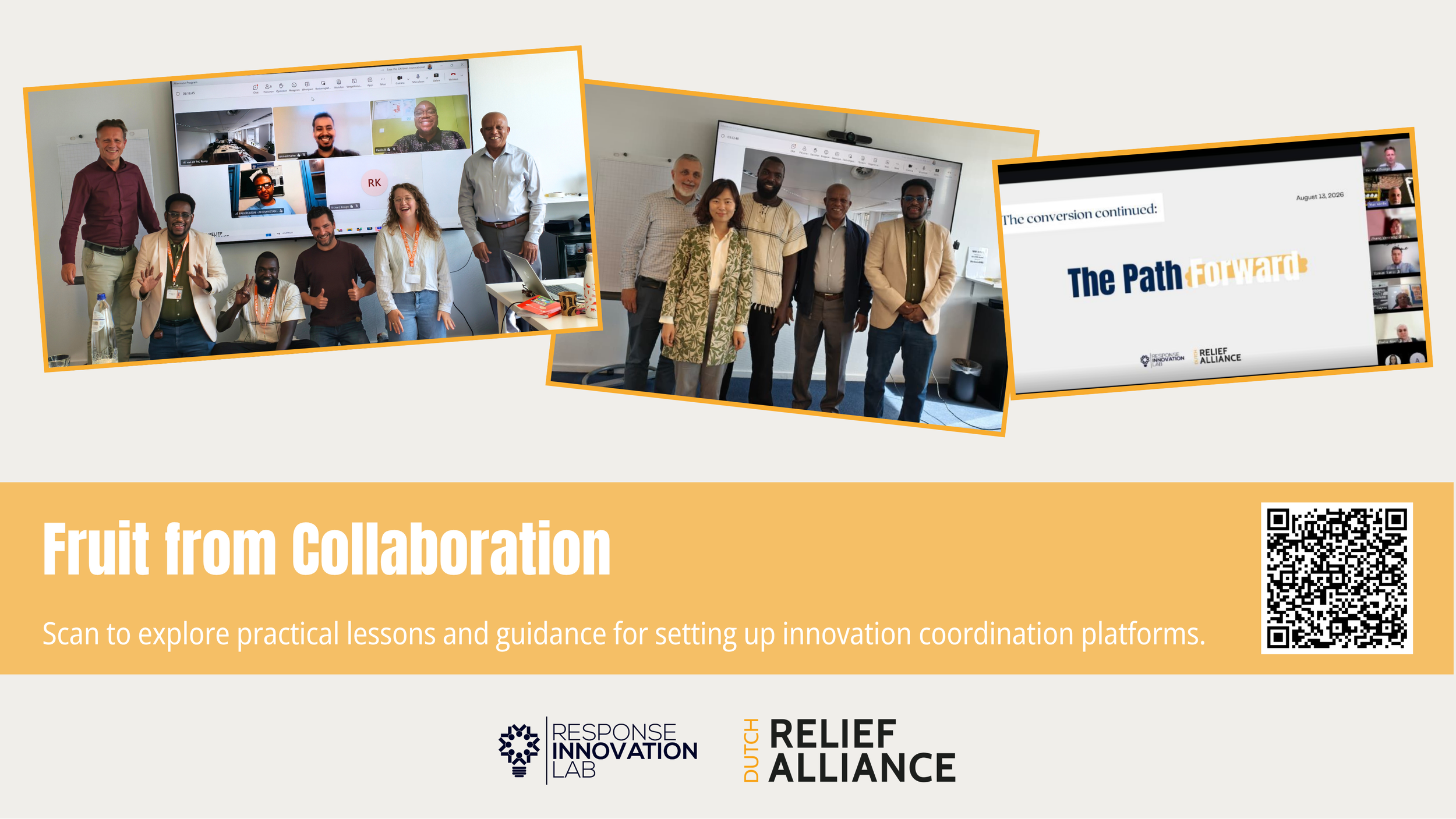
From June to August, as part of an evolving collaboration grounded in DRA and RIL’s shared commitment to localising innovation processes and strengthening response-level ecosystems, RIL delivered a structured package of support to DRA’s Innovation Focal Points. This included a Practical Guide, Learning Days workshop, and follow-up webinar, designed to support reflection on innovation coordination and inform DRA’s next phase of innovation strategy.
The pre-workshop readings and two workshops combined lessons from case studies and real-world experiences with hands-on exercises drawing on scenario planning and foresight. Together, these activities helped participants deepen their understanding of the role of innovation support and coordination within their respective contexts, while creating space for cross-learning and experience sharing across different Joint Responses.
The discussions also surfaced insights for DRA leadership as it seeks to strengthen the role of innovation within its strategic programming and planning. Spanning knowledge management architecture, organisational culture, coordination models, and ecosystem building, RIL drew on its experience as both facilitator and field-based implementer to synthesise practical recommendations, strengthening innovation support and enabling clearer pathways to more catalytic, sustainable impact for affected communities.
Anchored in RIL’s commitment to making innovation support a public good, the collaboration also resulted in an open resource for the wider humanitarian innovation community. The Practical Guide: Setting Up Coordination Platforms for Humanitarian Innovation brings together lessons, archetypes, and practical considerations to help organisations assess what kind of coordination platform their context can support, and provides a starting point for actors seeking to approach innovation support in a more coordinated, structured, and sustainable way.