


Scale-up: Digital Attendance Tracking
In May, 2021, World Vision and Save the Children (which leads the Education Cannot Wait consortium) signed an MOU to collaborate and scale up the Digital Attendance Tracking system across 42 schools across World Vision, Save the Children, Care and Sidra in Puntland.

Index Based Livestock Insurance (IBLI)
SomRIL has supported the Somali Livestock Insurance Consortium (SLIC) comprised off the SomReP consortium, ILRI (Internation Livestock Research Institute) and the Federal Government of Somalia, raise awareness across many public and private stakeholders, conduct feasibility studies, support the government for a task-force, and support the development of a Policy Roadmap. We also created an explainer video in English, Somali and Arabic: https://youtu.be/uQhcLojJxjY

Community-led Capacity Strengthening for Fragile Contexts (C4FC)
In our efforts to support localization efforts, we have the privilege to lead a multi-country and multi-agency cross learning imitative. This project is working with Care Somalia and World Vision Sudan and World Vision South Sudan, 31 LNGOs from across the three countries, and Sadar Institute. The goal is to build the capacity of humanitarian LNGOs so that they are better equipped to respond. This initiative has been developing 10 curriculums that range from Community Driven Resilience, to Early Warning Systems and much more.
Click here to see the video series developed as part of the C4FC project

Convenes – Global Goals Jam (GGJ) & the Mogadishu Tech Summit (MTS)
The SomRIL supported the SIMAD iLab to host the Global Goals Jam in Mogadishu in September, 2021. This event looked to using design thinking to address challenges in Somalia around achieving the SDGs.
In December, 2021, the SomRIL supported iRise as they organized the 3rd Mogadishu Tech Summit. We were able to organize 2 panel discussions. The first was on health innovations, and we facilitated the participation of Khalid, the founder and CEO of OGOW Health, and Sahra, the co-founder and CEO of Hello Caafi. The second was on innovations in the education sector where we facilitated the participation of World Vision, Save the Children, the Puntland MoE and Sisitech, to talk about the importance of public-private partnership and collaboration around the digital attendance pilot.

Sustainable Agricultural Capacity
In 2019, the RIL co-convened an event with the Somali Food Security Cluster to better understand the challenges in the sector. One challenge that emerged was around the sustainability of agriculture capacity in local institutions. The pandemic delayed the progression of this MatchMaker submission, but in 2021 the SomRIL was able to partner with the SomReP consortium, the Federal Ministry of Agriculture and Irrigation, and the Somali National University (SNU). This partnership and pilot is still unfolding, but the intent is for the SomReP to share their climate smart agriculture modules, have them endorsed by the MoAI, and then to develop a curriculum for the SNU to own and to offer to NGOs and others.

Support to Save the Children Sudan and its partners
Over the course of four months, the RIL Central Support Unit worked with the Save the Children Sudan Country Office to help its team and partners apply innovation processes to four challenges that they had identified.

Supporting Green Innovations through Challenge Funds
In 2020-2021, RIL further supported investment in this field by facilitating the 3rd call of the Dutch Relief Alliance Innovation Fund – allowing an investment of EUR 2 million in locally-led innovative proposals. See more about this locally-driven approach to funding innovation and the great solutions that emerged here.

Training to support Innovators on their journey
A tailored curriculum has been developed based on an analysis of capacity gaps and existing other training programmes in Uganda. It has been delivered in partnership with Save the Children, United Social Ventures and the Ministry of Science, Technology and Innovation. - Learn more about innovator trainings here

Local Innovations for Nutrition Solutions (LINS)
With the LINS project, RIL Uganda identified alternative solutions to the traditional distribution of free and imported nutritious foods (corn-soya blend/porridge) through a participative and competitive process.
Learn more about LINS here

Meet the winners of the Nutrition Innovation Challenge Fund
In 2021, LINS issued a call for nutrition innovations/solutions that are locally rooted, market-driven, sustainable, with satisfactory proof of concept, and less dependent on humanitarian aid flows. The call sought to support quality solutions to at least one of the major challenges of malnutrition

Creative Capacity Building in Uganda: Scaling the Impact of Refugee-Led Design Solutions
Participation in the MIT D-Lab’s Co-Creation Summit in Arua, Uganda, which promoted locally designed solutions to energy and livelihoods challenges in refugee settlements.

RIL supports Open Source for Equality Initiative in Uganda
The Open Source for Equality initiative aims to promote the development and use of open source that contributes to the Sustainable Development Goals with a focus on health, education and equality. In this video we get to hear the experience of how five organizations are using open source for their benefit.

SafeBangle Technologies behind the scenes with Response Innovation Lab
Read about the experience from innovator Saul Kabali with Response Innovation Lab developing SafeBangle Technologies for the past two years, a wearable technology for immediate reporting of violence attempts against women and girls.

Leveraging Technology to Improve Women’s Health in Somalia
Hello Caafi! is a groundbreaking telehealths solution from Somalia, designed and led by two remarkable women innovators.

Kampala Impact Day 2021
Learn about the Uganda RIL’s Kampala Impact Day events, and the three innovators nominated by the team.


In honor of World Refugee Day, check out these innovations...
Our labs are supporting several innovations that directly benefit refugee populations, learn more about these innovators and their pursuit to support their communities and others.
South Sudan: Adapting Innovations for Impact
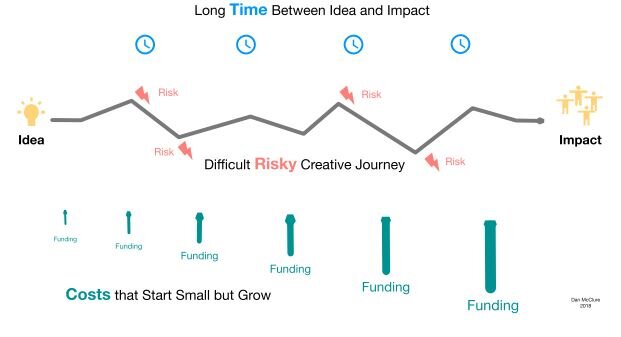
The case for innovation in the Humanitarian sector is well known, as is the importance of investing in new innovations and the need to adapt and adopt innovations that already exist to make wide-ranging improvements in people's lives. For a long-time, the focus of many humanitarian donors and organisations has been on creating new innovations in the hope of making significant change across the sector. This is an incredibly important focus, and area resources need to be allocated too. However, just as important, donors and organisations need to focus on the adoption of innovations that already work to create a significant change with people affected by the crisis.
