
Organizing the Mess: System Innovation in Fragile and Resource-Constrained Contexts
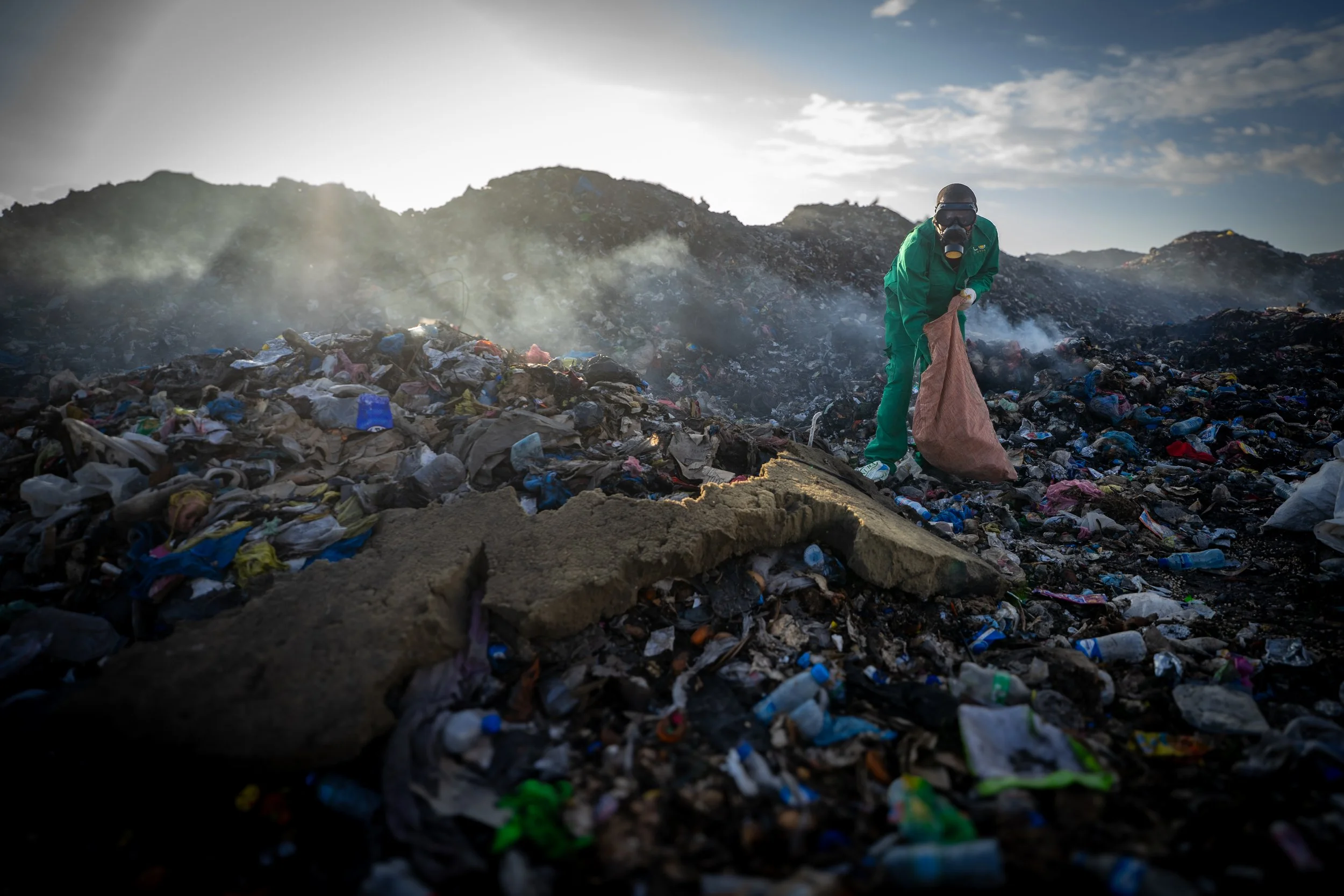
In many development and innovation spaces, innovation is often imagined as something sleek, structured, and highly technological. It is presented through polished prototypes, sophisticated systems, and “disruptive” solutions designed to replace broken systems with better ones. But in fragile contexts, systems rarely function in clean and predictable ways. They are informal, fragmented, improvised, and constantly adapting to instability.
In places like Somalia and Somaliland, people do not wait for perfect systems to emerge before surviving. They build livelihoods, relationships, markets, and entire economies within the cracks of broken systems.
Informality becomes infrastructure. Messiness becomes survival.
“Informality becomes infrastructure. Messiness becomes survival.”
This is often where conventional innovation approaches fail. They attempt to impose rigid formal structures onto ecosystems that operate through fluidity, negotiation, and adaptation. In the process, they overlook the very actors, practices, and informal systems already holding society together.
The Social Plastic for Economic Development pilot project, led by Somali Response Innovation Lab (SomRIL) in partnership with Engineers Without Borders Norway (EWB Norway) and funded by Innovation Norway, took a different approach. Rather than trying to erase the messiness of the plastic waste ecosystem in Hargeisa, the project asked a different question:
What if innovation in fragile contexts is not about eliminating messy systems, but organizing them to create more value, dignity, resilience, and opportunity?
The answer did not emerge from technology alone. It emerged from deeply engaging with the system as it already exists: informal waste pickers, fragmented recycling chains, local workshops, manufacturers, spare-part markets, humanitarian actors, and communities navigating a city increasingly overwhelmed by plastic waste.
In Hargeisa, plastic waste is everywhere. It gathers along roadsides, accumulates in informal dumpsites, clogs drainage systems, and burns in open spaces on the outskirts of the city. Mountains of mixed waste such as plastic bags, bottles, packaging, and household refuse are often set alight as one of the few available disposal mechanisms, releasing toxic fumes into nearby communities. Livestock feed on scattered plastic waste. During rainy seasons, blocked drainage systems worsen flooding and environmental contamination. But the plastic waste problem was never only environmental. It was also economic, social, institutional, and deeply human.
Beneath the visible waste crisis exists an “invisible” workforce of informal waste pickers who navigated dumpsites and streets every day collecting recyclable plastics by hand. Many worked without gloves, masks, boots, or protective clothing. Some faced attacks from stray dogs while collecting waste at dumping areas; others endured social stigma from communities who viewed them as thieves, mentally unstable individuals, or social outcasts rather than workers creating environmental and economic value.
Yet despite their marginalization, these informal waste pickers were already sustaining the early foundations of a circular economy. They were the ones separating plastic from mixed waste streams, recovering materials, and feeding recyclable plastics into local markets long before formal recycling conversations began.
For SomRIL, understanding this reality became central to the project’s systems innovation approach. It recognized early that the plastic waste challenge could not be addressed through isolated technical interventions or by building parallel systems detached from local realities. The ecosystem itself first needed to be understood.
The project therefore began not with machinery or infrastructure, but with ecosystem mapping.
Through a series of ecosystem engagements, design-thinking convenings, and collaborative dialogues, SomRIL and its partners brought together actors who rarely occupied the same room: waste pickers, private sector recyclers, manufacturers, local workshops, humanitarian actors, entrepreneurs, engineers, and community stakeholders. The objective was not simply consultation: it was to unpack how the ecosystem actually functioned where value flowed, where it broke down, who held influence, who remained excluded, and where opportunities for intervention existed.
What emerged was a picture of a highly fragmented but deeply interconnected system.
Plastic waste moved through invisible networks of informal collectors, middlemen, recyclers, transporters, aggregators, workshops, and manufacturers. Decisions made by humanitarian agencies affected waste generation volumes. The absence of formal waste systems created opportunities for informal livelihoods. Import dependency on virgin plastic affected local manufacturing economics. Technical limitations influenced the scalability of recycling operations. Even spare-part availability in local markets shaped what kinds of recycling technologies could realistically function in Somaliland.
This system perspective fundamentally changed how solutions were approached.
Instead of designing idealized interventions disconnected from local realities, the project focused on strengthening and organizing relationships already present within the ecosystem.
One important example was the project’s engagement with local private sector innovators. Through innovation-friendly procurement approaches, including open market dialogues facilitated by SomRIL & EWB Norway, ecosystem actors and solution providers were engaged early to ensure market realities informed the design of the innovation challenge itself. Rather than prescribing predetermined solutions, the process allowed innovators to shape the direction of the pilot based on operational realities, technical feasibility, and local constraints.
Through this process, two local innovators, Eco Plastic and Tayo Plastic, emerged as strategic partners.
What made their involvement particularly important was that both companies were already embedded within the system itself. They understood its constraints not theoretically, but through lived operational experience.
Tayo Plastic approached the challenge upstream. As a local major manufacturer, the company began integrating recycled plastic materials into its production processes, reducing dependence on imported virgin plastic while creating market demand for locally recovered plastic waste.
Eco Plastic operated downstream, focusing on transforming collected plastic waste into reusable products such as pavement tiles and construction materials.
Individually, each company addressed different dimensions of the problem. Together, they created a connected circular loop within the ecosystem. Tayo Plastic reduced the need for new plastic production at the source, while Eco Plastic extended the lifecycle of discarded plastic already circulating in the environment. One reduced future waste generation; the other recovered value from existing waste streams.
But the deeper innovation was not the recycling itself.
It was the re-organization of relationships, incentives, and value flows across the ecosystem.
The project understood that building recycling facilities alone would not fundamentally transform the system. Plastic waste would continue to hold low value unless social perceptions, labor conditions, market incentives, and institutional relationships also changed.
This became particularly evident in the project’s work with informal waste pickers.
Rather than treating waste pickers as passive beneficiaries, the project positioned them as essential economic actors within the recycling ecosystem. Through partnerships facilitated by SomRIL between the waste pickers and the two private sector companies, many informal collectors were able to transition into more stable and dignified working arrangements. They received personal protective equipment, hygiene and safety training, technical guidance on plastic sorting and material types, and stronger market linkages with buyers.
The impact of this bundled support extended far beyond income alone.
As working conditions improved, perceptions around waste collection slowly began shifting. The sector became safer, more organized, and increasingly recognized as legitimate economic activity rather than socially inferior labor. Younger individuals and more skilled workers began showing interest in participating in the recycling value chain. Informal waste pickers who once operated invisibly within dangerous environments increasingly became recognized contributors to environmental recovery and local economic activity.
Another critical dimension of the project was localization.
At the start of the pilot, technical and business assessments were conducted jointly by SomRIL and EWB Norway to evaluate the feasibility, viability, and sustainability of the proposed innovations within Somaliland’s fragile operating environment. These assessments did not only examine whether technologies could function technically. They examined whether they could survive institutionally, economically, and operationally within local realities.
This became particularly important when Eco Plastic initially proposed importing recycling machinery from abroad.
On paper, imported machinery appeared more advanced and efficient. But deeper systems assessments revealed serious long-term risks. Somaliland’s weak supply chains, limited technical maintenance ecosystems, scarcity of specialized spare parts, and high dependency on external expertise meant that imported technologies could easily become non-functional once breakdowns occurred.
Instead of importing complex machinery, the project pursued local fabrication. This decision transformed the innovation process itself into a deeply immersive and collaborative exercise. Engineers from EWB Norway worked alongside local workshops, innovators, welders, technicians, waste pickers, and market actors to iteratively design, fabricate, test, redesign, and operationalize the machinery within local constraints.
Local workshops mapped the availability of materials and spare parts already existing within Hargeisa’s markets. Designs were repeatedly adjusted based on operational testing and user feedback. Failures during fabrication and testing were not treated as setbacks, but as learning opportunities that refined the machines further. The process prioritized maintainability, adaptability, and local ownership over technological sophistication alone.
Importantly, the process also created two-way knowledge transfer.
While Engineers Without Borders Norway and SomRIL contributed engineering expertise and systems-thinking approaches, local actors contributed contextual intelligence that external actors could never fully possess: how local markets functioned, where materials could realistically be sourced, how machines would likely fail under local conditions, what users actually needed, and what business realities innovators faced daily.
The resulting solutions were therefore not merely technically functional. They were socially embedded within the ecosystem itself.
The project also expanded its systems lens beyond the recycling sector into the humanitarian ecosystem. Humanitarian operations across fragile contexts generate substantial plastic waste through packaging materials, food assistance distribution, water containers, and logistical supplies. Yet such waste is often treated solely as a disposal burden rather than a recoverable economic resource.
SomRIL and its partners began exploring how humanitarian waste streams could become inputs within local circular economy systems. By connecting innovators such as Eco Plastic and Tayo Plastic with humanitarian actors including World Food Programme, the project opened conversations around responsible plastic waste recovery, localized recycling partnerships, and environmentally sustainable humanitarian operations.
This reframed plastic waste not as something to be discarded, but as an economic resource capable of generating livelihoods, supporting local enterprise ecosystems, and reducing environmental harm simultaneously.
Ultimately, the Social Plastic for Economic Development pilot demonstrates that system innovation in fragile contexts rarely emerges through clean, linear, or perfectly structured processes. It emerges through adaptation, negotiation, experimentation, and learning within systems that are already informal and complex.
In fragile contexts, innovation is not about replacing messy systems with ideal ones. More often, it is about recognizing that within the mess already exist people, relationships, knowledge systems, survival mechanisms, and forms of value that can be organized into something more resilient, dignified, and sustainable.
The challenge is not to remove the messiness.
The challenge—and the solution—is learning how to work with it.
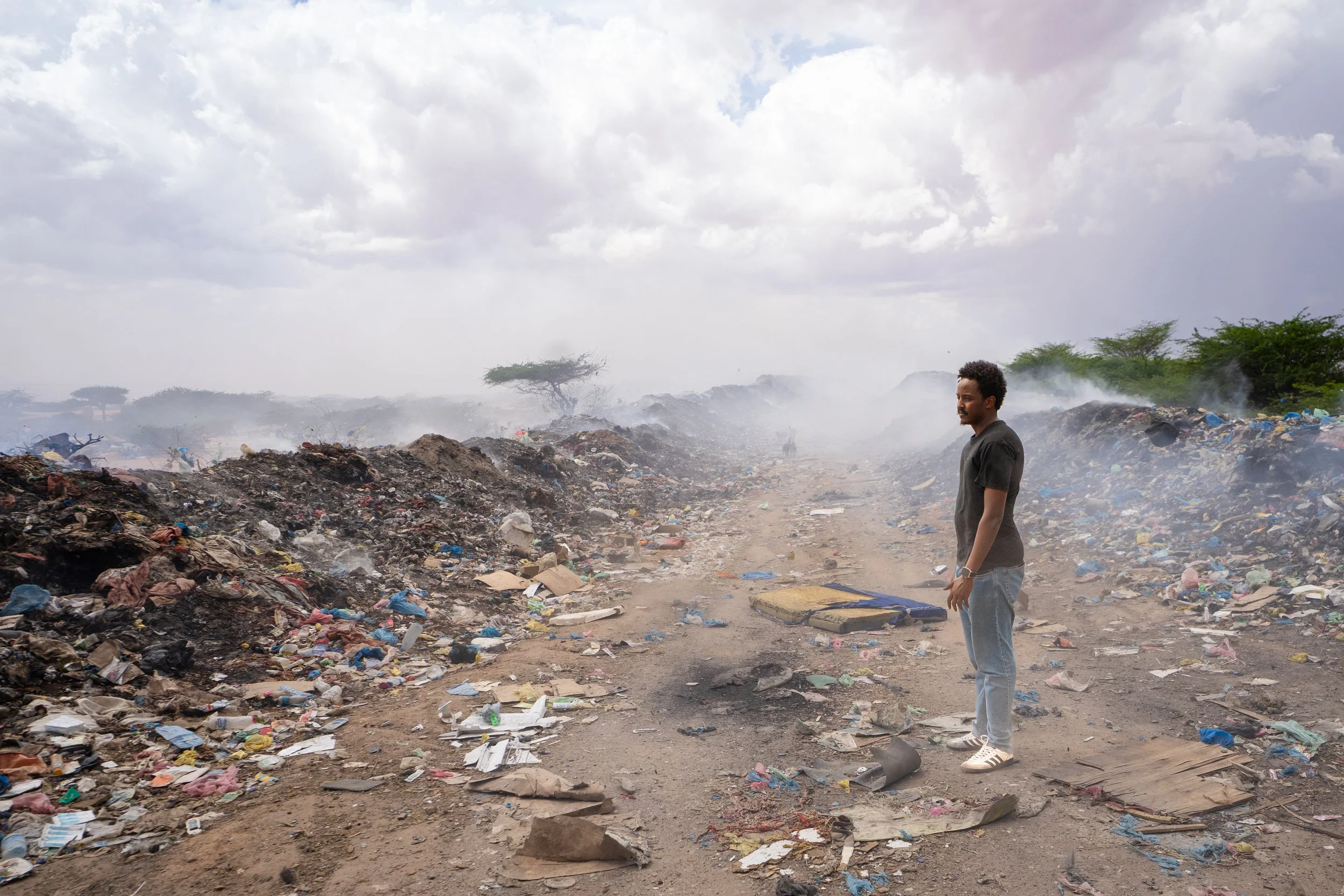
This thought piece is authored by Liban Mohamed, the Somali Response Innovation Lab Manager.
Get in touch: liban_maxamed@wvi.org