
#RILPlasticsStories in Hargeisa No.6: The Collective Power to Better Plastic Waste Management
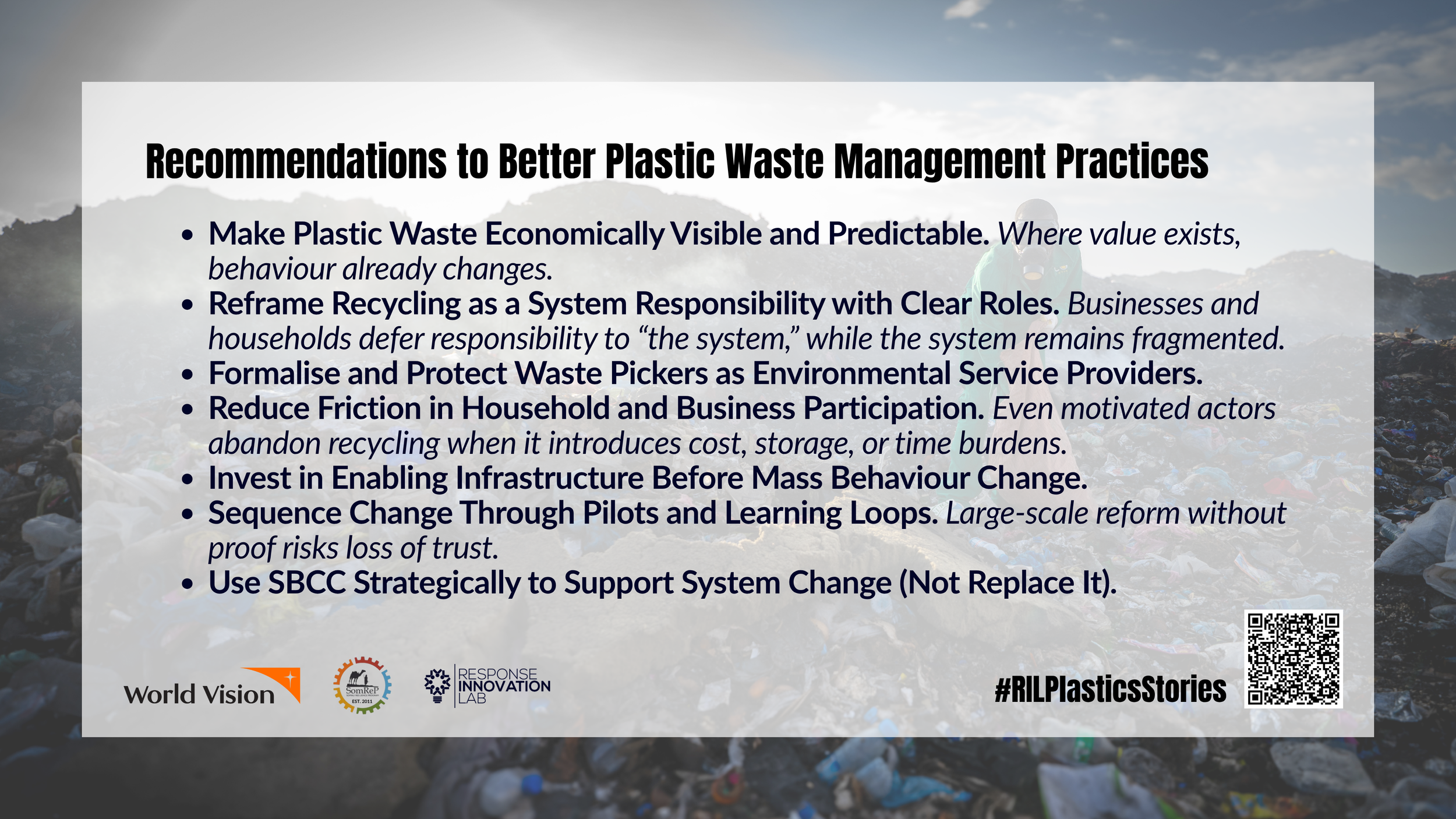
Plastic waste management in Hargeisa is not only about awareness — it is about how the system is designed. Today, plastic is still widely treated as having no value once discarded, which makes disposal the default behaviour. To change this, plastic needs to become economically visible and predictable, with clear buying mechanisms, nearby collection points, and simple systems that make sorting and handover easy. When value is clear and participation is convenient, behaviour naturally shifts from disposal to recovery.
At the same time, recycling only works when roles, responsibilities, and infrastructure are aligned. Fragmented systems and unclear ownership reduce accountability, while practical barriers like time, cost, and complexity discourage participation even among motivated actors. Strengthening coordination across stakeholders, reducing friction in everyday practices, and investing in visible, reliable infrastructure can help turn recycling from an idea into a routine part of daily life.
This insight piece is based on a qualitative study conducted under the Social Plastics for Economic Development in Somalia project, a strategic initiative that seeks to transform the country’s critical plastic waste crisis into a catalyst for sustainable economic growth and livelihood opportunities. The project is implemented in partnership with Engineers Without Borders Norway and World Vision Somalia, and funded by Innovation Norway.