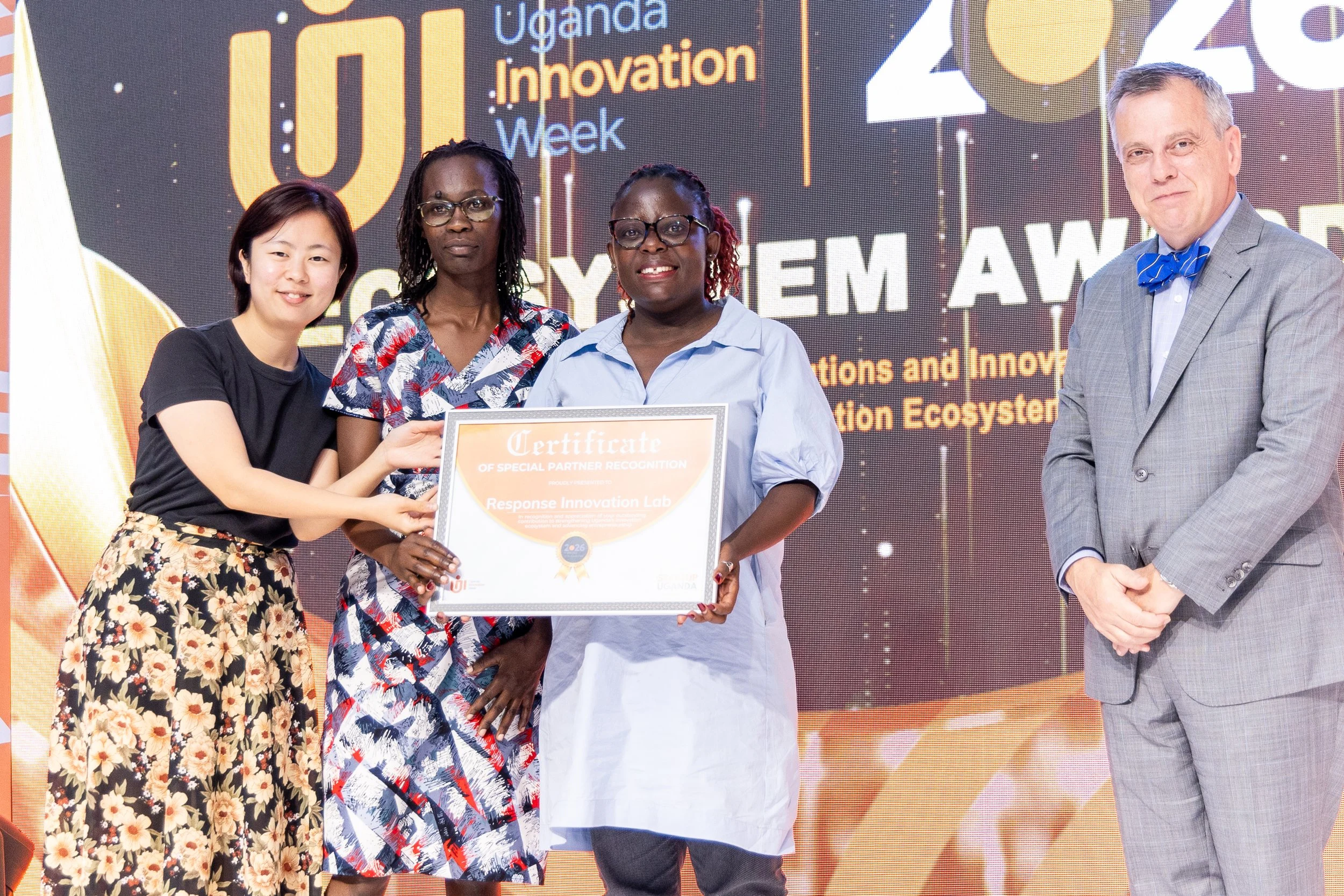
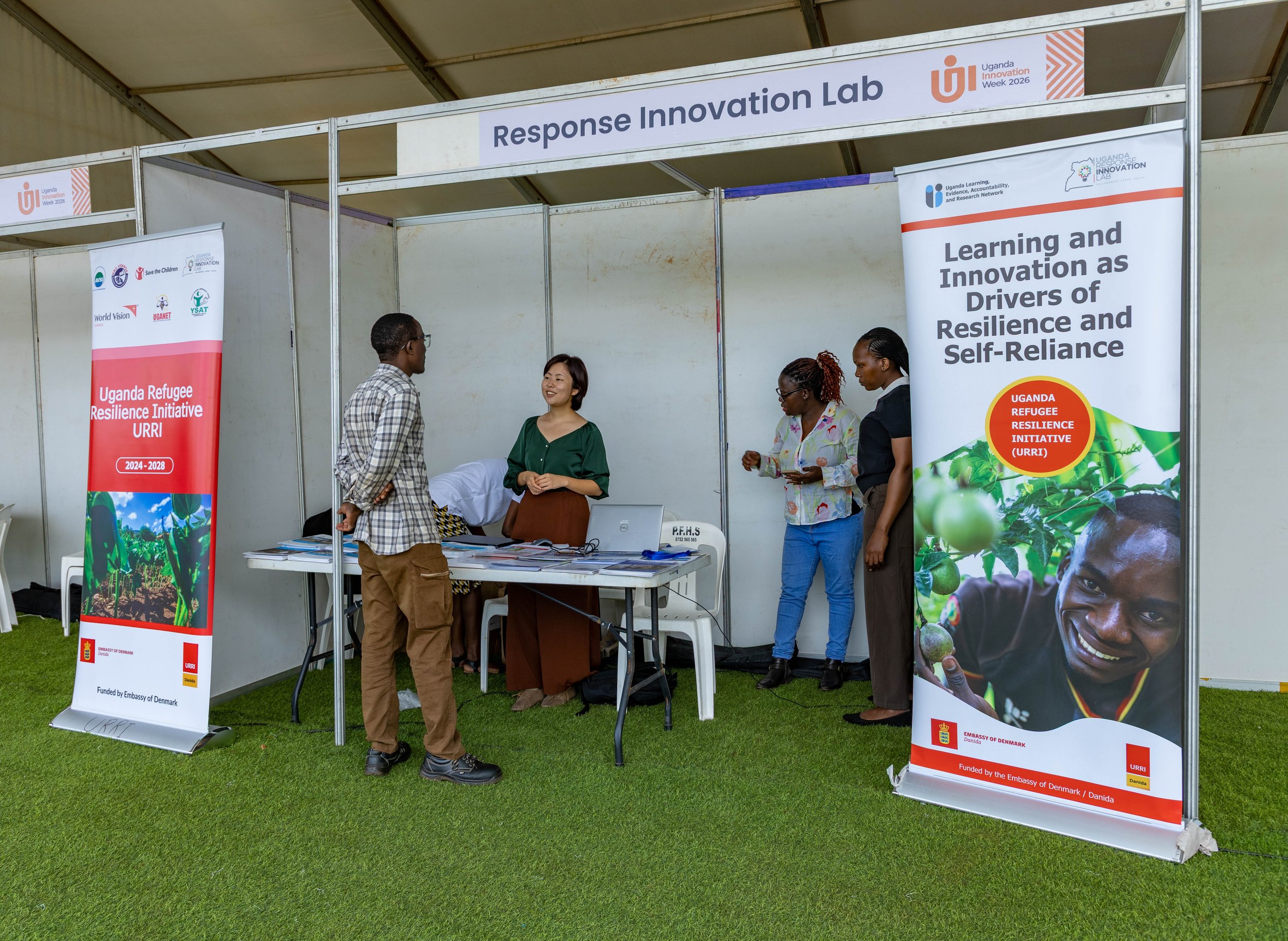
From 9–13 November 2026, Response Innovation Lab (RIL) joined Uganda's wider innovation community at Uganda Innovation Week (UIW) 2026, contributing to conversations on how innovation can address complex challenges and how ecosystems can better support solutions to emerge, connect and grow.
As a partner of this year's programme, the Uganda Response Innovation Lab (U-RIL) helped bring humanitarian perspectives into a broader conversation involving innovators, practitioners, financial institutions, policymakers, researchers and other ecosystem actors. The engagement formed part of the RILx26 Prelude, setting the stage for further exchanges on innovative financing and financing innovations ahead of the RILx26 Capstone in Kigali.
Across the week, RIL's engagement spanned refugee economic inclusion, digital financial services, climate finance and emerging technologies. While each conversation approached a different challenge, they shared a common interest: understanding what it takes to connect locally relevant solutions with the resources, relationships and enabling conditions needed to sustain them.
From settlements to markets: Rethinking refugee economic participation
Refugees are often approached primarily through the lens of humanitarian assistance. Yet refugee-hosting contexts are also home to economic activity, entrepreneurial potential, skills and market opportunities that are not always adequately recognised or supported.
The session From Settlements to Markets: Uganda's Refugee Economy as an Innovation Frontier explored how refugee and host communities can participate more meaningfully in local economies. Discussions considered the role of market linkages, locally led initiatives and inclusive approaches in creating opportunities for economic participation beyond traditional assistance models.
The conversation highlighted the importance of looking beyond individual enterprises or livelihood interventions to understand the wider market systems in which they operate. For refugee-led and community-based enterprises to thrive, they need more than promising ideas: they also need access to markets, appropriate financial services, supportive policies and connections with other actors across the ecosystem.
Digital financial services: Opportunities and realities in humanitarian contexts
Digital financial services are increasingly shaping how humanitarian assistance is delivered and how individuals participate in formal and informal economies. However, the availability of digital solutions does not automatically translate into meaningful financial inclusion.
Through The Digital Money Revolution: Opportunities and Risks for Humanitarian Financing, RIL brought together perspectives on the opportunities and practical challenges associated with mobile money and digital cash assistance, particularly in refugee contexts.
The discussion explored the conditions required for digital financial services to work effectively for the communities they intend to serve. Trust, accessibility, financial literacy and communication in local languages remain important considerations. Without these foundations, the shift towards digital payments risks creating new barriers for people who are already underserved by existing financial systems.
The conversation reinforced the need to consider financial inclusion as more than access to a payment channel. It requires an understanding of how people interact with financial services, the constraints they face and the support needed to participate in an increasingly digital economy.
Connecting climate finance with humanitarian action
As climate-related vulnerabilities increasingly intersect with displacement and protracted humanitarian needs, the boundaries between climate action and humanitarian response are becoming harder to separate. Yet the financing ecosystems supporting these areas do not always connect effectively.
The session Climate Finance Meets Humanitarian Action: Opportunities, Overlaps and Entry Points explored opportunities to bridge these two areas, with particular attention to the financing needs of refugees and climate-vulnerable communities.
Discussions considered how financial institutions, humanitarian organisations and other ecosystem actors can work together to improve access to climate finance and make financing mechanisms more responsive to local realities.
A central challenge is ensuring that available financing reaches the communities, enterprises and initiatives best positioned to respond to local climate risks. This requires not only identifying appropriate financial instruments, but also strengthening the intermediaries, partnerships and capacities that can connect funding with demand on the ground.
Exploring emerging solutions: AI for public health
Beyond the financing conversations, RIL's engagement also created space to recognise emerging innovations and locally developed solutions.
The Uganda Young Creator Challenge: AI for Public Health, featured in the Tech Experience Zone, provided an opportunity to showcase ideas exploring the potential of artificial intelligence to address public health challenges.
Such initiatives offer an important reminder that innovation is not confined to established organisations or technology hubs. Young creators and local innovators can contribute valuable perspectives and approaches, particularly when they are connected to a clearer understanding of community needs and the wider systems in which their solutions may be applied.
A decade of ecosystem building: Lessons from humanitarian innovation
Drawing on RIL's experience of humanitarian innovation ecosystem building across different contexts, From a Decade of Humanitarian Innovation Ecosystem Building: What Refugee Response Teaches Us About Building for Africa offered an opportunity to reflect on what it takes to strengthen innovation ecosystems over time.
Humanitarian contexts often bring together complex needs, constrained resources and multiple actors working across institutional boundaries. They also offer important lessons on the value of locally grounded approaches, cross-sector collaboration and collective problem-solving.
Building an innovation ecosystem is not simply about generating more ideas or supporting individual innovators. It involves understanding existing capacities and gaps, facilitating connections between actors, enabling knowledge exchange and creating opportunities for solutions to respond to clearly articulated demand.
This perspective is particularly relevant across African innovation ecosystems, where local knowledge, entrepreneurial capabilities and institutional resources already exist but do not always connect in ways that enable solutions to develop and reach those who need them.
Continuing the conversation: Funding the future of innovation
RIL's engagement at Uganda Innovation Week reflected a broader ambition to connect humanitarian innovation with wider development, financing and innovation ecosystems.
Across the different sessions, a recurring theme emerged: solutions cannot be sustained through innovation efforts alone. They depend on the wider ecosystem around them, including access to appropriate financing, enabling policies, market opportunities, institutional partnerships and the participation of affected communities.
These conversations also connect directly with the overarching theme of RILx26, "Funding the Future: Innovative Financing and Financing Innovations". As part of this year's Prelude and leading into the invitation-only Capstone in Kigali, they helped bring practical experiences and different ecosystem perspectives into a shared conversation about how innovation can be financed throughout its lifecycle, and how emerging financing mechanisms can better serve locally relevant solutions.
RIL extends its appreciation to U-Learn Uganda, the Uganda Innovation Week organising team, speakers, panellists, partners and participants who contributed their knowledge and experiences throughout the week.
The conversations initiated at Uganda Innovation Week are part of an ongoing process of learning, connecting and strengthening the ecosystems that enable innovation to respond to real needs and create lasting value.
Because building innovation ecosystems is not about building in isolation. It is about connecting what already exists, addressing what is missing and creating the conditions for solutions to thrive.
The conversations continue.