
Seeds of Innovation: Unpacking What It Takes to Move Agricultural Ideas into Action
Seeds of Innovation: Unpacking What It Takes to Move Agricultural Ideas into Action
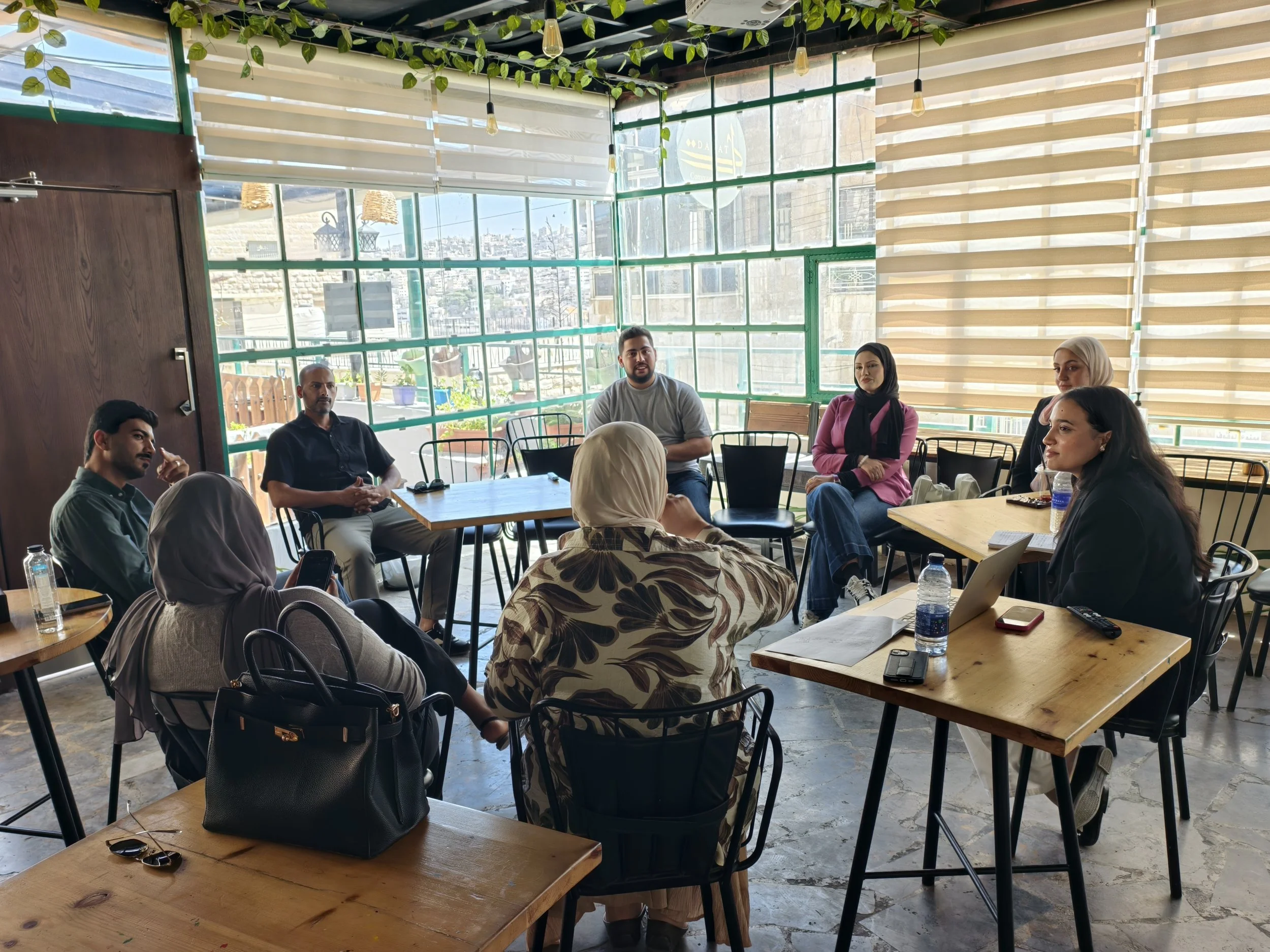
On 17 September in Amman, we hosted a special edition of our Thoughtcast series, Seeds of Innovation, bringing together different actors from Jordan’s agricultural innovation ecosystem to explore a question at the heart of agricultural innovation:
What’s getting in the way of turning an idea into a working solution?
The conversation brought together agricultural innovators alongside organisations and individuals working to support, finance, connect, incubate, and enable innovation, bringing perspectives from technical and agricultural actors, supporting organisations, and other ecosystem players.
Rather than focusing only on the challenges faced by individual innovators, the discussion explored the wider ecosystem around an innovation: how people find each other, how knowledge moves, how support is accessed, and what enables an idea to move from development to adoption.
The ecosystem is there, but connections are not always visible
One of the strongest themes emerging from the conversation was not a lack of actors, but the difficulty of finding and connecting with the right ones.
Innovators may need access to technical expertise, potential partners, funders, users, institutions, or markets, while supporting organisations need to understand where their support can add value. Yet these connections are not always easy to navigate. Different actors may be working on related challenges without knowing who else is working on them, what expertise exists, or which organisation is best placed to help.
This creates a gap that goes beyond networking. It is a gap in visibility and understanding across the ecosystem.
The same challenge applies to expertise. Universities, researchers, technical experts, and other knowledge holders may have relevant experience, but innovators do not always know where that expertise sits or how to access it. Strengthening these connections could create more practical pathways between research, technical knowledge, and innovation in practice.
Knowledge exists, but is not always shared
A connected ecosystem also depends on its ability to remember and learn.
The conversation raised a fundamental question: Who has already tried what? Who supported or funded it? What happened afterwards? What worked, what did not, and why?
When experiences remain scattered across individual organisations and initiatives, each new innovator risks having to navigate the same questions from the beginning. The challenge is therefore not only creating new knowledge, but making the knowledge that already exists visible, accessible, and useful.
This includes data and numbers that can help actors understand the agricultural innovation landscape, as well as practical documentation of initiatives, outcomes, successes, and failures. Stronger mechanisms for capturing and sharing this information could allow the ecosystem to build on previous experience rather than repeatedly starting from scratch.
From ideas to adoption
Even when an innovation is technically developed, another question remains: will people use it?
Moving from an idea to adoption requires opportunities to test, adapt, and understand the context in which a solution will be used. For agricultural innovators, this can mean building relationships with farmers and other users, as well as with partners, buyers, distributors, and markets.
Market access is therefore only one part of the challenge. Innovation also requires proximity to users and the ability to learn from them. Testing assumptions in practice can help innovators understand what needs to change before a solution can become useful and sustainable.
Support that fits the innovation journey
The discussion also highlighted that support needs to reflect the realities of innovation.
Funding was one example. The challenge is not simply whether funding exists, but whether the type, requirements, and structure of available funding fit the different stages and realities of agricultural innovation. Application processes, documentation, and other requirements can be difficult for emerging initiatives to navigate.
At the same time, there can be a gap between what funders and supporting organisations need to understand and what innovators communicate about their work. This points to a need for better mutual understanding: innovators need clearer ways to navigate support mechanisms, while funders and support organisations need to remain connected to the realities, needs, and stages of the initiatives they support.
The same principle applies to technical and institutional support: what is useful at the idea stage may not be what an innovation needs when testing, scaling, or entering a market.
Lastly, an innovation does not develop in isolation. Regulation, licensing, institutional requirements, and the broader policy environment can all influence whether an idea can move forward.
From fragmented experiences to an ecosystem embracing and rewarding learning
Many of the challenges facing agricultural innovators are not isolated individual problems. They reflect how the wider ecosystem connects people, shares knowledge, provides support, and learns from experience.
A more useful ecosystem would not simply bring more actors into the same room. It would help them find each other, understand each other, and build on what already exists.
That could mean clearer visibility of who is doing what, stronger links between innovators and expertise, better documentation of initiatives and their outcomes, more accessible information on funding and support, and practical mechanisms for sharing both successes and failures.
Collectively, we need to build an ecosystem that does not just support innovation, but learns from it and shares the learnings across it to create more enabling conditions for innovations to take root and thrive.