
Get ready for Kigali!
Things you need to know to plan your participation at the RILx26 Capstone.
Location:
Norrsken House Kigali, 1 KN 78 St, Kigali, Rwanda
Essential Information
The following information is adapted from the “Pre-departure Information and Personal Safety and Security Guidance for Visitors" by Save the Children Rwanda Country Office.
-
To ensure that travelers have up to date information regarding immunizations before travelling, it is required that all travelers check on this before departure: click on https://wwwnc.cdc.gov/travel/destinations/list/ and then on the country you are visiting. This website includes information for pregnant women and a World Map to identify areas of Zika risk, which can cause serious birth defects (https://www.cdc.gov/zika/) Pregnant women should consider seeking medical advice before travel.
All visitors to Rwanda are required to possess a valid vaccination certificate against yellow fever, except for children under one year of age. For information on vaccinations necessary before travelling to Rwanda, follow this link bellow: https://www.rbc.gov.rw/fileadmin/user_upload/Public_Notice_on_Yellow_Fever_Prevention.pdf.
-
Rwanda is in the Low Threat Category. Government of Rwanda is managing pretty well the security of the country. Generally, Rwanda remains a very safe country to visit, and Kigali is one of the safest capitals in the world.
Fire incidents: Rwanda experiences building fires due to default electrical installation and inappropriate construction materials, but this has been addressed by the National Rwandan Police and the construction industry bodies for actions.
Crime: They are minimal theft in Kigali city and other outside cities so staff and Visitors to Rwanda are advised to take personal responsibility for their own security by being vigilant and taking common sense precautions.
Pickpocketing in crowded public places is common, as is a minor theft from cars, hotel rooms, and public places.
Thefts of portable/mobile and computing devices are common.
Police check points: Sometimes it is possible to encounter police or military check points. You need to be polite, cooperative and follow given instructions.
Generally, visitors should take normal precautions:
• Don’t carry large amounts of money with you, leave valuable items with the hotel reception or ask to have a safe in your room. Keep your handbag, wallet and cash close at hand in crowded places.
• Walk purposefully and be cautious about sudden introductions or other orchestrated diversions in the street.
• Avoid crowded places such bus terminals and parks, bars, etc. during rush hours and when it gets dark
• Avoid small and/or big groups such as meetings in unprotected/unsafe places mostly on the roadsides, tax/bus parks, roadside bars, etc.
• No smoking in public
-
Recognition of traditional courtesies is important. Rwandans tend to be conservative at home. A handshake greeting is normal or a cheek-peck, with a pleasant discussion on personal matters before getting down to business. The offer of tea or coffee is normal, and time is not that important. No dropping rubbish everywhere should be thrown in the dustbin. Smoking is not allowed in public places and religious or cultural sites. Shoes are often taken off on entering mosques. Rwandans are universally addressed by their first name, and their Kinyarwanda’s name takes the place of a surname.
Dress code in Rwanda, there is no dress code but it’s important to dress decently and appropriately. Mostly official dressing is used in offices and casual smart dressing is appropriate. Most of the Muslim occupied areas, i.e., Nyamirambo Kigali city women wear long dress and veil due to their Muslim affiliation, and we advise while visiting such areas women to consider this as norm.
-
Racial and ethnic relations vary by culture. While you are in a country/area different from your country/area of origin, you may be part of an ethnic minority or majority and have to think about yourself in a new way. You need to understand how the host community perceives your identity - also considering that different local groups may have different interpretations - as well as how they expect to be perceived by yourself. Your knowledge of local ethnics and racial groups will also help you in respecting them and in gaining local acceptance.
You can further prepare yourself, by researching for information related to the minority, majority, and plurality racial and ethnic composition of the country you are going to, exploring its history of racial and ethnic dynamics, feelings towards migration and discussions about discrimination.
You are encouraged to check, within other sources of information:
· The official government website of the country of destination. Some offer good information on these topics.
· The website of your Embassy.
Also have a look at: Amnesty International (amnesty.org/); Human Right Watch (hrw.org/); International SOS (https://www.internationalsos.com/).
Note that countries may have different classifications and census options for race and ethnicity. Many national censuses use concepts that have their origins in Europe or in the views of Europeans, rather than in the views of the locals of these countries
· Specific information:
While Rwanda is said to have three ethnic group (Tutsi, Hutu and Twa), it is not allowed to discuss ethnicity and all people see themselves as Rwandan although few people are ethnocentric, any display and discrimination is severely punishable by the government. There is no specific place being occupied by a specific ethnic group; people are mixed in their residences and majority of Rwandans although some may speak Kinyarwanda since all have one local language. Most of the residences will largely depend on the economic standard/wealth since there are quarters well known to be occupied by wealth people irrespective of the ethnic group.
The Rwandans are obedient to government laws and regulations; they are hospital to foreigners to the extent that even in all shops, there is no price discrimination as seen in some other countries.
· Specific threats:
Religious and ethnic violence are not significant issues in Rwanda. Authorities strictly enforce laws about appropriate speech regarding the genocide. Promoting ideas based on “ethnic, regional, racial, religious, language, or other divisive characteristics” is illegal. Public incitement of “genocide ideology” or “divisionism,” including genocide denial, discrimination, and sectarianism, is punishable by five to nine years in prison and fines of 100,000 to 1,000,000 Rwandan francs ($100-$1,000).
· Crime Threats:
There is a moderate risk of crime in Kigali. Crime in Rwanda is rarely violent.
Pickpocketing in crowded public places is common, as is petty theft from cars, hotel rooms, and other public places, including churches. Thefts of portable/mobile computing devices are common.
Residential crimes tend to be crimes of opportunity, with unsecured items that are easy to transport and sell stolen from yards or unsecured homes. There has been no increase in forcible entry into homes to commit robberies; however, burglars generally target homes when residents are not present, not specifically for foreigners or any ethnic group.
Although there are minimal violent crimes such as assault, robbery, rape, and home invasion in Rwanda, they are rarely committed against foreigners.
Religious and ethnic violence are not significant issues in Rwanda. The law prohibits the propagation of ideas based on “ethnic, regional, racial, religious, language, or other divisive characteristics.”
Personal Identity Concerns: Same-sex sexual activity is legal but not widely discussed.
· Potential trouble spots:
§ Residential zones – Some people live and congregate in slums and informal settlements of the major urban centers of Kigali. (Nyamirambo, Kimisagara, Gastata, karuruma) through economic states but not ethnic ties
§ Rwandan communities make political decisions along political party origin, perception of inclusion is indirectly considered.
§ Like in any society, fellow Rwandan rarely likely treat low-income earners including cleaners, guards, gardeners etc. with less regard but indirectly since mutual respect is mandatory by the laws, rules and regulation.
§ Class conflict - poor (us) versus the rich (them) tends to be inside some people’s hearts but rarely displayed publicly. Economic disparities between social classes can never cause of tension in Rwanda.
§ Infrastructure investment is equal resulting in the development of all communities in the country unlike in the Kigali infrastructures that are more modern but can’t bring conflicts in the communities.
§ Land and land allocation are a major contentious issue within families but not between groups
· Suggested mitigations measures:
· Rwanda National Police (RNP) does not tolerate any crime; attempted bribery should contact the dedicated RNP hotline at 112 to report any suspect
· Treat all Rwandan with respect, show respect for laws, rules and regulations.
If you have questions or doubt around engagement with specific groups, please reach out to the SSFP
· Follow and adhere to SCI inclusion policies
· Report any racial abuses or incidents to the SSFP immediately
· Discuss you’re in-country travel plans with your host/logistics coordinator/Kigali Office SSFP to ensure you avoid problematic areas.
· Some websites for local information:
https://www.osac.gov/Country/Rwanda/Content/Detail/Report https://www.mtholyoke.edu/ World Politics class, Mount Holyoke College by Erin Galloway
-
In November 2015, Rwanda public transport system introduced an innovation that leaped the country into a digital era- passengers started using a contactless smart card to pay for their trips across Kigali city. The system is called Tap&Go cards used on all public buses in Kigali to pay for transport fare.
Kigali City in August 2013 launched a new public transport system to solve the disorder that characterized the sector for a long time and reduce the long waiting times at bus stops, especially during the rush hour. Regulated green-stripe taxis are normally easy to find. A typical fare costs around $ 7- $10, but it is wise to agree the fare before beginning the trip. For the private Taxi cars (yellow and white color), the price is 5000 RWF = 3.43 US $ (less than 3 kms) and, from 4 kms, 800FRW= 0.54 US $ each km up to the top of kms of your travel. Motorcycle-taxis cost between $0.5 and $3, depending on the distance. Helmets, provided by the driver, are compulsory. Visitors should note that road accidents are common and the use of motorcycle taxis is not recommended. Therefore, motorcycle taxis should not be used for transport. If this is the only option available, ensure that the motorcycle driver respects road traffic speed limits and avoids overtaking when it is unsafe to do so. REMEMBER THAT YOU ARE RESPONSIBLE OF YOUR SAFETY BEFORE ANYONE ELSE.
-
Rwandan currency is the mostly accepted in markets. In the few markets you find the prices are tagged on the items, it is advisable to have a local staff/person with you to help you bargain prices and know safer marketplaces. Forex bureau opens mostly between 8 am and 8 pm Check exchange rates online before going to Forex bureaus.
Currency: Rwanda's unit of currency is the Rwandan Franc (Rwf). Visitors are allowed to bring in any amount of foreign currency. The simplest way to access local currency in Kigali is to change US dollars (dated 2006 or later) at a forex bureau, or by debit/credit card at an ATM machine. Kindly note that USD notes dated before 2011 are only accepted in very few forex bureaus.
Bank of Kigali (in Town and outside city): ATMs at bank of Kigali accept international visa cards. They offer 2 options: either Rwandan francs or Dollars. However, they are inconsistent as they are on and off. Many times, one has to walk to the bank counters with a visa or MasterCard, Pin number and the passport to be helped though at a small cost.
Access Bank (inside UTC 2nd Floor): to withdraw money from your debit or credit card, one has to go to the counter and show a passport.
Eco bank (City Plaza building – in Town, Kigali heights, Remera and other more both counter and ATM services are provided
Equity bank. There are also international ATM machines in some other major towns.
Local currency can also be obtained by exchanging cash or traveler cheques at banks and other authorized establishments. For cash exchange, US dollars, GB pounds and Euros are most widely accepted and forex bureau are plentiful in Kigali. Current exchange rate is around US$1 = 1416 RWFs.
International credit cards are accepted at only a few hotels and restaurants, and a fee is normally charged. Hotels normally accept dollars instead of local currency. Please always check before you order if you are paying with a card, the facility may be there but not functional.
-
Hospitals:
The main hospital in Kigali is King Faysal Hospital, behind Umubano Hotel,
Tel: 252 589905 and 252 582659. Mob: 0788 309002 and 0788 309003, Baho International Hospital, CHUK, Military Hospital, Legacy clinic and many others.
For up-to-date health information and advice on vaccinations for Rwanda, see the British FCO website: https://travelhealthpro.org.uk/country/187/rwanda, and the Belgian Foreign Ministry website: http://diplomatie.belgium.be/fr/Services/voyager_a_letranger/.
Medical Insurance: Before travel, visitors must have appropriate health insurance which includes medical evacuation.
Major diseases:
· Malaria: There is malaria in Rwanda, though not as prevalent as in neighboring countries. Nonetheless, for short visits you are strongly advised to take malaria prophylactics.
· Food or Waterborne diseases: Bacterial and protozoa diarrhea, hepatitis A, typhoid fever and hepatitis E.
· Vector borne diseases: Malaria and coetaneous leishmaniosis.
· HIV/AIDS: The prevalence of AIDS among the adult population in Rwanda is estimated at around 3%. However, among sex workers in Kigali, rates are reported at over 50%. Preventive behaviors are important. If you need an injection, make sure you see the syringe unwrapped in front of you (or carry your own).
· Bilharzia/Schistosomiasis: It is safest to assume that all Rwandan rivers and lakes can infect you with schistosomiasis, also known as bilharzia. It’s claimed that Lake Kivu is free of the parasites which cause bilharzia, but this is open to question. Many still swims in the lake, but avoid reeds and stagnant water by the shoreline.
-
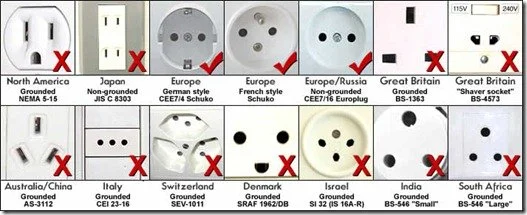
Electric Power: Electricity is 230v/50Hz. In Rwanda, the electrical sockets (outlets) used are the “Type C” Euro plug and the “Type E” and “Type F” Schuko. Often times we advise our guests to travel with plug adapters since many of our guests to Rwanda end up crossing to Uganda as well where the sockets are also different. The Rwanda electrical sockets (outlets) supply electricity at between 220- and 240-volts AC. If you are to plug in an appliance that was built for 220-240-volt electrical input, or an appliance that is compatible with multiple voltages, then you need an adapter. In Kigali power cuts are relatively frequent and more so in remote districts.
-
Attitudes towards lesbian, gay, bisexual and transgender (LGBT) people vary significantly around the world. In some countries homosexuality is punishable by death, many countries continue to criminalize same-sex relationships and a high number of them have laws restricting freedom of expression on sexual orientation and gender identity. Please also note that some countries may recognize some LGBT rights, however, this does not guarantee cultural acceptance, and certain acts may not be legal. LGBT people may be subjected to hate crimes, which are known to
In Rwanda although lesbian, gay, bisexual and transgender (LGBT) is not a crime, cultural acceptance cannot be guaranteed as they are considered as sins by most religions and society. Therefore, it is recommended to keep a low profile to minimize personal risks.
The following steps can be taken to minimize the likelihood of encountering cultural, social, legal or physical consequences arising from your sexual orientation:
· Keep a low profile: LGBT travelers generally face harassment or legal censure only if they draw attention to their sexuality. In higher risk locations, LGBT travelers should avoid drawing attention to themselves through public displays of affection or expressing opinions on LGBT issues in public. If LGBT employees receive unusual attention or are victims of abuse, they should leave the area and go back to their hotel or office.
· Follow the law: Travelers should always comply with local laws, including in countries where LGBT activity is illegal.
· Be vigilant: LGBT travelers should exercise higher levels of vigilance in areas with a higher likelihood of physical assault. They should remain alert to their surroundings and check for signs of being followed.
More information to inform content for the above paragraph can be found here:
· Map of Countries that Criminalise LGBT People | Human Dignity Trust
· Criminalisation of consensual same-sex sexual acts | ILGA World Database
· 67 countries where homosexuality is illegal (76crimes.com)
Hotels
ONOMO Hotel (Partner Hotel)
Partnership Rate
USD 95 per Standard room per night, Bed & Breakfast, including transfers to and from Norrsken House
Booking Method
Email reservations.kigali@onomohotel.com quoting "RILx26"
A credit card is needed to guarantee the booking, with payment on arrival or departure. Cancellations are free up to 4 days before arrival. A late cancellation or no-show is charged 100% value of the booking. Book before November 5th to enjoy the Special RILx26 Rate.
Hôtel des Mille Collines (Partner Hotel)
Partnership Rate
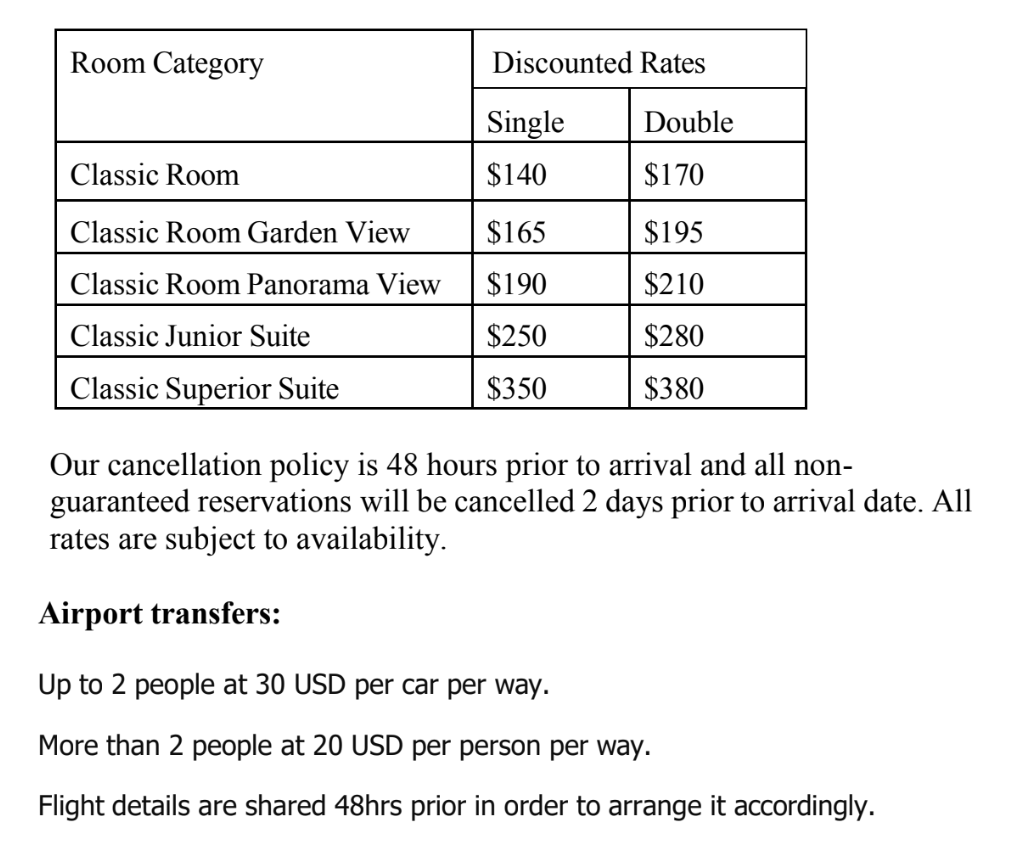
See the price table.
Booking Method
Email reservations@millecollines.rw quoting "RILx26"
Book early to secure your stay. All rates are subject to availability.
A few alternatives
For participants looking for more budget-friendly accommodation, we’ve listed a few other hotel options within walking distance of the venue. These are suggestions for your convenience and are not official RILx26 partner hotels. For enquiries, please contact the hotels directly.
5 Swiss Hotel, 12 mins by walking
Galaxy Hotel, 14 mins by walking
2000 Hotel, 15 mins by walking
Weather & Packing
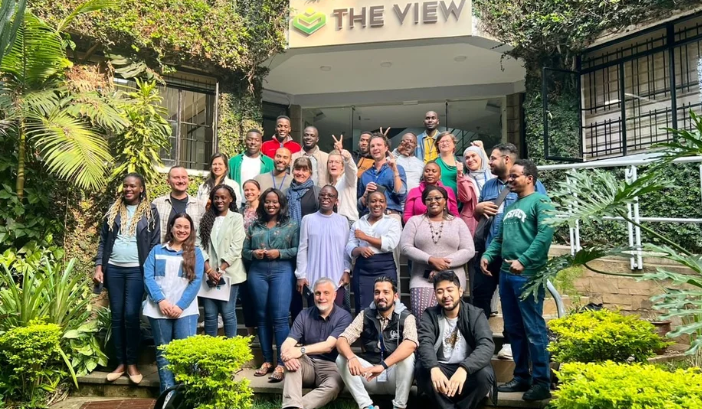
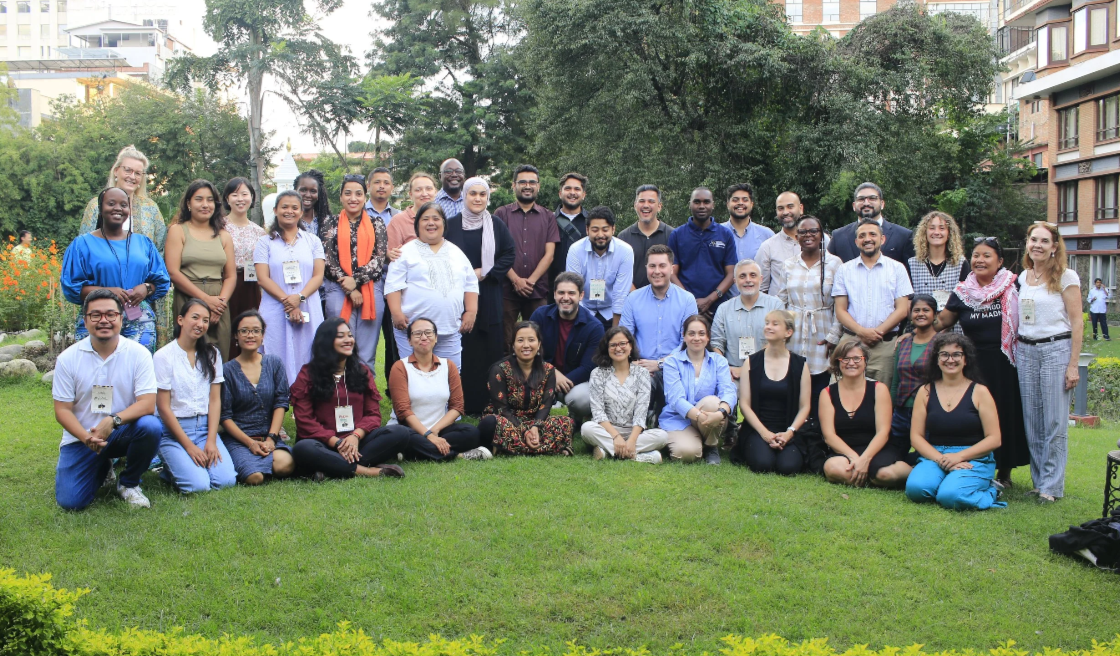
Dress code at RILx26: Casual
-
Kigali enjoys a tropical highland climate, which means it stays comfortably warm during the day and pleasantly cool at night. November falls within Rwanda's short rainy season.
Daytime Temperatures: Expect warm highs ranging from 24°C to 27°C (75°F to 80°F).
Nighttime Temperatures: It cools down significantly at night, with lows between 11°C and 16°C (52°F to 62°F).
Rainfall: November typically sees 15 to 23 days of rain spread across the month, usually taking the form of heavy afternoon showers or sudden thunderstorms rather than all-day downpours.
Sunshine: Even with the rain, you will see a mix of clouds and about 5 hours of bright sunshine daily.
-
To ensure you stay comfortable through both the sun and the rain, we recommend packing the following items:
Clothing & Layers
Lightweight, breathable daytime wear: T-shirts, breathable long-sleeve shirts, and lightweight trousers
Evening layers: Pack a light jacket, fleece, or sweater.
Rain Protection
Waterproof gear: A high-quality, lightweight rain jacket or a sturdy travel umbrella is essential.
Footwear
Comfortable walking shoes: Kigali is famously hilly with a mix of paved roads and dirt paths. Bring sturdy sneakers or walking shoes with good grip.
Water-resistant shoes: If you plan on doing any nature walks or hikes outside the city, waterproof hiking boots are highly recommended.
-
The Daily Pattern: Rain is most common in the late afternoon. Plan your main outdoor activities and city tours for the morning hours.
Plastic Bag Ban: Rwanda strictly prohibits plastic bags. Ensure any rain covers or organisers in your luggage are made of fabric or eco-friendly materials before clearing customs.