

The Oral History of RIL’s 2016-2026
with Saul Kabali
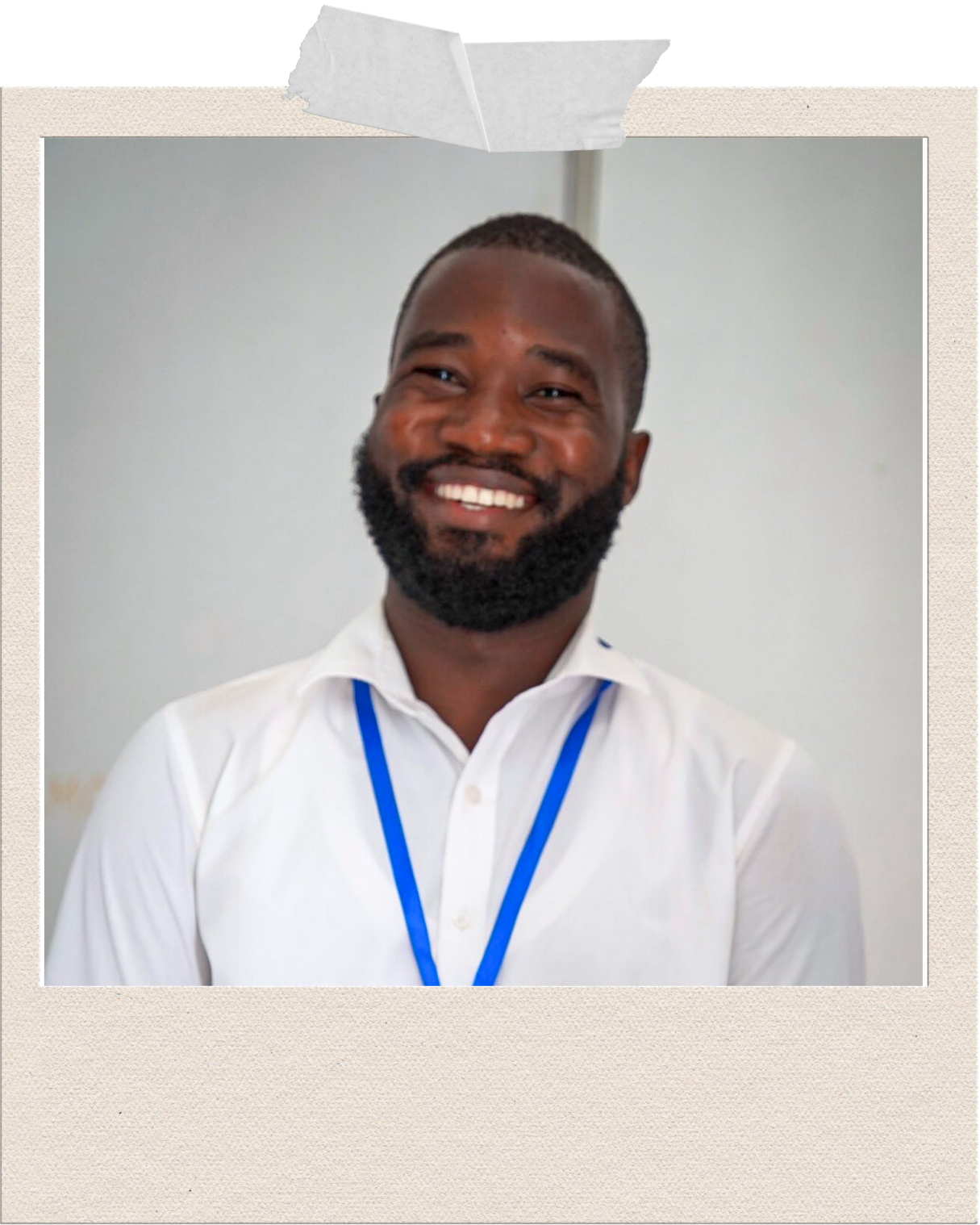


Saul Kabali's journey with RIL is a unique one. Starting as an intern, later becoming an innovator supported by the Lab, and now giving back to the innovation ecosystem, his journey reflects RIL's long-term approach to investing in people rather than projects alone.
As an aspiring leader who believes in empowering other to grow—someone whose team “can continue moving forward even without” him— Saul said he hopes to replicate the kind of leadership he experienced firsthand through RIL. As an innovator leading SafeBangle and building a safety device designed to help women and girls combat gender-based violence and physical assault, he described his experience with RIL as “phenomenal, insightful, and mind-opening”, as it showed him the importance of collaboration, trust, and investing in people.
“…RIL was fundamental in shaping my journey. I entered RIL wanting an internship. I left with a different understanding of what I could become.”
When Saul joined U-RIL, he was still in university, carrying the newly conceived idea for SafeBangle, which would later become the innovation he now develops as an entrepreneur and impact driver, along with a determination to gain professional experience on a path toward community development. He was motivated to build his skills, prove himself professionally, and, perhaps, find the training and support to take SafeBangle further.
That early experience as an intern at RIL gave Saul not only the skills, but also the mindset needed to become both an innovator for impact and a visionary leader.
Reflecting on his biggest takeaways from his time as an intern, Saul highlighted three lessons:
Learning to work creatively with limited resources.
Visual communication is not just about making something attractive; it’s about communicating information effectively.
Transparency and team empowerment are fundamental to good leadership; trust and ownership can sometimes produce more than supervision.
Listen to the clip to hear Saul elaborate on each of these points.
The most powerful lessons on leadership are often taught first-hand, through exposure to a great role model. For Saul, that role model was Charlène, his supervisor at the time (click here to hear Charlène's story), who involved him in the Lab's co-planning and decision-making processes. That nurturing experience went on to shape how Saul now mentors and leads his own team at SafeBangle, a reflection of the very philosophy RIL holds when supporting innovators through its trainings and bootcamps. As Saul put it:
“RIL was investing in the innovators themselves, not just the product.”
“From Working for RIL to Building With RIL”
“RIL did not come in and tell us what SafeBangle should become. They created the conditions for us to discover what it needed to become.”
Saul reflected on how the support he later received from RIL as an innovator differs from many other “transactional” programmes, which tend to prioritise funding and predefined deliverables or milestones. For Saul, funding alone would not necessarily build local innovation capacity. What proved to be the true cornerstone of SafeBangle's growth was the support RIL offered in thinking through policy, partnerships, and long-term sustainability.
One example he pointed to is what he called “ecosystem connection”. When the young team could not afford to travel abroad for supplier scouting, RIL’s Ecosystem Map helped Saul to connect with a manufacturer with the right expertise, a link that significantly improved the device.
Another is what he calls “institutional muscle”. RIL supported the team in conducting field tests, through which they learned about the realities on the ground and made iterations to adapt the solution, including making the device multilingual, increasing its accessibility for those who don't speak English or Luganda.
RIL also helped the team normalise failures: as part of innovation, as an opportunity to learn and to improve.
More recently, we have, quite accidentally, come to associate RIL with the character of an "old auntie" (here's why). Saul offered another reason why the analogy resonates: patience. Throughout SafeBangle's journey, RIL remained a long-term partner, providing the steady support needed for iterative development. For a hardware innovation like SafeBangle, progress requires not only patient capital but also partners willing to stay around—and RIL proved to be one of them.
The Message RIL Brings to the Sector
RIL's first decade has been an iterative learning journey to better understand how to support local innovators through an ecosystem approach. Over time, we have continued to refine what an "ecosystem approach" means in practice, and Saul's reflections offer reassuring evidence that this approach does make a difference.
Invest in understanding the innovation ecosystem.
Create structured, locally-driven processes.
Provide capacity-building alongside funding.
Saul’s innovation journey offers a living interpretation of RIL’s ecosystem approach and of the “ripple effect” it creates on the ground.
“At the beginning, we were the people receiving introductions. Now, we are the ones making introductions for others.”
This is the kind of impact RIL strives to create as an ecosystem builder and facilitator. We want to demonstrate the value and power of supporting innovation as a public good, and how an ecosystem-building mindset can inspire more actors to strengthen connections, foster collaboration, and ultimately drive greater impact for crisis-affected communities through collective effort.
SafeBangle on Its Impact Journey
“…Perhaps the most meaningful part is that the journey did not end when the internship ended. It evolved from working for RIL, to building with RIL, and eventually to contributing back to the ecosystem that RIL helped me become part of.”
Saul’s innovation, SafeBangle, is still expanding today and the team is developing new products.Since its early days at RIL, SafeBangle has received international recognition, including winning the World Summit Awards and other innovation awards, while continuing to pilot and scale its technology with humanitarian and development partners.
Today, SafeBangle Technologies is developing affordable safety technologies that enable women, girls, humanitarian organizations, schools, and communities to respond more quickly during emergencies. Its flagship wearable safety bracelet silently sends SMS alerts with GPS location when activated, while newer innovations such as SafeCheck expand personal safety through mobile-based check-ins. Building on years of field testing, partnerships, and continuous learning, SafeBangle is working toward making personal safety more accessible across Africa.
Learn more about SafeBangle here!