

The Oral History of RIL’s 2016-2026
with Charlène Cabot

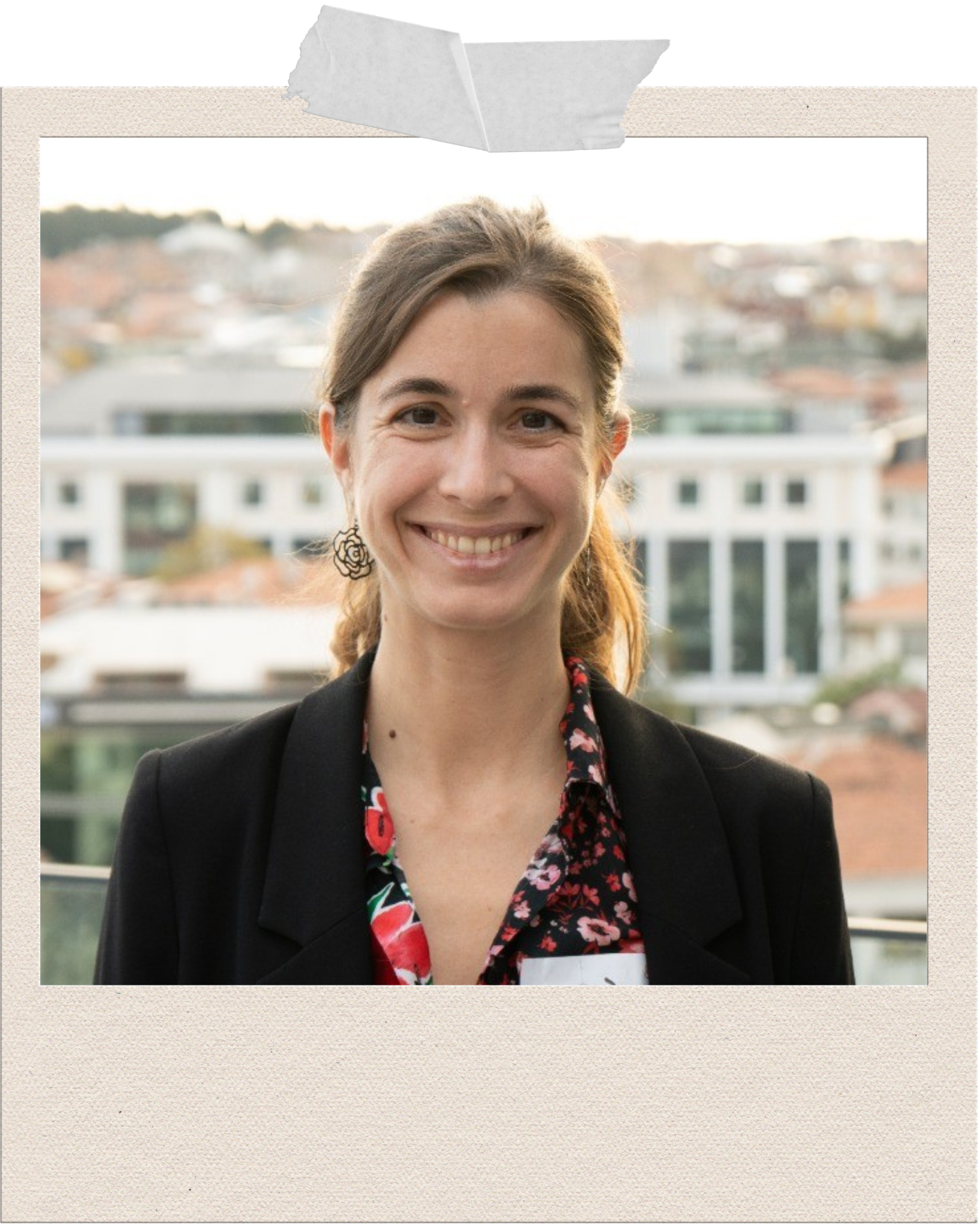
Charlène is one of the earliest architects and champions of RIL. She joined to launch the lab in Uganda, built the team of U-RIL from the ground up, and laid the foundation for U-Learn — establishing "learning and evidence uptake" as what is now a tenet of RIL's work. She continues to inspire new generations of RILers through her leadership and her unwavering belief in the role of innovation in humanitarian response.
Charlène's journey with RIL evolved from being its sole implementer in Uganda, to building and leading the team as a manager, and eventually to becoming a trusted independent advisor who continues to shape RIL's work today.
"Throughout this journey, the diversity and growth of the portfolio kept me very busy and engaged... there was never a boring day."
When asked about her ambitions in those early days, Charlène did not describe a grand blueprint. Instead, she pointed to where that ambition came from: a clear alignment between what the humanitarian sector needed and what RIL was setting out to be: an aspiring "enabler for humanitarian workers."
That conviction to address a genuine gap became the seed of one of RIL’s lasting contributions to the sector: a different way of working in humanitarian response.
RIL, A Humanitarian Organisation Doing Innovation Work, and Focusing on The “Missing Middle”
One thing that remains unchanged today is RIL's identity — which, in Charlène's words:
“RIL is a humanitarian organisation doing innovation work. That distinction is very important because it's not the other way around—it's not an innovation organisation doing humanitarian work. This is critical because this kind of positioning is what was missing. We start with the challenges faced by people affected by crises and by the humanitarians trying to serve them better. We're not an innovation entity trying to fit its ideas into a humanitarian setting….RIL is a stakeholder that builds trust and confidence, acts as a service broker and supports as many organisations as possible.”
RIL's model and positioning have been refined over time, shaped by the gaps and weak points Charlène and others uncovered in the humanitarian sector. She described how RIL evolved to focus on the "missing middle", a less-travelled path yet one that delivers the impact needed, rather than accumulating pilot projects and grant-distribution cases that might, arguably, have built RIL's name more quickly.
Charlène also noted that, over time, RIL has become naturally positioned in long-term crises, where its greatest strength can be put to best use: the extensive and diverse network it has built to connect with people. This intermediary model, which strengthens trust across the ecosystem, is what's still needed today, across protracted conflicts, humanitarian-development-peace nexus contexts, anticipatory action, and other complex humanitarian settings.
What Makes RILers, and What's the Experience Like Working as a RILer?
Staffing is always an important yet challenging task at RIL. Having recruited and built a team that is diverse in background yet aligned in mindset, Charlène reflected on what makes a RILer:
Comfortable acting as a connector between different worlds.
Able to adapt their work to the evolving innovation needs of the response
Comfortable working with uncertainty, including not always knowing about what we work on next month (due to the evolving priorities).
When it came to working with the team, one word Charlène returned to was creativity:
“There was always space for creativity and experimentation”.
That flexibility became part of the organisational culture that has since solidified and still shines through today. In the early days, it gave the young U-RIL team, under Charlène's leadership, the freedom to develop their own approach to delivering the work, while creating opportunities to experiment, adapt, and build RIL together.
“We Are ‘Client-Oriented’.”
The early days at U-RIL also shaped a "client-oriented" culture, according to Charlène. Here, "clients" refers to the innovators and humanitarian actors the team was supporting. The approach started with understanding their needs, then finding creative ways to respond and support. In this solution-driven process, the team also learned not to accept "no" as an answer, even when the toolkit was limited, the humanitarian system rigid, and the host organisation came with its own internal constraints.
There was always a way.
“We Are Experts on Nothing And on Everything.”
We often describe RIL's work as sector-agnostic, and people frequently refer to the RIL team as "experts." Here’s how Charlène sees it:
“With RIL, we are experts on nothing and on everything. Of course, we have developed expertise around innovation concepts and approaches, but if you are talking about a very specific niche—whether in health, agriculture, or digital tools—we won't be the technical experts. What we can do is understand enough across different areas to help think through how solutions might work in different contexts: what constraints a digital tool might face in rural Somalia, or what challenges a solution might encounter if it needs to be adapted to a different context.”
RIL’s Impact in the Early Days
As a novel model in the humanitarian sector, RIL’s founding journey in Uganda was not an easy one. Communicating its mandate and services, rallying for support within the host organisation while engaging the larger ecosystem, identifying early adopters, demonstrating value through action—all required creativity, persistence, and flexibility. Thanks to these qualities, the U-RIL team found ways to create impact even in its earliest stages.
Charlène recalled one example of an innovator who decided not to pursue a funded partnership after using RIL's ethics checklist to identify a misalignment in objectives and standards. It is a powerful illustration of how RIL's tools and principles can influence innovators’ decision-making, even beyond the support RIL directly provides such as capacity building.
The Message RIL Brings to the Sector
Over the past decade, RIL has accumulated a wealth of learning on ecosystem building In recounting the story behind Learning Hub and U-Learn's creation, Charlène offers a valuable lens on why funding ecosystem facilitation is a catalytic investment, one that creates a multiplier effect, increasing humanitarian impact well beyond the initial input.
Building on Charlène’s insights, we want to call on more funders and investors to invest in the soil, not just the seeds. Ten years on, RIL is proof of what that kind of patient investment can grow into, and a reminder of how much more is possible when the next ten years begin the same way with more actors joining the journey.