

A decade of strengthening local humanitarian innovation ecosystems.
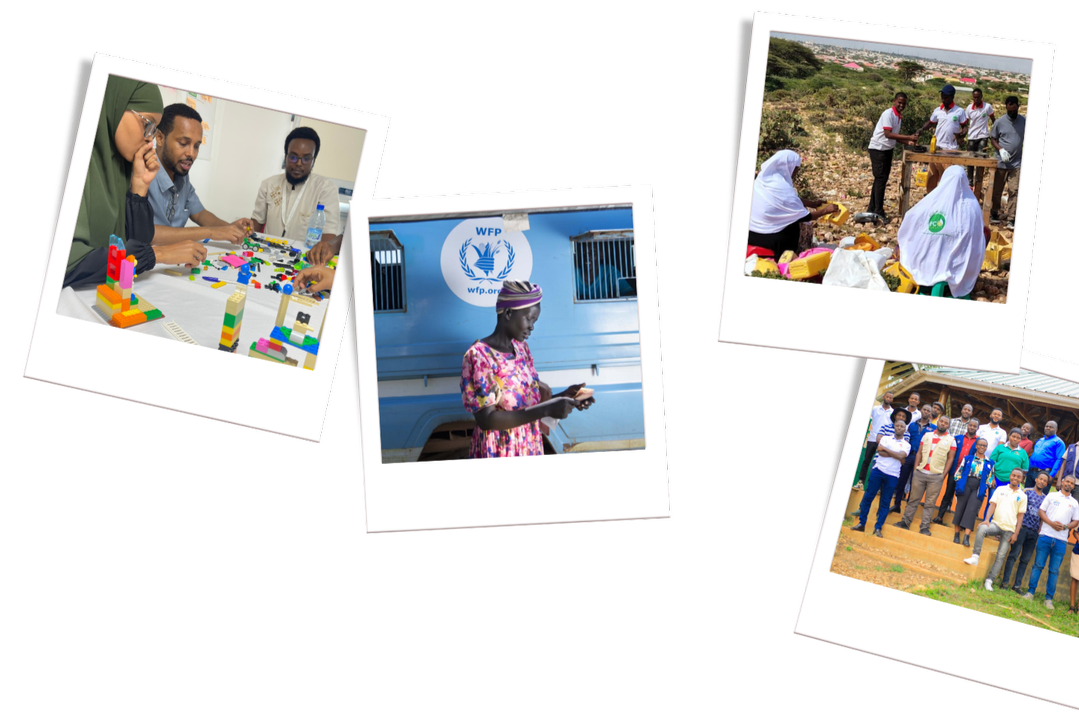

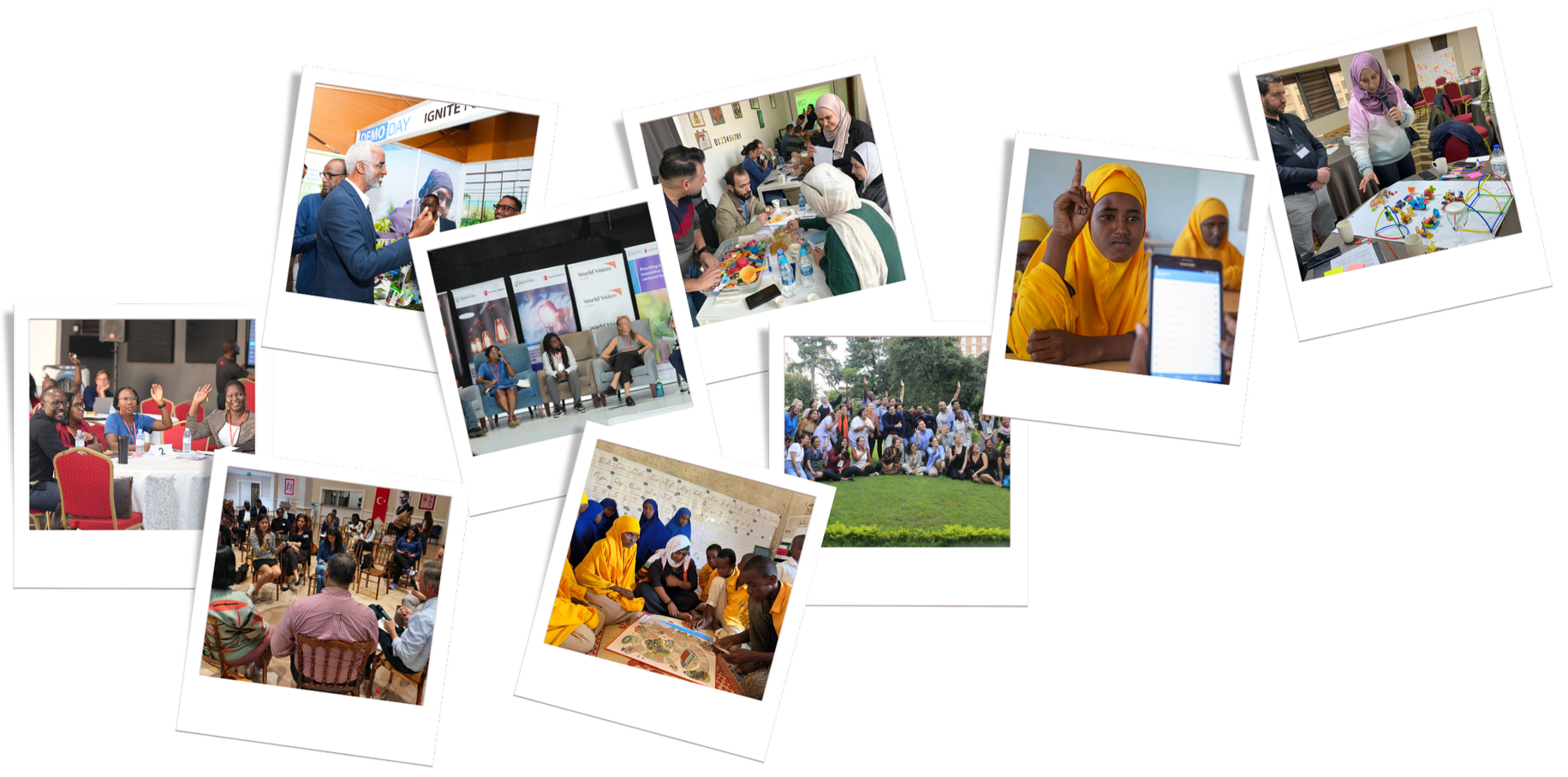
A decade of dedication to strengthening local humanitarian innovation ecosystems.
The milestones over the past decade … …
-
The idea for the Response Innovation Lab (RIL) was conceived by founder Jennifer Wilde while she was leading World Vision’s response to the devastating 2015 earthquake in Nepal. She realised that traditional humanitarian efforts tended to leave out emerging actors like start-ups, social entrepreneurs, and researchers—even though they had valuable ideas and solutions to offer, both in emergencies and in helping communities recover and become stronger over time.
Together with her colleagues, Jenny founded the World Vision Nepal Innovation Lab (NLab) as a space for people from different backgrounds to come together and solve problems.
This initiative took off quickly and started making a real difference. As Jenny sought to replicate the concept in other contexts, she began reaching out to partners to co-create a global network of response-based innovation labs.
-
In 2016, experienced humanitarian workers from Save the Children, Oxfam, and World Vision teamed up with researchers from George Washington University and creative problem-solvers from Civic. Together, they began designing what was first called the “Crisis Response Innovation Lab”, a platform for submitting challenges, sharing innovations, and connecting with tools, funding, and partners.
Over the next two years, the five founding partners developed what became known as the “Convene-Matchmake-Support” model. They also wrote the manuals for the RIL network including the Central Support Unit (a non-physical “Headquarter” providing support to field operations) and Country Labs.
-
By the end of 2018, RIL had launched labs in Jordan (2017 Oct), Uganda (2017 Dec), Iraq (2017 Dec), Somalia (2018 Jan), and Puerto Rico (2018 May), developed the online MatchMaker tool, and mapped four humanitarian innovation ecosystems.
Today, it continues to expand its network and partnerships to strengthen its tools, systems, and services—ensuring innovations better meet humanitarian needs worldwide.
-
In March 2020, as COVID-19 spread globally, RIL introduced Pop-Up Labs in new contexts like Yemen and South Sudan where the resources were too limited to establish fully operational labs. These “pop-up labs” leveraged existing innovators to address humanitarian challenges and hosted workshops for capacity sharing, challenge defining, and solution-oriented skill-strengthening.
-
In July 2020, the Puerto Rico RIL completed its mandate upon the closure of its support to the Hurricane Maria response. RIL, together with the local hosting organisation the Puerto Rico Science Trust (PRST), decided that ongoing RIL activities were no longer needed as PRST initiatives had grown to meet local needs.
RIL is designed to be temporary—filling critical gaps in the ecosystem and building local capacity. Puerto Rico marked RIL’s first successful lab transition and exit.
-
Affiliate Facilities share RIL’s vision of inclusive, collaborative innovation ecosystems, integrating their own approaches with RIL’s methodologies. By the end of 2021, Jordan Country Lab (2020 Jan) and the previous Puerto Rico Lab host PRST(2021 May) have transitioned into Affiliate Facilities.
In August, Kumwe Hub hosted by Save the Children in Rwanda joined the RIL network as an Affiliate Facility, followed by Nepal Innovation Lab hosted by World Vision Nepal in September.
-
The Gaza Response Innovation Lab (Gaza RIL) was an initiative led by Oxfam with the aim of tackling the complex challenges that the humanitarian actors in Gaza were encountering.
The Lab was founded in Feb 2022 with the aim of ensuring innovation is integrated within the local humanitarian contexts. The Lab’s approach was improving and transforming how response unfolds, from early recovery and resilience building to supporting cross-industry innovations to solving locally-identified pressing challenges.
-
In the second half of 2023, the Danish Refugee Council (DRC) joined Save the Children International, Civic UK, Oxfam, and World Vision International as the fifth global Core Partner. DRC’s Strategy 2025 focuses on enhancing locally led programs and innovative approaches to humanitarian response, with an emphasis on climate and conflict resilience. This partnership reflects a shared commitment to supporting community-led solutions across more responses.
-
Northwest Syria Response Innovation Lab (NWS Lab) was established in 2024 in Gaziantep, Turkiye, hosted by World Vision Syria Response, to develop locally driven, adaptive, and scalable solutions for Syria’s evolving needs. In 2025, it was renamed Syria Response Innovation Lab (SyRIL), focusing on WASH and beyond, fostering practical experimentation, knowledge-sharing, and community-led problem solving with emphasis on relevance, impact, and inclusivity.
-
During RILx25, RIL and Rwanga Foundation officialized the partnership whereby Rwanga Foundation joined the global RIL network as an Affiliate Facility. As part of this affiliation, Rwanga Foundation will serve as the host of the Iraq Response Innovation Lab (IRIL), reinforcing RIL’s commitment to localization and locally led innovation. IRIL was established in January 2019 through a collaboration between Oxfam in Iraq and the Response Innovation Lab.
Through this collaboration, RIL and Rwanga will join forces to advance innovation, creating pathways for young people, local organizations, and innovators across the Kurdistan region and Iraq to drive creativity, cultural growth, and social impact.

The Oral History of RIL’s
RIL’s 10th Anniversary Special Project

The Oral History Project aims to move away from an organisational retelling of RIL’s impact reflected through it’s first decade. Instead, it focuses on collecting personal stories, experiences, and subjective reflections from the invited “storytellers”, and exploring what these accounts reveal about the role, evolution, and impact of RIL, as well as the broader systems and contexts in which it operates.
As an approach centred on lived experience and memory, oral history enriches RIL’s narrative by adding a human dimension to the story of this collaborative initiative. It brings forward behind-the-scenes efforts and the “unspoken legacies” of an ecosystem builder, enabler, and facilitator, as experienced by those who have been part of it.
Looking back … …


![Lessons learned on integrating innovation into the Uganda refugee response [ Devex ]](https://images.squarespace-cdn.com/content/v1/5d7fba1a7dc0f278f09832df/1614028911010-3MF2E7RPR6RF15YPAE6B/IMG_20200218_104759.jpg)

At this year’s #HNPW, we hosted a session on March 5 reflecting on a decade of humanitarian innovation, bringing together perspectives from practitioners, innovators, and ecosystem actors across different regions.