
Beyond Agricultural Challenges: Exploring the Realities Shaping Agriculture in Jordan
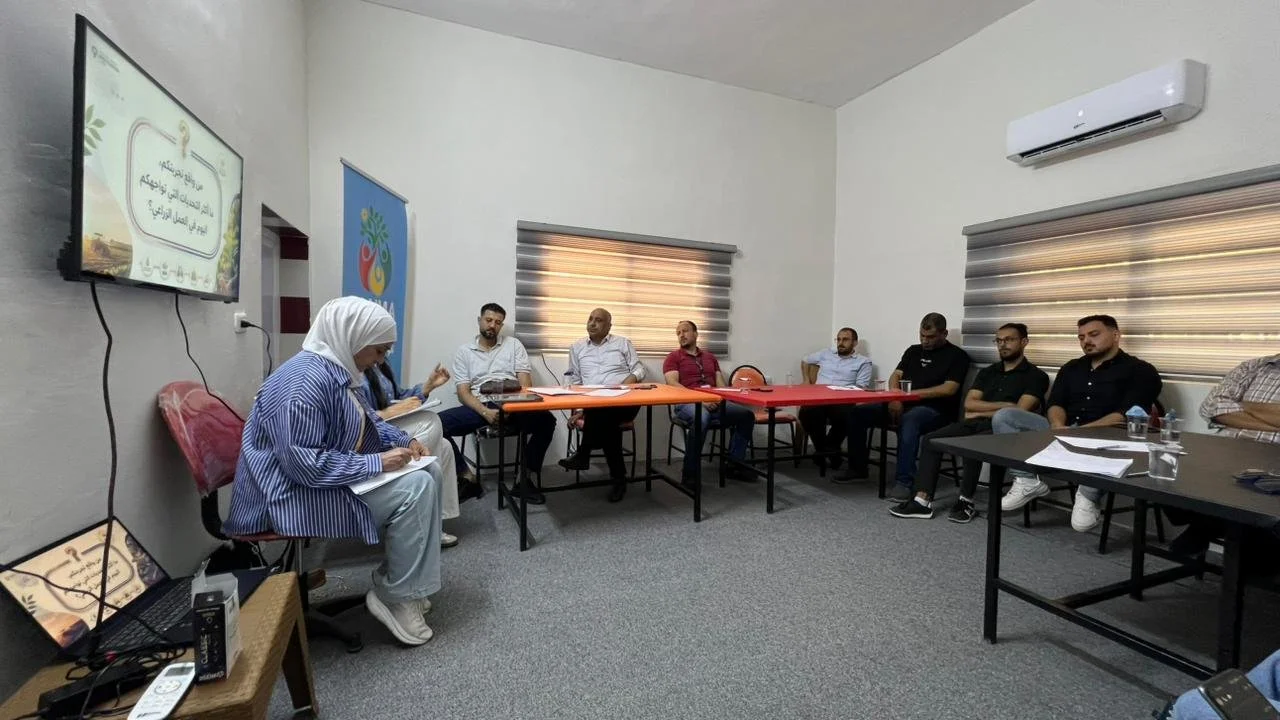
On 18 June 2026, we hosted a special edition of our Thoughtcast series in Irbid, Jordan, under the theme “Beyond Agricultural Challenges: Exploring the Realities Shaping Agriculture in Jordan.” The session was organised in collaboration with Rahma Foundation, which supports local communities through entrepreneurship, skills development, business support services, and capacity building, including for agricultural and food-processing enterprises.
With nearly 90% of its land dedicated to agriculture, Irbid Governorate is one of Jordan’s most important agricultural regions. It supports diverse agricultural activities, including forestry, olive and almond cultivation, and the production of key field crops such as wheat, barley, and lentils. Wheat, often referred to as Jordan’s “yellow gold,” remains particularly important for food security and rural livelihoods.
Rather than seeking ready-made solutions, the Thoughtcast aimed to deepen understanding of the realities shaping Jordan’s agricultural sector. Recognising that agricultural challenges are interconnected and influenced by broader systemic factors, the discussion explored how different stakeholders experience these realities and what underlying causes contribute to persistent challenges.
The discussion brought together representatives from local government, agricultural research institutions, technical professions, agricultural traders, investors, and farmers managing small-, medium-, and large-scale operations. Many participants also had direct entrepreneurial and investment experience in agriculture, enabling the discussion to combine policy perspectives, technical expertise, market insights, and firsthand field experience. Participants demonstrated a strong willingness to explore opportunities for improvement, adopt innovative approaches, and contribute to the sector’s long-term development.
Throughout the discussion, participants consistently emphasised that agricultural challenges should not be viewed in isolation. Issues related to water, energy, production, markets, knowledge, and policy were seen as interconnected elements within a broader agricultural system. Despite differences in production models and farm sizes, participants identified many shared concerns and priorities.
Key Findings
Water Scarcity and Rising Irrigation Costs
Participants identified water availability as one of the most pressing challenges affecting agricultural production. Limited access to groundwater resources and inadequate water sources in some areas have increased dependence on costly irrigation methods. Rising fuel and energy prices further increase irrigation expenses and reduce profitability. Participants also noted inefficiencies in some irrigation systems, leading to higher water consumption and operating costs.
Climate Change and Environmental Pressures
Climate-related challenges emerged as a major concern across agricultural activities. Participants highlighted declining rainfall, increasingly unpredictable weather patterns, and prolonged dry seasons, all of which place additional pressure on productivity and water resources. The discussion also emphasised the growing prevalence of agricultural pests and diseases, including stem borer infestations, which threaten crop yields and increase production risks.
Soil Degradation and Declining Soil Quality
Participants expressed concerns about declining soil fertility and low levels of organic matter. Poor soil quality was seen as contributing to reduced productivity, greater dependence on agricultural inputs, and lower resilience to environmental stressors.
Declining Agricultural Engagement and Knowledge Transfer
A recurring theme was the gradual disengagement of younger generations from agricultural livelihoods in favour of alternative professions. Participants expressed concern that this trend is contributing to the loss of practical agricultural knowledge and limiting the transfer of experience between generations. They also highlighted the absence of strong mechanisms for knowledge sharing, technical guidance, extension services, and peer-to-peer learning.
Post-Harvest Management and Market Coordination Challenges
Participants noted that the simultaneous cultivation and harvesting of similar crops often results in market saturation, oversupply, and lower prices. These challenges are compounded by limited access to cold storage and preservation facilities, reducing farmers’ ability to manage supply, maintain product quality, and access markets at more favourable times.
Regulatory and Licensing Barriers
Participants highlighted challenges within existing regulatory and licensing frameworks, noting that available licensing categories do not always reflect the diversity of agricultural enterprises. Entrepreneurs and farm owners seeking to formalise their operations often struggle to identify appropriate licensing categories, creating administrative barriers and limiting access to support mechanisms linked to formal registration.
The discussion reinforced the importance of adopting a systems perspective when examining agricultural challenges. By bringing together government representatives, researchers, technical experts, traders, investors, and farmers, the session generated a richer understanding of the opportunities, constraints, and interconnected realities shaping agriculture in Jordan. These insights can help inform more context-driven and sustainable interventions that strengthen the sector’s resilience and long-term sustainability.